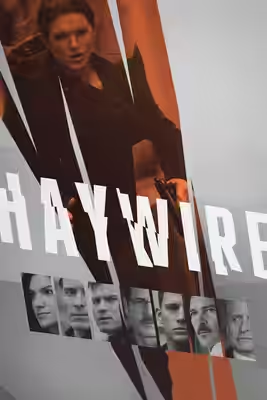
Haywire poster

Haywire

2011 · Directed by Steven Soderbergh
1h 33mActionThrillerDrama15
74
Fi1m score
65
Critics · 18
Audience · not yet

Where to watch in the UK

Checked 10 September at 22:29. Prices and availability change; the service’s page is the last word.

Synopsis

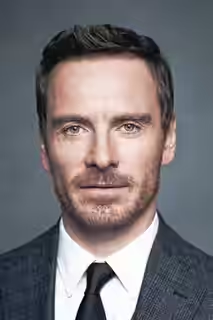
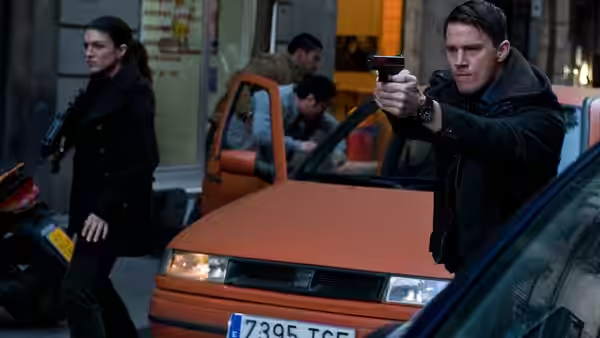
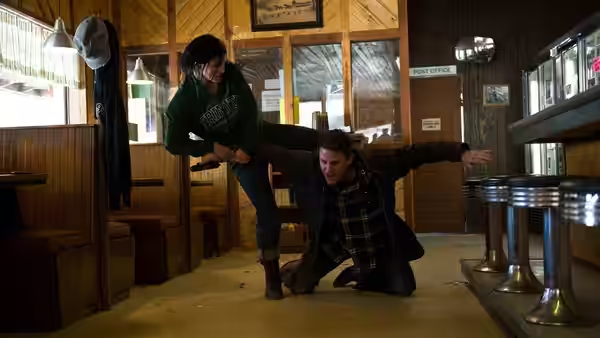
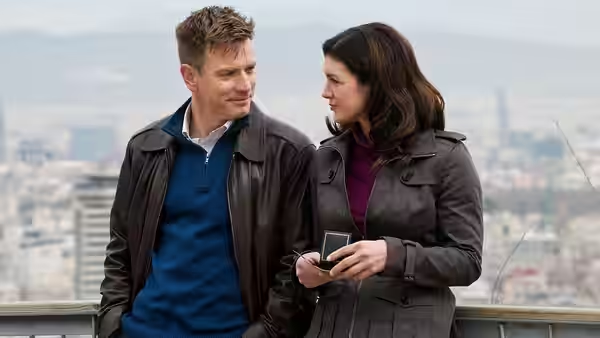
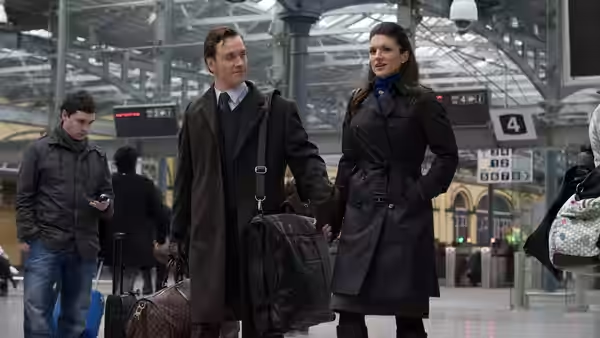
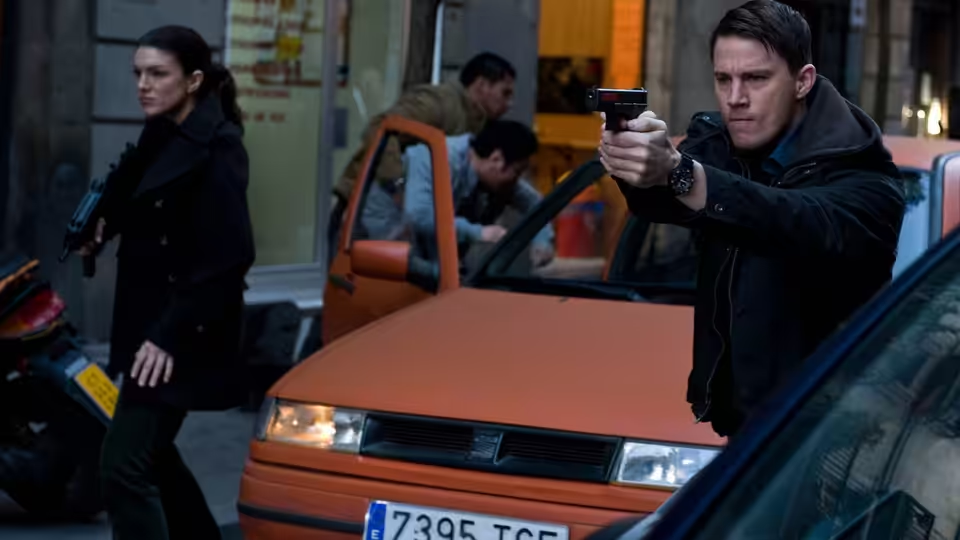
Mallory Kane (Gina Carano) works for a private firm that takes on the jobs governments prefer not to put their names to. We meet her in a diner in upstate New York, where a colleague, Aaron (Channing Tatum), has been sent to bring her in. She leaves instead with a bystander, Scott (Michael Angarano), and as he drives she tells him how she came to be hunted: a hostage extraction in Barcelona, then a second assignment in Dublin alongside another operative, Paul (Michael Fassbender), which does not go as briefed. Her employer Kenneth (Ewan McGregor), a government man called Coblenz (Michael Douglas) and a contact in Spain, Rodrigo (Antonio Banderas), all know more than they say. Bill Paxton plays her father. Steven Soderbergh directs, from a script by Lem Dobbs.

Fi1m review

In a sentenceMichael Fassbender loses a hotel-room fight in a good suit and the film is never better

Soderbergh strips a spy thriller down to a woman, a string of rooms and the men who underestimate her. The fights are hard, plain and superbly staged; the story between them is cool to the point of indifference, and so, at times, is its star.

Steven Soderbergh has made a spy thriller by taking things out of one. Mallory Kane (Gina Carano) does the work governments would rather not sign for, and when we meet her she is in a diner in upstate New York, being asked to come quietly by a colleague, Aaron (Channing Tatum). She declines. She leaves with a young man called Scott (Michael Angarano) and tells him, as he drives, how it came to this: a hostage job in Barcelona, a second job in Dublin, and somewhere between the two a decision made about her by other people. Lem Dobbs’s script gives her little else and the film runs 93 minutes.

Soderbergh shoots and edits it himself, and the fights are where the decisions show. He keeps the camera at a middle distance and lets the shot run, so we can see it is Carano doing this and that the man is, most of the time, losing. There is no music under any of it. David Holmes’s score, loping bass and brushed drums that sound lifted from a spy record of 1971, plays over the travelling and the talk and stops dead at the first blow, and what we hear instead is breath and furniture. The best of it is in a Dublin hotel room with Paul (Michael Fassbender), a fellow operative posing as her husband. Neither says a word. We winced, aloud, at the sound a head makes against a wall in a room with no music.

Each city gets its own light. Barcelona is amber and hot, Dublin grey-green and wet, the New York of the framing story bleached white with snow. Howard Cummings gives Dublin a hotel of pale marble and long corridors that Mallory will need to get out of. When she runs across the rooftops Soderbergh hangs back on a long lens, so she is a small dark shape against slate. Shoshana Rubin puts her in a cocktail dress for the Dublin evening and then makes her fight in it, and the film is dry enough not to remark on this.

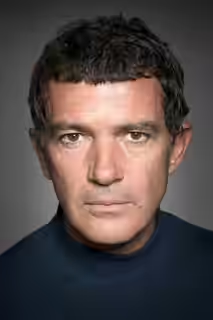
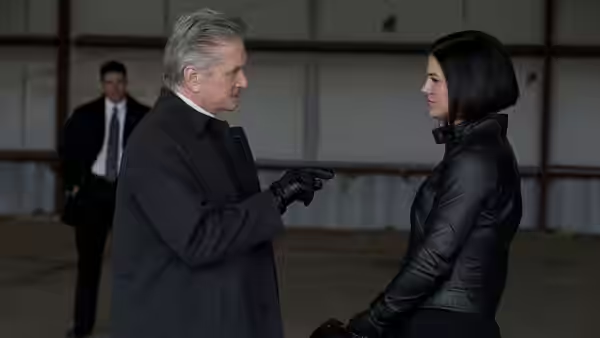
Around Carano stand an unusual number of famous men, and the joke of the casting is that they are furniture. Ewan McGregor’s Kenneth, who runs the firm and used to share her bed, has the tight charm of a man who has already decided you are a cost. Michael Douglas’s Coblenz folds his arms and represents the government. Antonio Banderas’s Rodrigo wears a beard and says nothing to be trusted. Bill Paxton, as her father John, supplies the film’s only warmth in two brief scenes, and it is enough.

Then there is Carano, a mixed martial artist rather than an actor. Some critics have said she cannot act, and we think that mis-describes what the film wants from her. She moves like someone who has been hit before and is not afraid of it, which no amount of training gives a performer, and she looks at men the way a mechanic looks at an engine. Her line readings are flat, as if she were saying the words for the second time. Soderbergh knows it, gives her little to say, and does the acting with the camera when she needs to be angry or afraid.

The trouble is everything between the fights. The scenes in which Kenneth and Coblenz and Rodrigo work out who has sold whom are cool, brief and hard to care about, and the frame in Scott’s car is a device; Angarano is likeable and has nowhere to go. Around the hour mark there is a run of men in good coats saying names in offices, and we noticed we were waiting for the next fight rather than attending to the man on screen. We were not bored. We simply did not much care who had sold her, and the film does not seem to mind.

Soderbergh has done this sort of thing with more feeling. Out of Sight (1998), also scored by Holmes, and The Limey (1999), also written by Dobbs, had people in them we minded about as well as shots we admired. Haywire has one person, and she is mostly kicking. See it for her and for the hotel room, and at 93 minutes it is over before the coolness starts to grate. It carries a 15, and the sound of that hotel room is most of the reason.
Critical consensus AI synthesised

65
Positive
10
Mixed
4
Negative
4

Most critics agree on where Haywire earns its keep: Gina Carano. The reviews praise her fight scenes almost without exception, noting that Soderbergh shoots them from a respectful distance, without wires or stunt doubles, and lets the raw sound of the blows do the work. Several also admire the lean approach, treating the film as an exercise in thriller technique rather than storytelling. The reservations cluster around everything between the fights. The plot is called thin, derivative or convoluted, and a number of critics find the film too cool for its own good, with Slant judging it aloof and inconsequential and Time Out finding the hi-def visuals flat and banal. The spread is wide: from strong approval at The AV Club and Collider to outright dismissal at The Times, which argues Soderbergh never taught Carano to act. Even admirers tend to wonder whether she can carry a role that asks for more than a kick.

The AV Club
19 January 2012 · A- · Scott Tobias
90

Soderbergh uses sophisticated trappings as a smokescreen for distilled lizard-brain entertainment built around Carano's athletic ass-kickings. The raw fight sounds and terse lead role make it bracing and satisfying action fare.

Read the full review →
IndieWire
19 January 2012 · B+ · James Rocchi
83

Soderbergh crafts a stylish, smart action vacation with sharp kicks and effective genre play around Carano's breakout. The film balances visual flair and physical thrills without overreaching.

Read the full review →
Screen Daily
7 November 2011 · festival review
80*

Soderbergh delivers a fun, uber-stylish action-thriller with kinetic fight scenes and a dazzling physical performance from Gina Carano that proves seductive despite a thin plot.

Read the full review →
Total Film
6 January 2012 · Kevin Harley
80*

Gina Carano ably leads Steven Soderbergh’s revenge actioner with slick, muscular tag-team fights that deliver an agile drop-kick to doubts. The pared-back purity focuses on physicality and jazzy montage over story depth, proving effective with tough panache despite some limitations in range and emotion.

Read the full review →
Empire
10 January 2012 · Simon Crook
75*

Soderbergh delivers a fresh, muscular payback movie with mischievous indie spirit, casting MMA fighter Gina Carano as a convincing action lead surrounded by star power. The film is great fun with well-choreographed, realistic fights and Soderbergh's signature style, though it stays a little too cool for maximum excitement.

Read the full review →
Vulture
20 January 2012
75*

Soderbergh's formula action-thriller is perfectly enjoyable thanks to Carano's arresting athletic presence and well-staged fights viewed from a respectful distance. Minor complaints about underenergized sections and lack of flashy payoffs do not detract from its appeal.

Read the full review →

Cast

Stills

If you liked this, try…

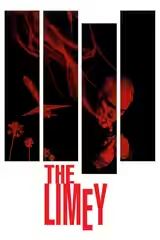
The Limey poster80

The Limey

1999 · Dobbs and Soderbergh again, with Terence Stamp doing the hitting and more to feel.

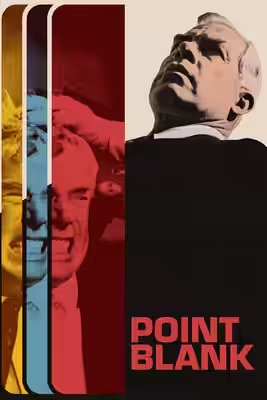
Point Blank poster

Point Blank

1967 · Lee Marvin walks through rooms full of liars; the template for cool revenge.

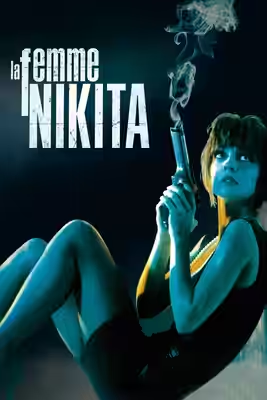
Nikita poster

Nikita

1990 · Besson’s assassin drama has the same trained woman, more feeling, less restraint.

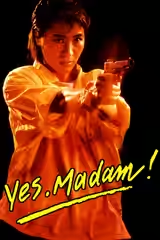
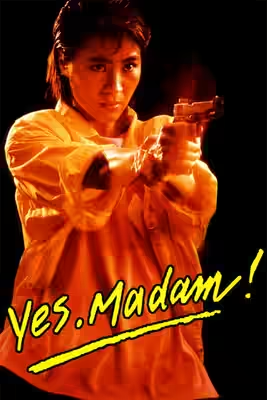
Yes, Madam! poster

Yes, Madam!

1985 · Michelle Yeoh and Cynthia Rothrock hit people for real, and the camera keeps up.

Atomic Blonde poster

Atomic Blonde

2017 · Charlize Theron’s stairwell fight is the closest anyone has come to that hotel room.