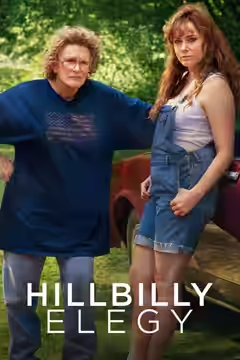
Ron Howard’s family drama is earnest, repetitive and hard to care about. Amy Adams and Glenn Close work hard, but the writing gives their characters too few qualities beyond their troubles.
Hillbilly Elegy wants us to understand a troubled family before we judge it, which is a reasonable place for a drama to begin. Ron Howard directs with evident sympathy, yet the film keeps returning to scenes of distress without making its people more understandable. At 117 minutes, this is a poor, tiring drama with capable actors and too little interest in the lives they are playing. We get repeated demonstrations of how difficult this family can be to live with.
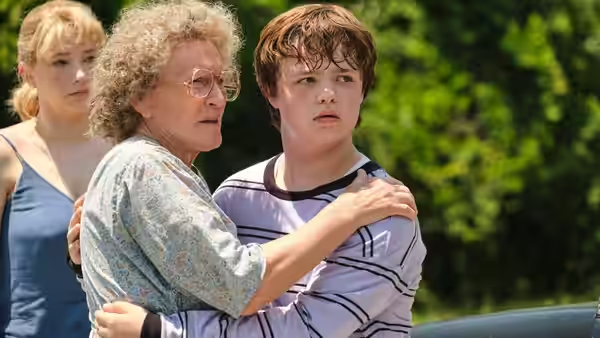
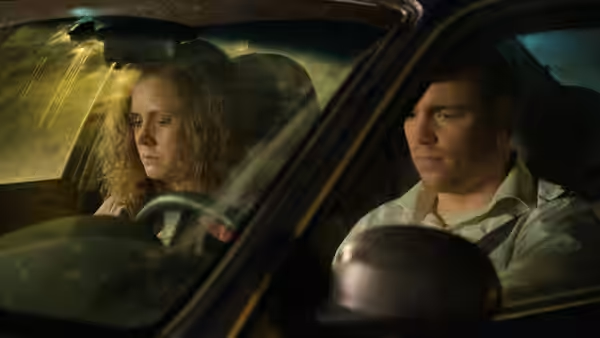
Vanessa Taylor’s screenplay moves between J.D. Vance’s childhood and his later Ivy League studies, placing his educational ambitions beside the family troubles that shaped him. Gabriel Basso plays J.D. Vance, with Owen Asztalos as Young J.D. Vance, and their relative restraint is welcome amid the surrounding agitation. The changes of period give James D. Wilcox, the editor, a useful way to connect the boy with the adult, and the transitions are more persuasive than much of the dialogue. Yet returning to the past keeps producing another crisis when we need an ordinary conversation.
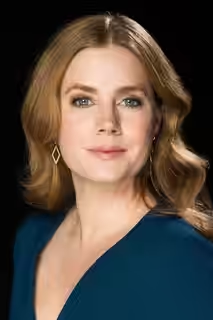
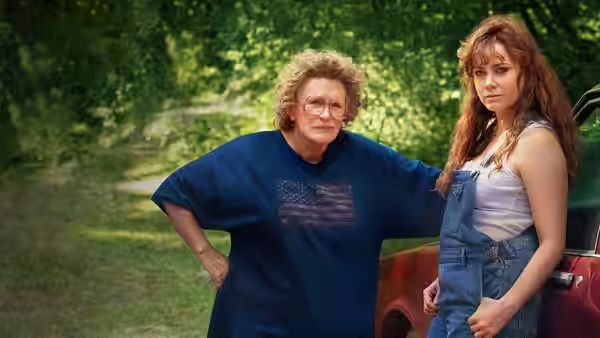
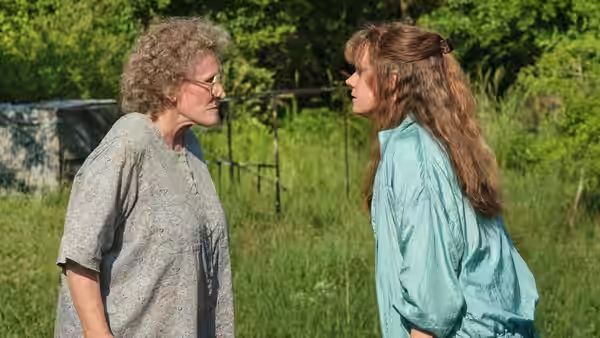
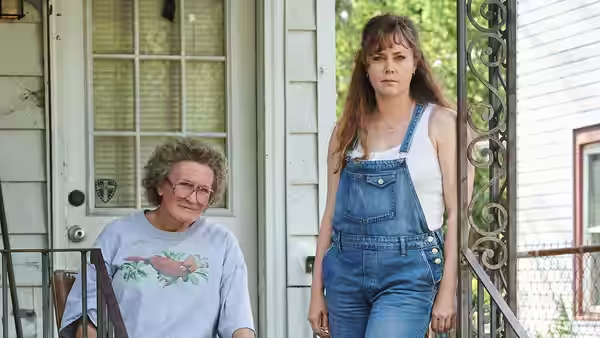
Amy Adams gives Bev a rawness that sometimes makes the pain register despite the writing’s insistence on another outburst. We were exhausted by the repeated eruptions between Bev and Mamaw, because their distress arrives at much the same volume each time. A family can argue like this, of course, but a drama still needs to show us what holds its members together when they stop. The performance gets too few opportunities to suggest anything beyond the immediate emergency.
Glenn Close fares better as Mamaw, largely because her toughness occasionally suggests a person who exists when nobody is arguing. She can make a sentimental line sound like something this woman might actually say, and her flashes of warmth are welcome. That is a considerable service to the screenplay, which too often tells us what a character stands for before letting us know them. Even here, the emphasis on forcefulness leaves too little room for everyday company.
Maryse Alberti’s cinematography brings an assurance to the images that the storytelling lacks, and the film’s polish is not in doubt. Molly Hughes’s production design gives the family a credible setting, though we seldom get the sense of ordinary life continuing between the crises. The music by Hans Zimmer and David Fleming does little to vary the emotional pressure. These are capable contributions to a film whose basic dramatic rhythm remains confrontation, explanation and another confrontation.
A family melodrama need not offer a lecture on economics to tell us something about poverty. It does need to show enough of the wider world for the family’s choices to mean something. Here, hardship and addiction keep arriving as private emergencies, so that getting an education seems to answer questions the film has barely asked. We can follow the personal difficulties, but the film gives us little help in understanding the circumstances that surround them.
Viewers hoping for an intimate account of how a family lives with poverty should look elsewhere. The film’s insistence on distress makes it harder to spend time with people it plainly wants us to care about. If the attraction is the cast, we would still choose another film.