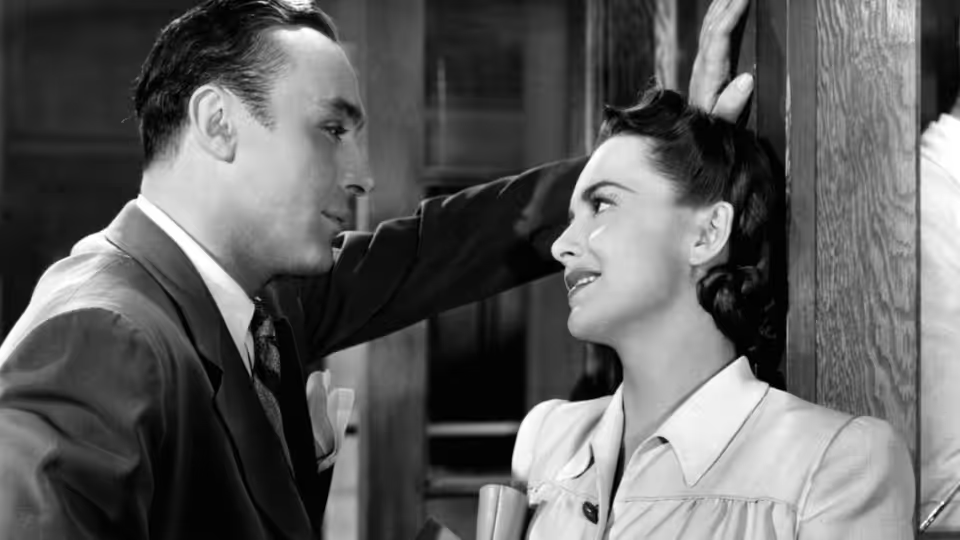
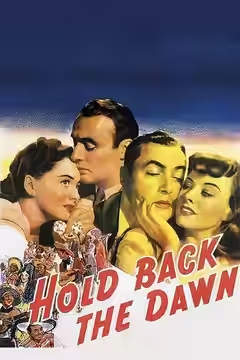
Brackett and Wilder’s script gives Charles Boyer a gigolo who marries a schoolteacher for a visa, and Mitchell Leisen plays it cold for an hour before the film starts asking us to forgive him. Olivia de Havilland is the reason to stay.
Billy Wilder and Charles Brackett wrote it, Mitchell Leisen directed it, and it opens on a Hollywood sound stage, where an unshaven Georges Iscovescu (Charles Boyer) walks in off the street and offers a film director his life story for cash. The story is this. Georges is a gigolo who has run out of women to charge. He is stuck in a hotel in a Mexican border town with a Romanian passport and a quota number that will not come up for years, and the hotel is full of people in the same fix: a professor (Victor Francen) who has been waiting so long he has stopped counting, a young couple (Eric Feldary and Rosemary DeCamp) hoping their child can be born on the other side. It is a refugee film made in 1941, while the refugees were still arriving, and it does not pretend otherwise.
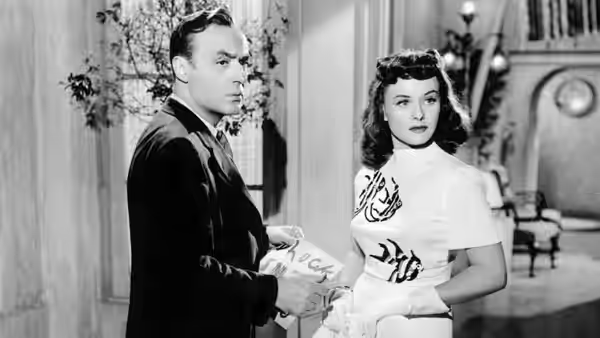
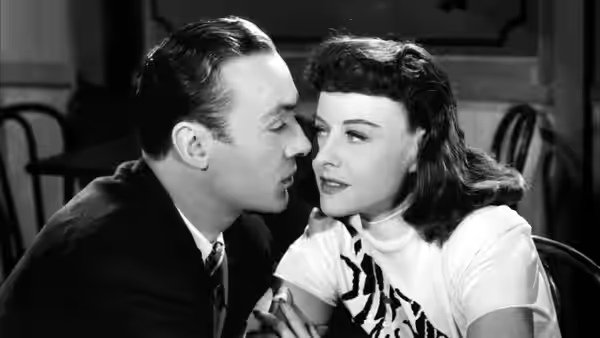
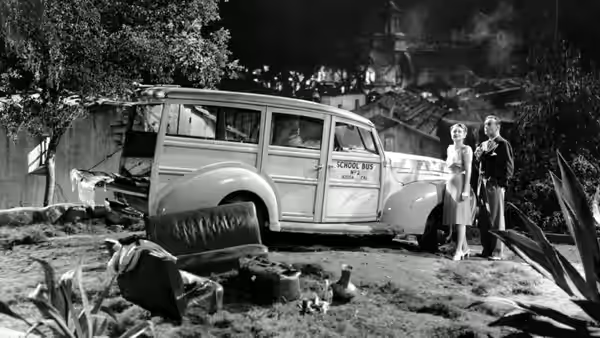
Then Anita (Paulette Goddard), his old dancing partner, arrives from the American side with a new hat and the trick: marry a citizen, cross, divorce, repeat. A bus of Californian schoolchildren rolls in for the Fourth of July with their teacher, Emmy Brown (Olivia de Havilland), and Georges goes to work. Boyer plays this stretch with the smile switched off between lines, so we can watch the sums being done, and it is the best thing in the film. Some critics at the time found him slow. We think the slowness is the character: a man who has never had to hurry a woman before and is not certain he still can.
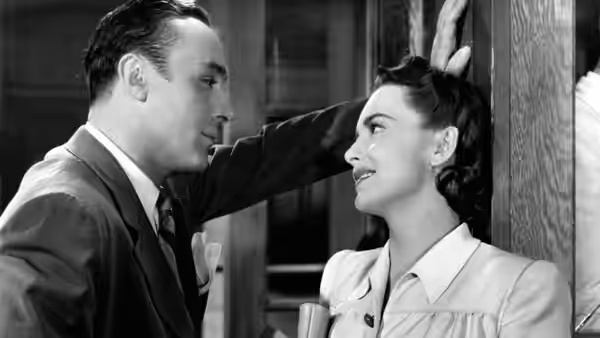
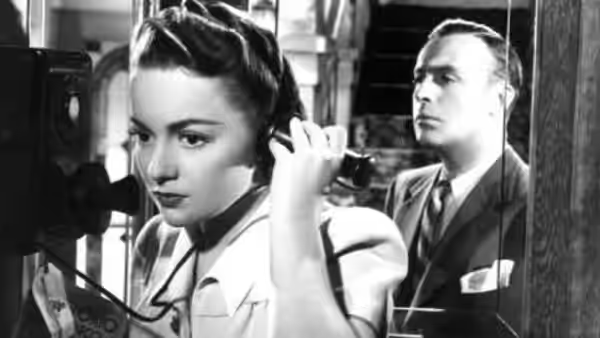
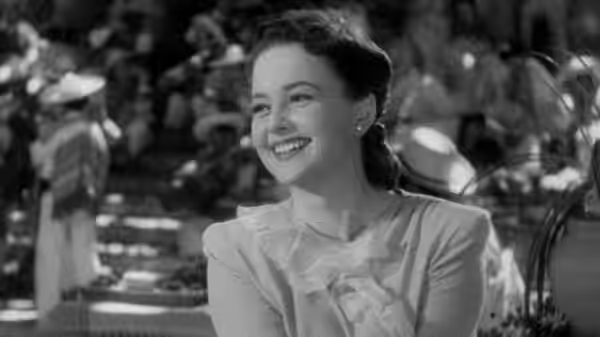
De Havilland is doing something harder. Her schoolteacher is not a fool, and the script never asks her to be one. She is a woman who has spent her life in a small town and has decided, once, to say yes to something. There is a scene in the hotel, after the wedding, where she talks about the house they will have and he lets her talk, and it made us wince more than we expected, because she is so plainly happy and we know what she does not. Edith Head puts her in cotton prints that look ordered from a catalogue and puts Goddard in things that shine, so the two women could not be confused for a second.
Leo Tover shoots the hotel as a place of blinds and slatted light, and the border itself as a plain gate you could step over in a moment, which is both the joke and the wound. Victor Young’s score does more than we would like in the last third, but it stays out of the courtship, where the silences are working. Doane Harrison keeps the hotel’s several small stories moving without letting any of them take over, and the business with the mechanic Flores (Nestor Paiva) and a bus that stays broken is paid out in the right instalments.
What does not work is the shape. The Hollywood framing is a Wilder indulgence he would repeat, better, nine years later in Sunset Boulevard, and here it mostly reminds us that a story is being sold. The second half takes a turn we will not describe, and from there the film moves its pieces with a heavier hand than before; by the end it wants Georges forgiven rather more warmly than we were ready to forgive him. Curt Bois, funny in the early going as the hotel manager Bonbois, simply drops out of the picture. Boyer’s part thins as the film goes on, and the last hour belongs to de Havilland.
Leisen had a reputation as a director of frocks, and this film argues back. He gets a whole town of waiting people on screen without a single speech about waiting, and he lets a border be a border rather than a symbol. Against the other refugee romances of the period it is colder at the start and softer at the finish than it should be, and at 116 minutes the softness goes on a little long.
Watch it for the first hour, in which a man works out how to marry a stranger, and for de Havilland, who has the harder part and does not let you see her working.