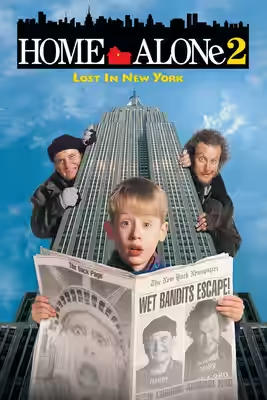
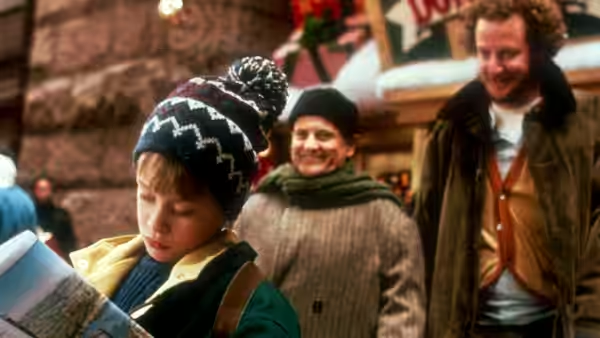
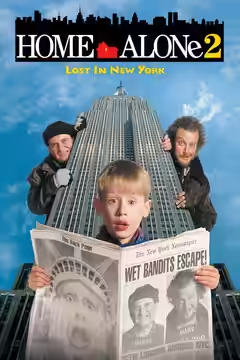
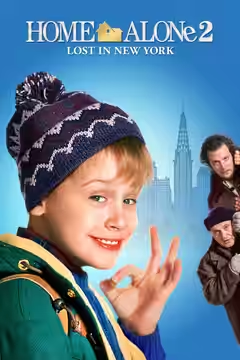
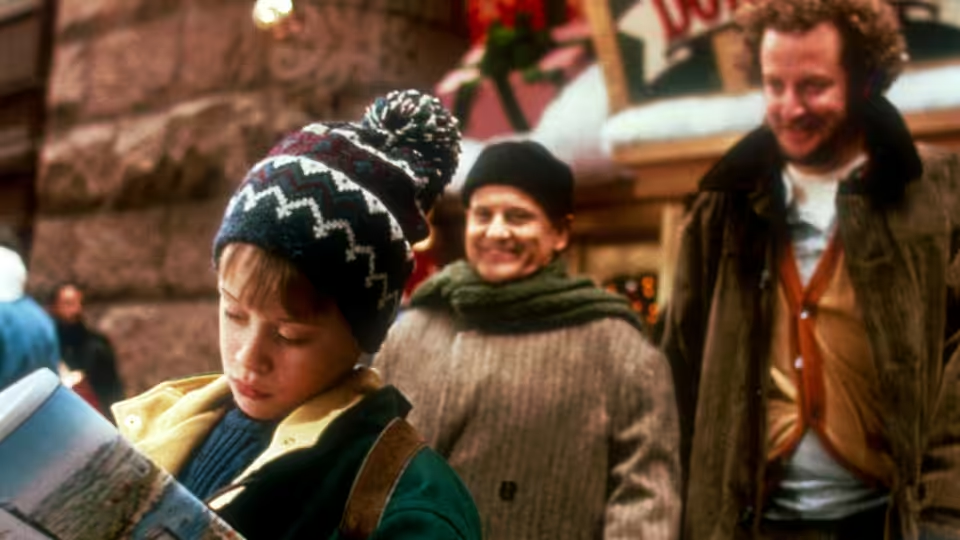
Kevin (Macaulay Culkin) reads a map while Harry and Marv approach on a city street
Film review

Home Alone 2: Lost in New York

1992 · Directed by Chris Columbus · 2h 00m · MPA PG

In a sentenceThe burglars deserve arrest; the film seems to be arguing for several months of physiotherapy

Kevin (Macaulay Culkin) is lost in New York at Christmas. Harry (Joe Pesci) and Marv (Daniel Stern), two burglars, are among the adults he has to contend with. There is also a concierge (Tim Curry) and the Pigeon Lady (Brenda Fricker), while Kate (Catherine O’Hara) and Peter (John Heard) are part of the family story. On his own in the city, Kevin has to manage without someone telling him what to do, in an adventure involving strangers, grown-up trouble and a child determined to handle things himself.

Fi1m review

Macaulay Culkin keeps this Christmas sequel amusing, but the familiar plotting and prolonged punishment wear thin. There is enough here for returning admirers, less for anyone hoping for a fresh adventure.

Chris Columbus’s Home Alone 2: Lost in New York is an intermittently funny sequel that spends too much time repeating itself. John Hughes’s screenplay keeps trusting the familiar contest between Kevin and the burglars to do the work, and familiarity does help the jokes along. It also makes the next joke rather easy to anticipate. There is enough pleasure here for an indulgent family evening, provided nobody expects much surprise.

Macaulay Culkin gives Kevin the certainty of someone who has never considered that he might be the nuisance. That confidence remains funny when an adult is expected to take him seriously, though the character’s pleasure in getting his own way becomes wearing. Tim Curry’s Concierge supplies a welcome change of comic emphasis: officiousness is a more agreeable target than a human skull. His performance gives us an adult worth watching even when Kevin is not controlling the joke.

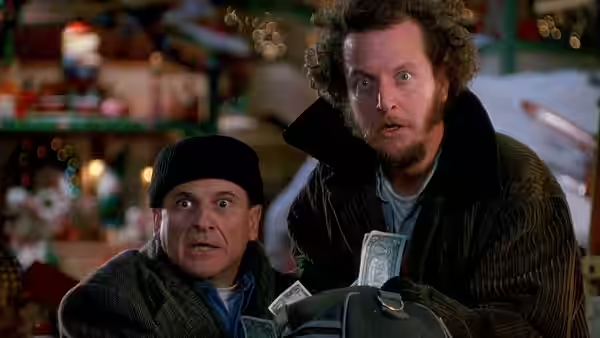
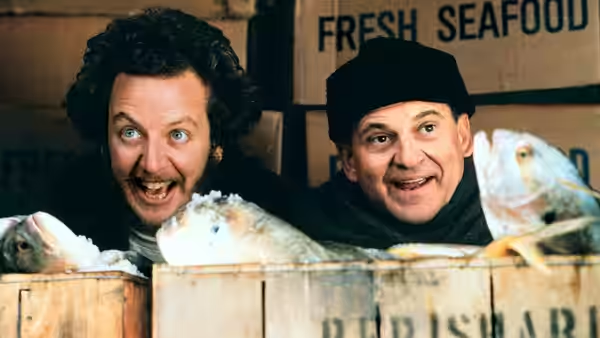
Joe Pesci and Daniel Stern approach Harry and Marv’s punishment with admirable commitment, making each indignity register through their reactions. We laughed at their extravagant suffering, then grew uncomfortable as the film kept finding reasons to hurt them again. The difficulty is the accumulation: there is less recovery time for either the burglars or our sympathy. Their performances keep the violence cartoonish, but Kevin’s enthusiasm makes some of it unpleasant. A little less satisfaction from him would make it easier to enjoy their work.

The cinematography by Julio Macat and Douglas F. O’Neons makes New York feel welcoming enough that Kevin’s independence remains an attractive proposition. Sandy Veneziano’s production design contributes to that comfort; the surroundings encourage us to enjoy his freedom rather than fret about his safety. This is a sensible approach to a family comedy built around a child being alone. We could have used more time enjoying that setting before the familiar business takes over, because the city offers the film its clearest opportunity to do something different.

Raja Gosnell’s editing serves the physical comedy better than the story’s pace. The action is readable, and individual jokes have the preparation they need, but too many of them serve much the same purpose. At 120 minutes, the film gives us ample opportunity to notice the repetition. Cutting more quickly would not solve that; John Hughes’s screenplay needed fewer returns to material whose effect was already established. Even a successful gag can make the next one harder work.

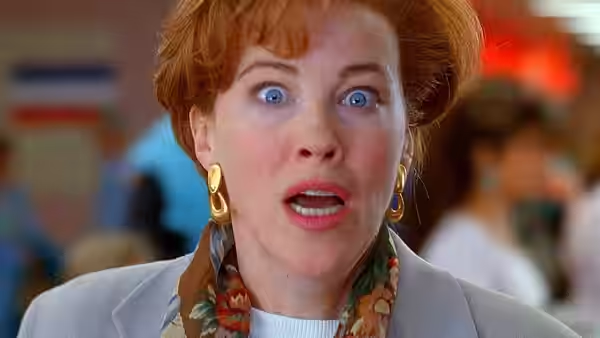
John Williams’s score gives the sentimental passages considerable encouragement, sometimes more than they need. Catherine O’Hara’s Kate and Brenda Fricker’s Pigeon Lady bring sufficient warmth without quite so much musical assistance. Their performances also make the harsher comedy feel awkwardly placed, because the film wants us to take some people’s feelings seriously while treating other people’s pain as inexhaustible entertainment. That mixture can work in slapstick, but here the shifts ask for more indulgence than the writing earns.

Compared with Home Alone, this is a less satisfying use of Kevin’s resourcefulness, although Macaulay Culkin remains a persuasive reason to spend time with him. Family slapstick can be cruel, and there is no need to demand good behaviour from everyone involved. The problem is how often this sequel repeats a joke after getting the laugh. Return if Kevin already amuses you, and allow for stretches when he does not.
Critical consensus AI synthesised

61
Positive
3
Mixed
4
Negative
2

The reviews lean towards a mixed verdict on Home Alone 2: Lost in New York, with praise centred on its slapstick and reservations about how much it repeats. The warmer notices find the Christmas sentiment satisfying and the traps inventive, while Macaulay Culkin’s performance and the choreography of the action earn approval even in a more qualified assessment. Familiarity does not prevent some critics from finding it funny, but enthusiasm is far from uniform.

The sharpest division concerns Kevin’s treatment of the burglars: The Hollywood Reporter enjoys the escalating cartoon punishment, while Radio Times finds it malicious. Recycled gags, padding and fewer surprises account for much of the remaining criticism. Den of Geek notably prefers the sequel to the original, despite finding the tone uneven. The spread is broad, although two of the nine listed reviews lack accessible text, limiting what can be said about their reasoning.

The Hollywood Reporter
16 November 1992 · Duane Byrge
80*

Byrge finds the sequel a cheerful, crowd-pleasing holiday comedy, despite its familiar story and gooey sentiment. He praises its escalating slapstick, especially Kevin’s cartoonish traps for the burglars.

Read the full review →
RogerEbert.com
64*

The page could not be accessed, so the critic’s verdict is unavailable. No praise or complaint from the review could be verified.

Read the full review →
The New York Times
20 November 1992
64*

The accessible page provides no review text, so its verdict cannot be verified. No praised or criticized element can be identified from the available material.

Read the full review →
Radio Times
★★★ · Joanna Berry
60

Berry finds the sequel less entertaining than the original. She criticizes Kevin’s malicious treatment of the two burglars.

Read the full review →
Variety
15 November 1992 · Brian Lowry
55*

The critic finds the sequel entertaining but overly repetitive, padded, and less effective than the original. He praises Culkin’s performance and the well-choreographed action, while noting that the traps can feel too mean-spirited.

Read the full review →
Time Out
· BC
40*

The review regards the film as a routine sequel with few surprises. It singles out a trio of nice cameos as a bright spot.

Read the full review →

Straight answers AI written, from our review

Is Home Alone 2: Lost in New York worth watching?
Home Alone 2: Lost in New York is worth watching for returning admirers of Kevin’s antics, though its repeated jokes and prolonged slapstick punishment limit our score to 63. Macaulay Culkin remains amusing and Tim Curry supplies welcome comic variety, but the two-hour running time asks for more indulgence than the familiar plotting earns.
How long is Home Alone 2: Lost in New York, and what is it rated?
Home Alone 2: Lost in New York runs 2h 00m and is rated PG by the MPA in the US. It is a comedy and family film.
Where can I watch Home Alone 2: Lost in New York in the US?
Home Alone 2: Lost in New York is streaming on Disney+ in the US, and it is also available to rent from Amazon Prime Video and Apple TV from $3.99. Availability is checked daily; the links above go straight to each service.
How does Home Alone 2: Lost in New York compare to Home Alone?
Home Alone 2: Lost in New York is less satisfying than Home Alone, which we recommend for its more carefully timed slapstick. The New York setting gives Kevin’s independence a welcoming backdrop, but the sequel spends too little time exploring that opportunity before returning to familiar punishment; it suits established admirers more than anyone hoping for a different adventure.
What should I watch after Home Alone 2: Lost in New York?
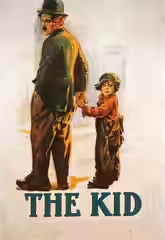
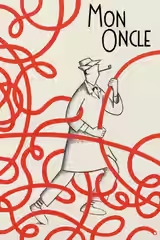
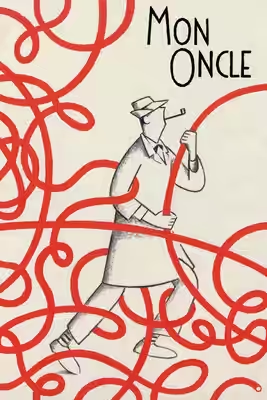
After Home Alone 2: Lost in New York, try Home Alone (1990, Fi1m 80): The simpler set-up gives Kevin’s resourcefulness more room and the cruelty less. Then The Kid (1921, Fi1m 84): A child and an adult muddle through hardship with more tenderness than malice; and Mon oncle (1958, Fi1m 82): Another child navigating adult foolishness, with visual jokes worth paying close attention to.

Part of · 2 of 2

Home Alone

2 films on Fi1m · 1990–1992 · average 72 · best Home Alone 80

All 2 in order

Cast

If you liked this, try…

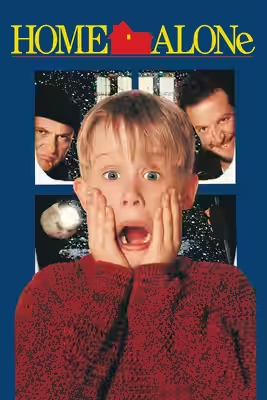
  1. Home Alone (1990, Fi1m 80)The simpler set-up gives Kevin’s resourcefulness more room and the cruelty less.

  2. The Kid (1921, Fi1m 84)A child and an adult muddle through hardship with more tenderness than malice.

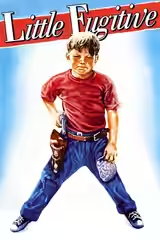
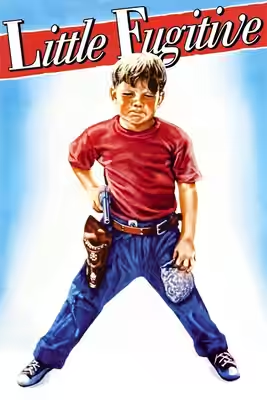
  3. Little Fugitive (1953) · not reviewed yetA child’s city adventure, watched with patience and without escalating the punishment.

  4. Mon oncle (1958, Fi1m 82)Another child navigating adult foolishness, with visual jokes worth paying close attention to.

  5. Paddington (2014, Fi1m 84)For more city misadventures, with adult pomposity punished and kindness given equal attention.

Free account

Know what to watch tonight

Two lists that know where things are streaming, collections you can share, your own score beside ours, and Discover that remembers what you have seen.

  • Want to see, sorted by what is streaming now
  • Seen, with your score out of ten
  • No adverts, ever