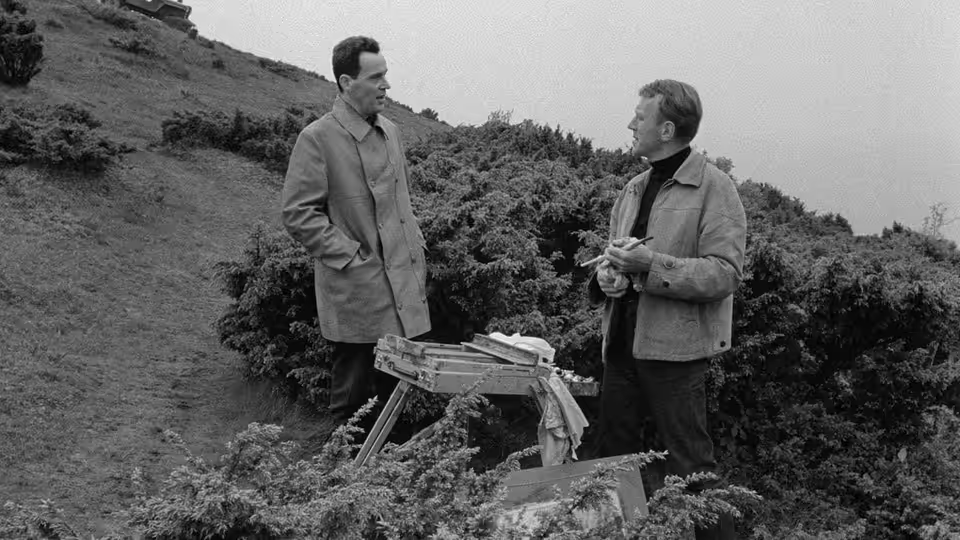
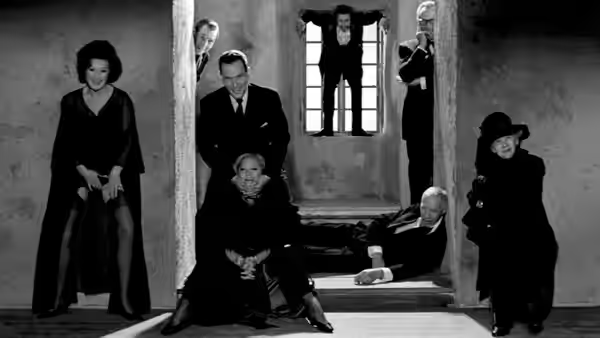
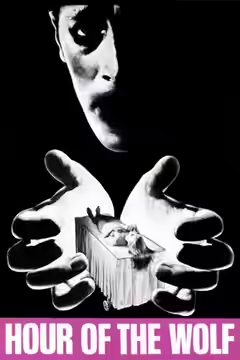
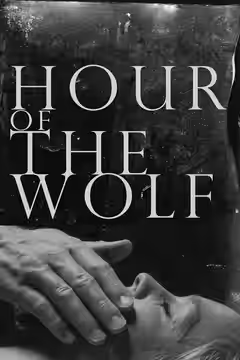
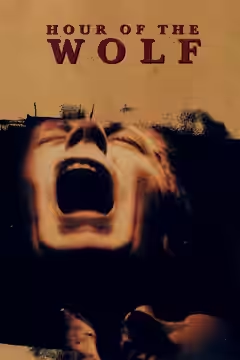
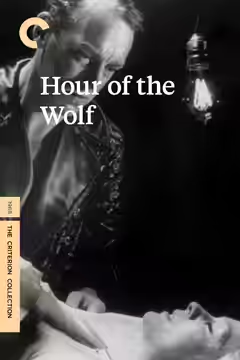
Ingmar Bergman’s horror unsettles through its acting and severe black-and-white images. The attention paid to an artist’s suffering sometimes becomes tiresome, but Max von Sydow and Liv Ullmann give us good reason to stay.
Hour of the Wolf is worth the unease, although its troubled artist can be exhausting company. Ingmar Bergman asks us to take that exhaustion seriously, and the film is persuasive enough to make this a reasonable demand for much of its length. Its principal strength is the acting, which gives an immediate human interest to material that could easily become an exercise in solemnity. Our reservation is simple: there are stretches when the anguish becomes repetitive, and being uncomfortable ceases to be interesting.
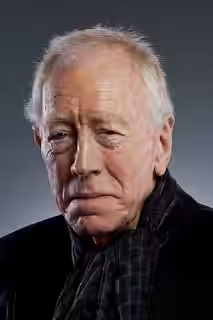
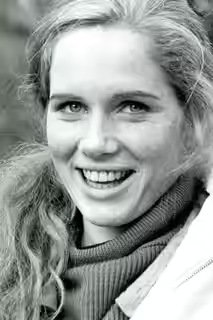
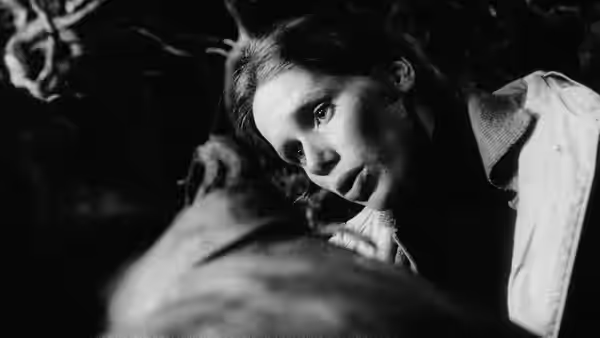
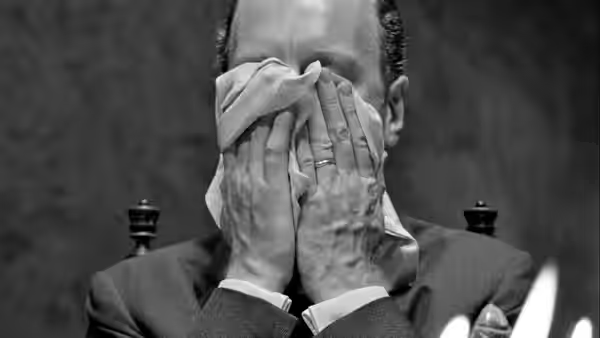
Max von Sydow’s Johan Borg has a severity that makes easy sympathy difficult. That is a useful quality in a horror performance: we keep watching him without settling into the comfortable business of rooting for him. Still, his intensity can become monotonous, with too little room between distress and greater distress. Liv Ullmann gives Alma Borg a more responsive presence, and we were moved by the attention in her performance. She makes concern seem difficult and tiring, with none of the reassurance that a gentler performance might have supplied.
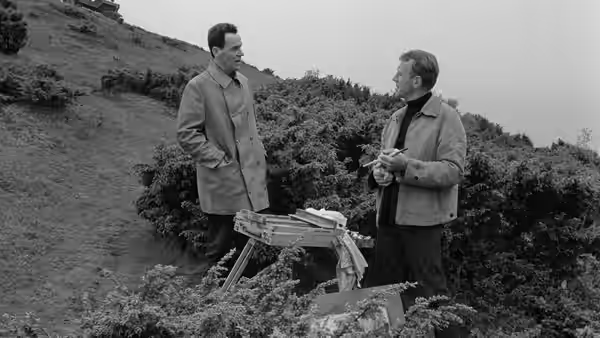
Sven Nykvist’s black-and-white cinematography is crucial to the film’s unease. The severity of the images makes looking at a face feel like an uncomfortable intrusion. The acting withstands that scrutiny without needing the photography to flatter it. We felt hemmed in by the combination of Max von Sydow’s intensity and the coldness of the images; the film gives us little encouragement to relax our attention. This is where its seriousness works, making a familiar human face difficult to read with any confidence.
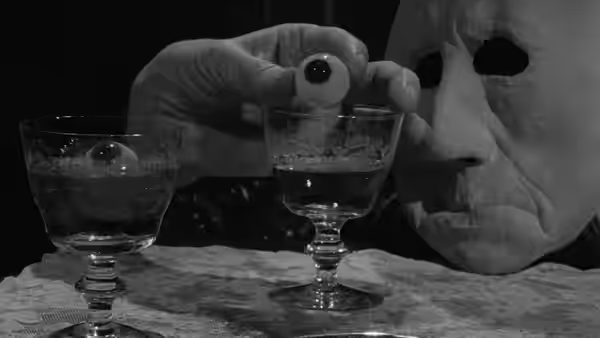
Marik Vos-Lundh’s production design contributes a formality that suits this atmosphere. The surroundings feel no more accommodating than the people, and their stiffness makes the human encounters more uncomfortable. Lars Johan Werle’s music has an abrasive quality that suits the horror, though it can make an already severe film feel over-insistent. The performances carry enough strain without needing much assistance. When everything presses equally hard, it becomes difficult to distinguish a mounting threat from a mood that has simply been sustained.
Ulla Ryghe’s editing gives the performances space, and that patience is often justified. Horror needs time to let a person become disturbing without treating each change of expression as a signal for a cut. The difficulty comes when the film sustains the same emotional pressure after we have understood it, leaving us waiting for a change that the writing is slow to supply. At 88 minutes, it can still feel drawn out. Ingmar Bergman the writer is too ready to assume that an artist’s torment will hold our attention simply because it is torment.
These reservations matter, but they do not cancel the film’s hold. Judged as horror, it has the considerable advantage of actors who make unease seem worth taking seriously, even when we grow impatient with the man at its centre. We would recommend it to anyone happy for a frightening film to spend time studying faces, with the caveat that its gravity leaves little breathing space. Save it for an evening when sustained discomfort sounds more appealing than a brisk succession of scares.