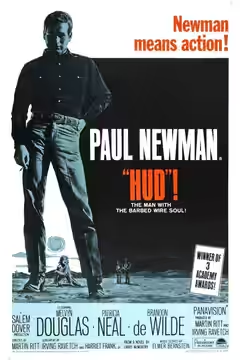
Martin Ritt’s Texas drama gives Paul Newman his most likeable louse and James Wong Howe a horizon to fill with sky, and neither wastes it. Only Melvyn Douglas’s upright rancher, right too often and too loudly, keeps it from the top rank.
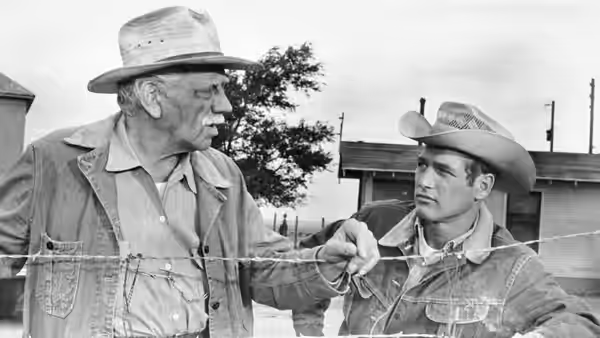
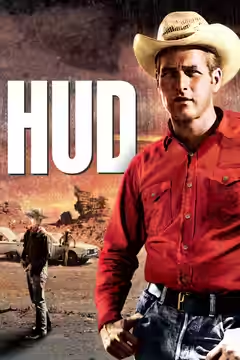
Homer Bannon (Melvyn Douglas) has spent his life on a Texas cattle ranch building a herd and a set of rules, and his son Hud (Paul Newman) has spent his breaking them. Hud sleeps late, drives a Cadillac, and comes home in the morning from other men’s wives. Watching them both is Homer’s grandson Lonnie (Brandon deWilde), not yet grown and undecided about which of them he wants to turn into, and keeping house for all three is Alma Brown (Patricia Neal), a divorcee who has heard every line Hud has. Then a heifer is found dead by the water tank, and the state vet, Mr Burris (Whit Bissell), wants to run tests before anyone moves a cow. Hud’s idea is to sell the herd before the results come back. That is the film, and it is one of the best American films of its decade about a man who is no good.
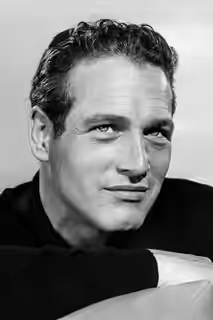
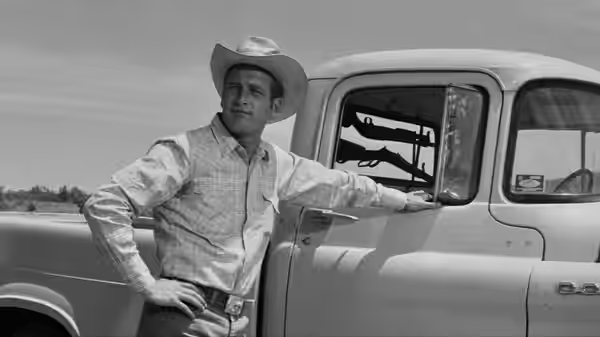
The trick, and Martin Ritt knows it is a trick, is that Newman is so easy to watch. He plays Hud slack and grinning, never raising his voice, and he makes selfishness look like the only sane response to a hot afternoon. We came out liking him more than the film wanted us to, and we were uneasy about it, because Irving Ravetch and Harriet Frank Jr. keep handing him lines that ought to have cured us. It is the best kind of star performance: the actor’s charm and the character’s rot in the same shot, and no signal to tell you which one to trust.
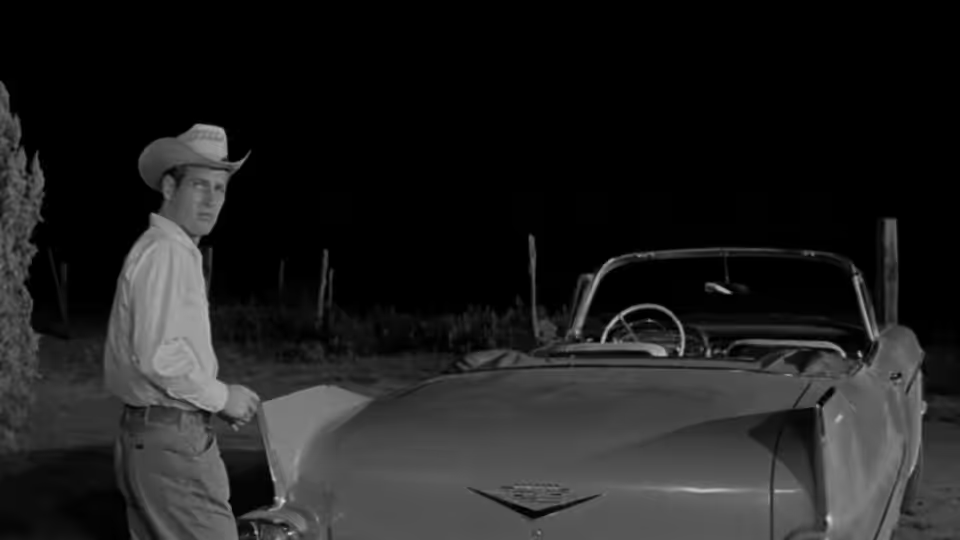
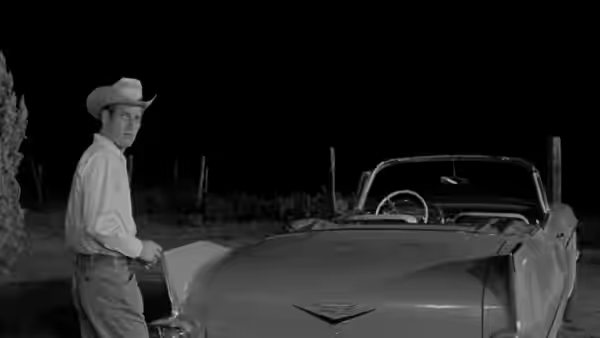
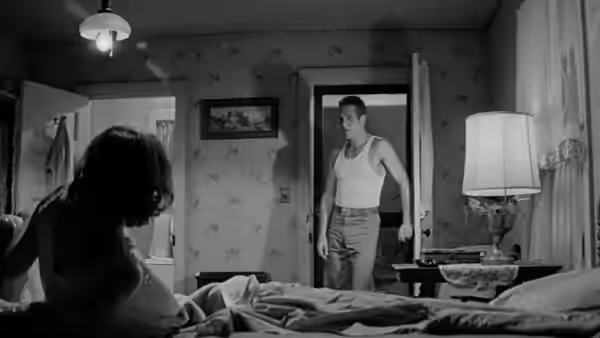
James Wong Howe shot it in black and white on a wide frame, and he puts the horizon low so that most of the picture is sky. The Bannon house sits on the flat like something that fell off a lorry. Indoors he lights from single sources, a lamp on a kitchen table, a bulb over a porch, so faces come out of the dark one at a time and the dark stays dark. Frank Bracht cuts slowly and lets conversations run to their end, which the script can bear. Elmer Bernstein’s score is a few bars of guitar and long stretches of nothing, and the nothing is right; the film’s sound is wind, screen doors and a car engine turning over at dawn.
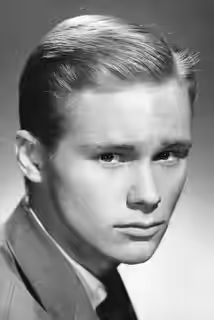
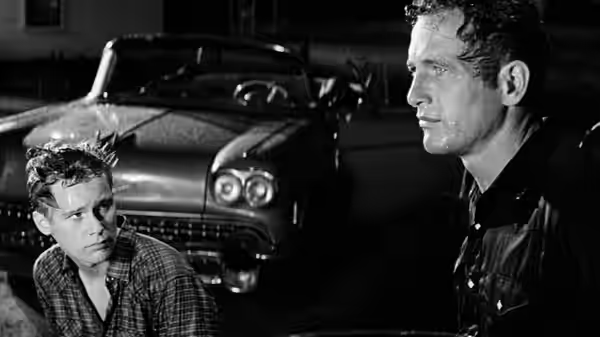
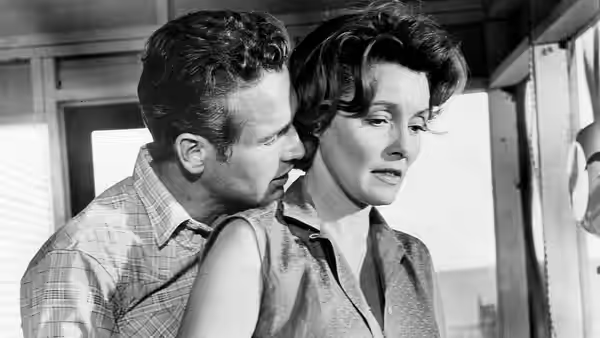
Neal is the reason to see it a second time. Alma has a low, dry voice and a way of answering Hud’s advances that neither invites them nor shuts the door, and the kitchen scenes between them are the best-written in the film. Edith Head puts her in plain cotton dresses and Newman in shirts a size too tight, and the costumes tell you the terms of the argument before anyone speaks. deWilde has the harder job, since Lonnie mostly watches, and he does it with his face: the boy admires his uncle and knows he should not, and you can see both at once.
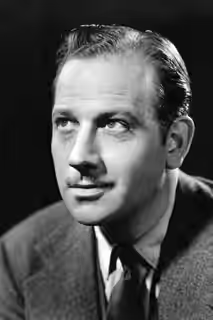
The weakness is Homer. Douglas plays him with great dignity, and the script rewards him by letting him make speeches, about the land, about the men a country chooses to admire, about the difference between what a man is and what he owns. Each speech is true and each one lowers the temperature, because Homer is never wrong, so he never has to fight for his side. The one hostile review we read complained that the film never clarifies its themes through the father and son. We think it clarifies them too much, and from the wrong side. Hud is also handed a late speech that states his philosophy in full, and we did not need it; Newman had shown us in the first ten minutes.
The second half takes turns we will not describe, except to say that one of them is the most upsetting thing in the film, that Howe shoots it without mercy, and that another changed how we felt about everything before it, which we take to be the point.
Ritt, Ravetch and Frank Jr. have made a western with a Cadillac in place of a horse, in which the range is fenced, the cattle may be diseased, and the handsome man in the tight shirt is the problem rather than the cure. At 112 minutes there is not a slack scene in it. Watch it and then ask yourself which Bannon you were on the side of. We are still not certain we gave the right answer.