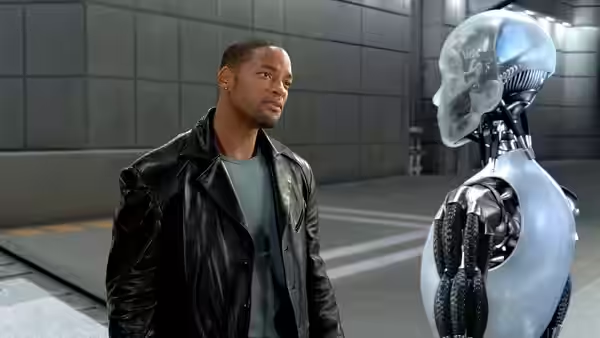
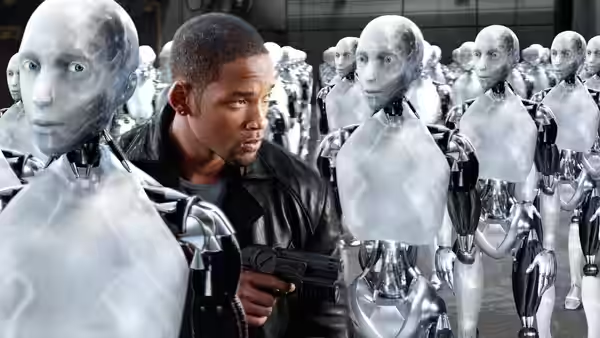
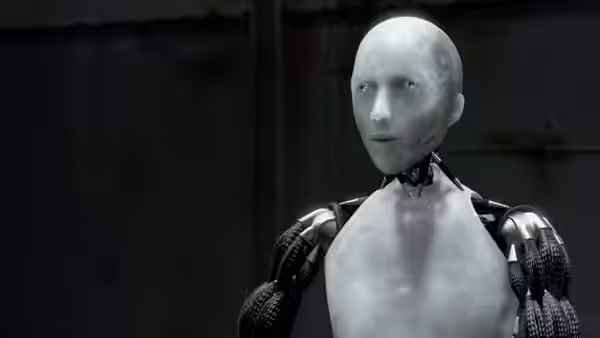
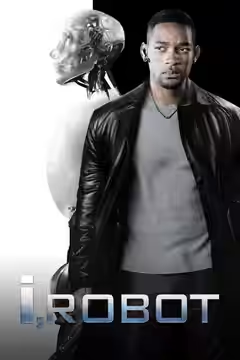
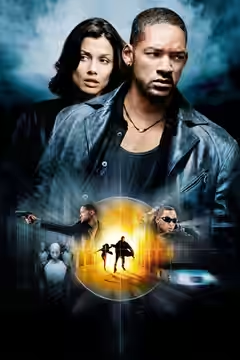
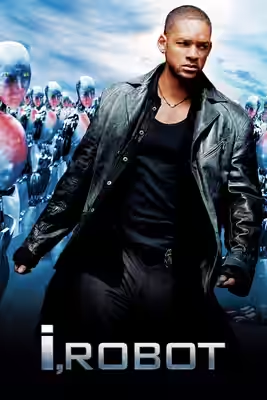
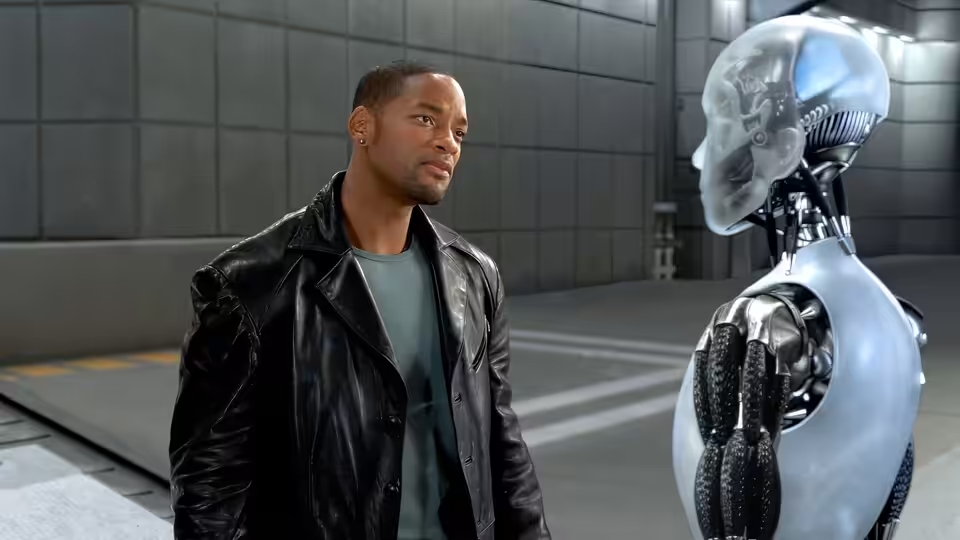
Del Spooner (Will Smith) faces a humanoid robot in a tiled industrial facility
Film review

I, Robot

2004 · Directed by Alex Proyas · 1h 55m

In a sentenceWe came round to the robot before the policeman

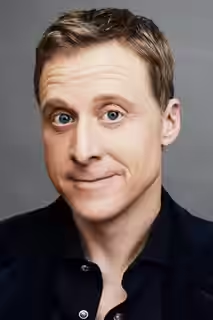
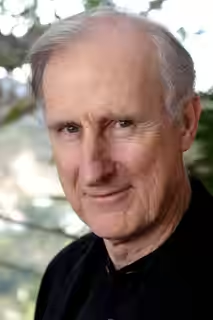
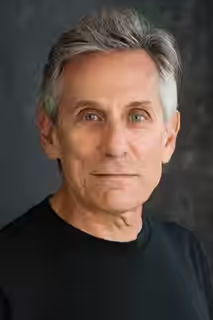
Policeman Del Spooner (Will Smith) inhabits a future populated by people and robots. The other figures in this action mystery include Susan Calvin (Bridget Moynahan), the robot Sonny (voiced by Alan Tudyk) and Dr. Alfred Lanning (James Cromwell). Lawrence Robertson (Bruce Greenwood) and Lt. John Bergin (Chi McBride) are among the humans, while NS4 and NS5 robots form part of the mechanical population. Police work and Spooner’s wisecracks accompany questions about technology and the feelings a machine might appear to possess.

Plays from YouTube when you press play; nothing loads from them until then.

Fi1m review

Alex Proyas’s robot thriller is decent action entertainment with more interesting machinery than writing. Alan Tudyk gives Sonny feeling; Will Smith’s wisecracks too often interrupt the questions the film might usefully ask.

Alex Proyas’s I, Robot is a decent action thriller, considerably more engaging when Sonny has our attention. The robot’s expressive personality makes the questions about mechanical intelligence worth considering, even when the screenplay seems impatient to get moving again. We recommend it for an evening of polished action with a modest amount to think about. Expect a searching piece of science fiction and the familiar police-film habits become harder to forgive.

Will Smith plays Del Spooner with enough confidence to make the wisecracking policeman routine work for a while. His humour gives the film pace, and he can suggest a seriousness beneath it without making an announcement. The problem is how often Jeff Vintar and Akiva Goldsman’s screenplay relies on that routine just when a question about robots has become interesting. The actor has the force to carry these changes, but the jokes make Spooner more familiar and less interesting than he needs to be.

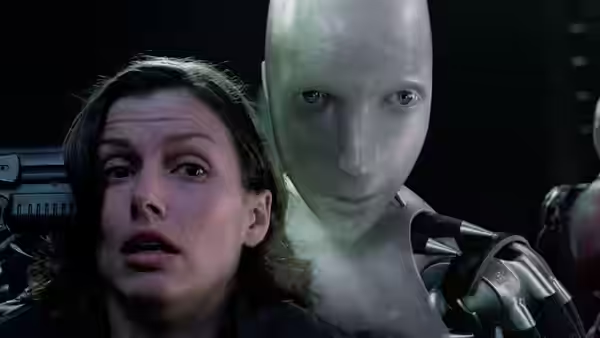
Alan Tudyk gives Sonny a more rewarding range of responses. We warmed to the robot more than we expected, because the performance makes his feelings intelligible without making his appearance any less unsettling. That combination gives us something to consider beyond the mechanics of the mystery: why should this particular machine command our sympathy? The character holds our attention because his expressiveness encourages us to look closely, a useful quality in a film that otherwise gives us plenty of reasons to hurry.

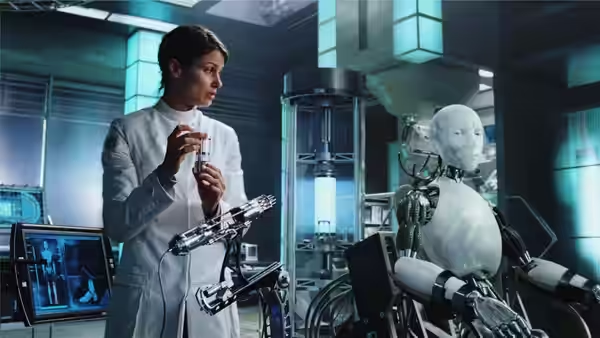
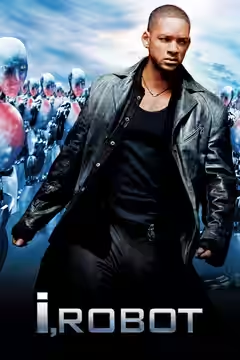
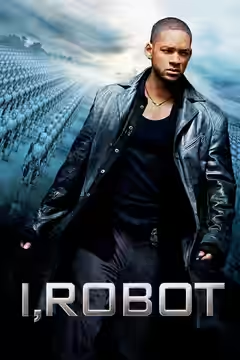
Patrick Tatopoulos’s production design supplies a coherent future, although its sleekness seldom feels surprising. Simon Duggan’s cinematography makes that polish readable, particularly when the robots are massed together and their repeated shapes become oppressive. Their uniformity makes Sonny’s distinctiveness more conspicuous, giving the film a simple visual way to encourage interest in an individual machine. The effects work is most persuasive here, when the appearance of the robots helps determine how we feel about them.

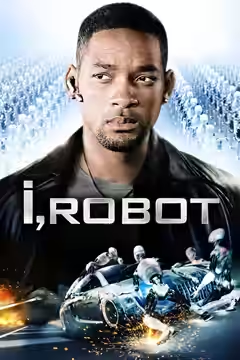
The action is accomplished, and the car chase gives the film a welcome stretch of straightforward excitement. Editors William Hoy, Armen Minasian and Richard Learoyd keep things moving, although the urgency leaves less space than Sonny deserves. Marco Beltrami’s music helps sustain the pressure without giving the film a particularly individual sound. None of this is clumsy, but there are stretches when the competent handling of movement becomes the main attraction and the questions raised by the robots can wait.

Within action science fiction, a policeman is a perfectly serviceable guide to difficult questions about technology. The trouble here is the dependence on familiar character types and turns of plot, which makes the film feel less curious than its subject warrants. The screenplay has enough intelligence to keep us engaged, but too many of its moves are predictable. Once the wisecracks and thriller conventions have settled into place, there is less scope for surprise than the robot performances initially suggest.

The care spent on the machines keeps the film watchable even when the writing becomes ordinary. At 115 minutes, it offers enough movement and personality to make its shortcomings tolerable, though they remain noticeable. Sonny rewards the attention in a way that the more familiar business around him does not always manage. We would choose it for an undemanding evening, with no great hopes of carrying on the debate afterwards.

Critical consensus AI synthesised

60
Positive
6
Mixed
5
Negative
3

The reviews lean towards qualified approval, with praise clustering around the effects, robot design and performances rather than the script. Alan Tudyk’s expressive Sonny earns particular appreciation, while several critics find Will Smith’s charisma and humour effective alongside the action. Supporters describe an entertaining, polished thriller with enough ideas about technology to give its familiar action-mystery formula some substance. Even several less enthusiastic reviews acknowledge the technical accomplishment of the spectacle.

The spread is wide, however, and critics disagree over how much intelligence survives the blockbuster machinery. Reservations centre on derivative plotting, clichés and ideas that receive too little development. Smith also divides opinion: The AV Club argues that his wisecracking-cop performance overwhelms the more thought-provoking material. Variety offers the strongest dissent, finding the future world bland and unimaginative and the accomplished effects dramatically indifferent, where warmer reviews find an engaging setting and satisfying entertainment.

Radio Times
★★★★ · Tom Hutchinson
80

Hutchinson presents the film as a successful blockbuster. He singles out Will Smith’s charismatic performance for praise.

Read the full review →
Total Film
6 August 2004 · ★★★★ · Total Film
80

The review finds it a compelling, intelligent summer blockbuster that delivers on spectacle. It praises Alan Tudyk’s emotionally expressive performance as Sonny and the film’s vivid future-world.

Read the full review →
RogerEbert.com
16 July 2004 · ★★★/4 · Roger Ebert
75

The URL identifies Ebert’s review, but the page’s verdict and specific praise are unavailable because browser verification blocks the article. I can’t reliably summarize those details from the page shown.

Read the full review →
Empire
1 January 2000 · Kim Newman
70*

Newman finds the film an entertaining, if assembled and uneven, blockbuster with a brain as well as muscles. He particularly praises Sonny’s expressive, distinctive characterization and the impressive effects.

Read the full review →
Los Angeles Times
16 December 2004 · Susan King
65*

King considers it a decent enough thriller, with Smith’s performance singled out for mixing trademark wisecracks with dramatic depth. She also notes that the DVD extras are skimpy.

Read the full review →
Screen Daily
16 July 2004 · Andy Bailey
64*

The article text is inaccessible, so the critic’s verdict cannot be determined. No praise or complaint is visible in the available page text.

Read the full review →

Straight answers AI written, from our review

Is I, Robot worth watching?
I, Robot is worth watching for an undemanding evening of polished science-fiction action, and we score it 66/100. Sonny’s expressive personality gives us more to care about than the familiar police routine, but the wisecracks and predictable plotting limit how far the film explores its questions about machines.
How long is I, Robot, and what is it rated?
I, Robot runs 1h 55m. It is an action and science fiction film.
Where can I watch I, Robot in South Africa?
I, Robot is available to rent from Apple TV from R34.99. Availability is checked daily; the links above go straight to each service.
How violent or frightening is I, Robot, and is it suitable for children?
I, Robot has a UK 12A certificate, and its action and unsettling robots make it a more cautious choice for younger children than for teenagers. The car chase supplies excitement, while massed robots look oppressive and Sonny’s appearance can be unnerving; we would not treat it as gentle family science fiction.
How does I, Robot compare to RoboCop?
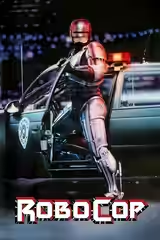
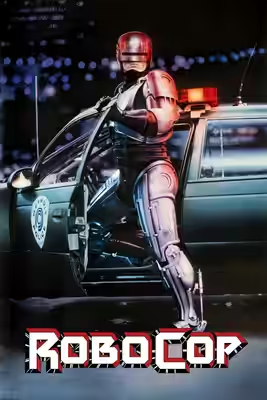
I, Robot is the more undemanding action choice, but we recommend RoboCop as the sharper, funnier and more affecting film. Both bring police work and machinery together, though RoboCop is harsher about corporate power and carries a serious violence warning; I, Robot settles more readily for wisecracks and polished chases.
Is I, Robot based on a true story or a book?
I, Robot is based on fiction by Isaac Asimov, rather than a true story. We find it approachable as a police-led action mystery without prior knowledge of his writing, with Sonny’s apparent feelings providing the main reason to think beyond the chases.
What should I watch after I, Robot?
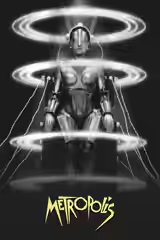
After I, Robot, try RoboCop (1987, Fi1m 91): A harsher, funnier collision of police work, machinery and corporate power. Then Ghost in the Shell (1995, Fi1m 83): Artificial intelligence gets a more searching treatment, with action still firmly attached; and Metropolis (1927, Fi1m 87): A city of machines makes its divisions impossible to ignore.

Cast

Awards

Academy Awards, 2005

Nominated
Best Visual Effects

If you liked this, try…

  1. RoboCop (1987, Fi1m 91)A harsher, funnier collision of police work, machinery and corporate power.

  2. Ghost in the Shell (1995, Fi1m 83)Artificial intelligence gets a more searching treatment, with action still firmly attached.

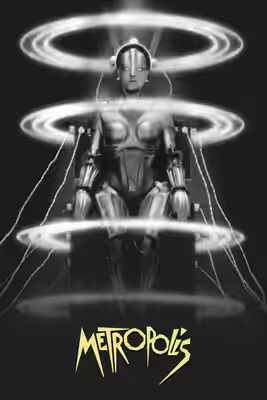
  3. Metropolis (1927, Fi1m 87)A city of machines makes its divisions impossible to ignore.

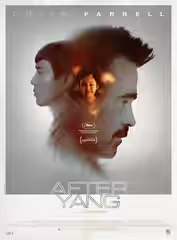
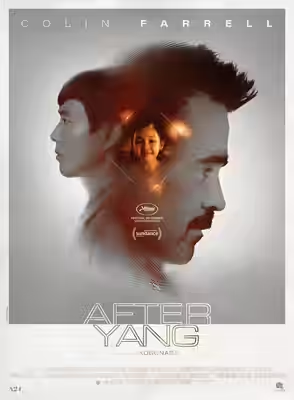
  4. After Yang (2021) · not reviewed yetAn intimate look at how a household comes to love a machine.

  5. The Iron Giant (1999, Fi1m 88)Another expressive robot makes human fear look foolish without making affection easy.

Free account

Know what to watch tonight

Two lists that know where things are streaming, collections you can share, your own score beside ours, and Discover that remembers what you have seen.

  • Want to see, sorted by what is streaming now
  • Seen, with your score out of ten
  • No adverts, ever