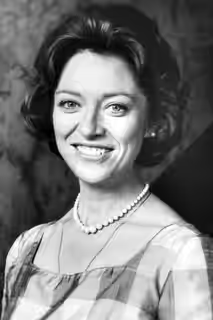
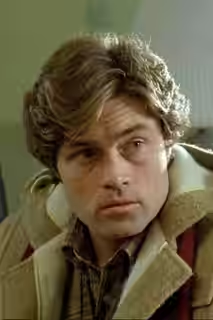
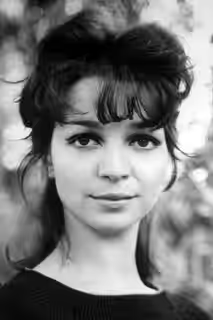
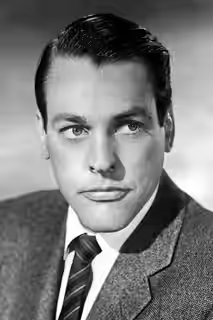
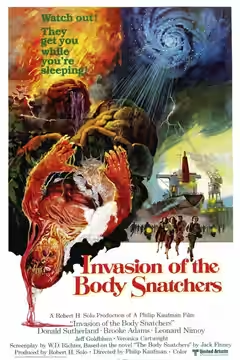
Philip Kaufman moves the pod people from a small town to late-seventies San Francisco, where nobody notices a neighbour changing because everybody is already paying to change. It is one of the few remakes that improves on its original, and it frightened us badly.
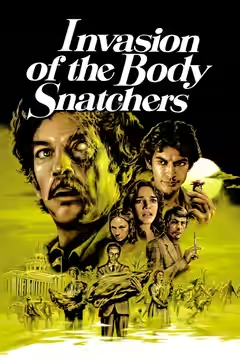
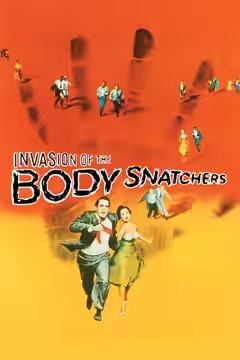
Philip Kaufman’s film is a remake of Don Siegel’s 1956 Invasion of the Body Snatchers, and it keeps the plot of Jack Finney’s novel: pods from space grow copies of sleeping people, the copies wake without feeling, and the few who notice cannot get anyone to believe them. What Kaufman and his screenwriter W.D. Richter change is the address. Siegel’s story happened in a small town. This one happens in San Francisco in the late seventies, a city full of people paying to be told they have changed, so nobody looks twice when a neighbour does. It is a better film than the original, and we did not sleep well after it.
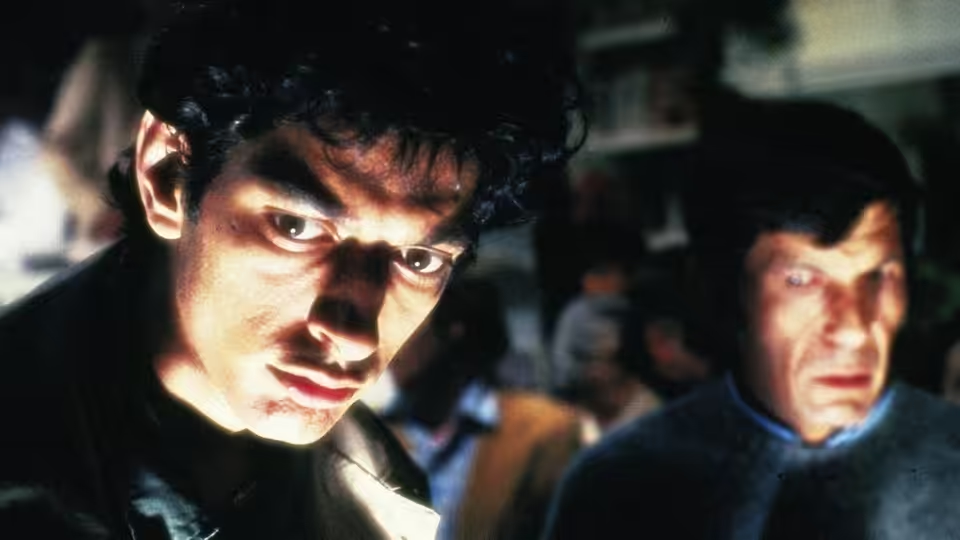
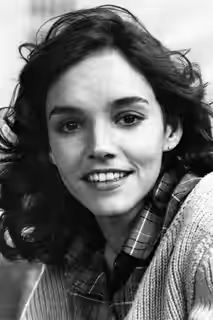
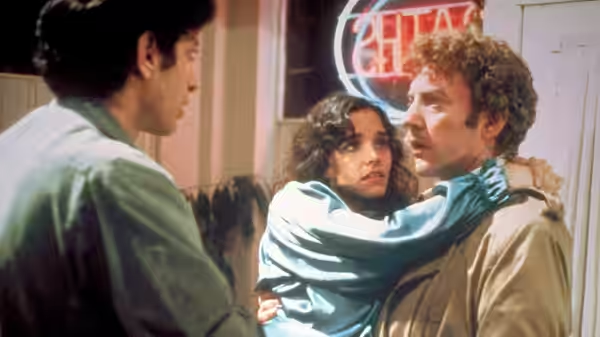
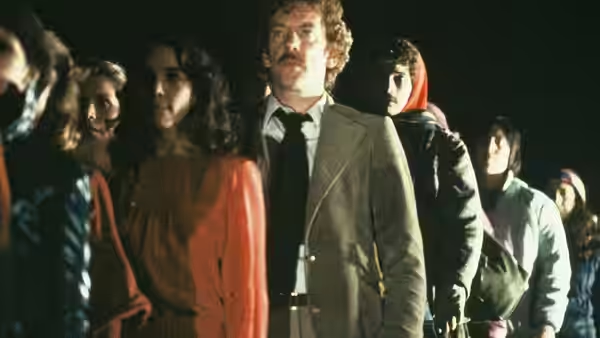
The first hour has no monster in it. Michael Chapman, who shot Taxi Driver two years earlier, films the city at street level, and Kaufman fills the back of the frame with small wrongnesses: a priest on a children’s swing, a schoolteacher gathering flowers with her class, a crowd on a corner that has stopped moving. Elizabeth watches Dr. Geoffrey Howell hand a parcel to strangers without a word, and Brooke Adams plays it as the ordinary hurt of a woman whose partner has gone off her overnight. We were more frightened by Art Hindle sitting downstairs before dawn, dressed and shaved, staring at a television, than by anything the film does later with fibre and foam. He is only sitting there.
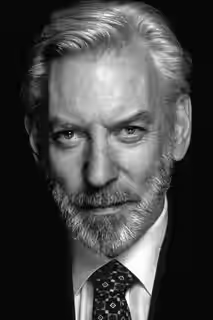
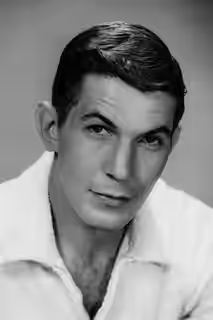
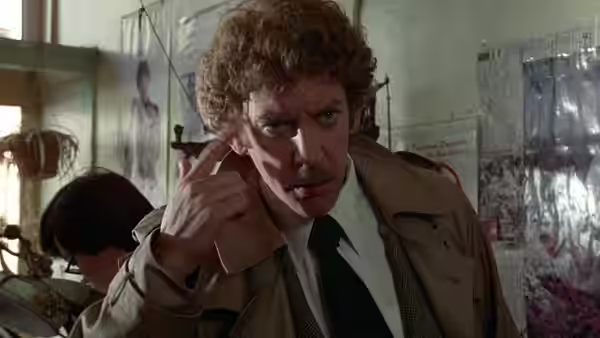
Donald Sutherland’s Matthew is a health inspector, introduced fishing a rat dropping out of a restaurant sauce while the chef insists it is a caper. Aggie Guerard Rodgers puts him in a long leather coat, and Sutherland gives him a perm and a slow, reasonable manner; the character’s trouble is that he stays reasonable for too long. Leonard Nimoy’s Dr. David Kibner is the pop psychiatrist whose book everyone at the party is holding, and Nimoy plays him as a man with an explanation for everything and a hand on your shoulder while he gives it. He tells Elizabeth that people invent conspiracies because they cannot admit a relationship is over. In this city that passes for wisdom.
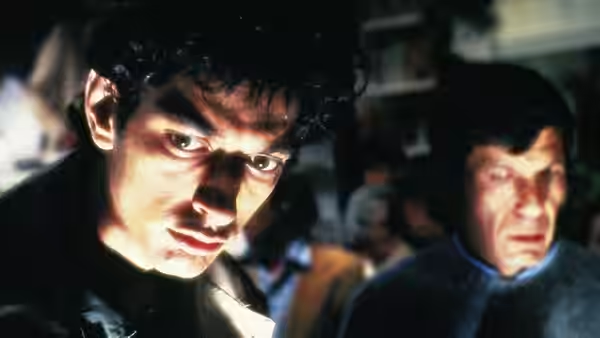
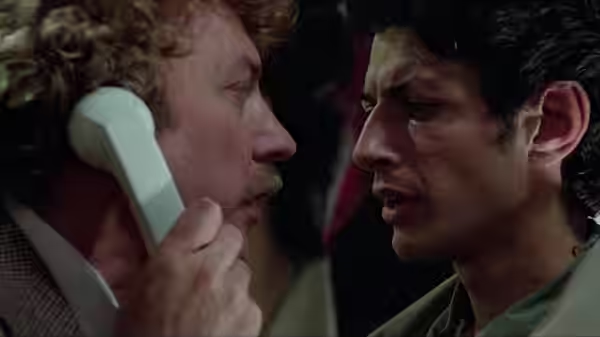
Jeff Goldblum’s Jack Bellicec is a writer nobody reads, twitching with grievance at a party for a man everybody reads, and Veronica Cartwright’s Nancy Bellicec, who runs their mud-bath spa with him, believes first and is believed least. Cartwright is the best thing in the film. When she finds the grey, unfinished body on a table in the spa she does not scream; she talks, fast, and keeps talking, and Kaufman holds on her until the chatter is the fear.
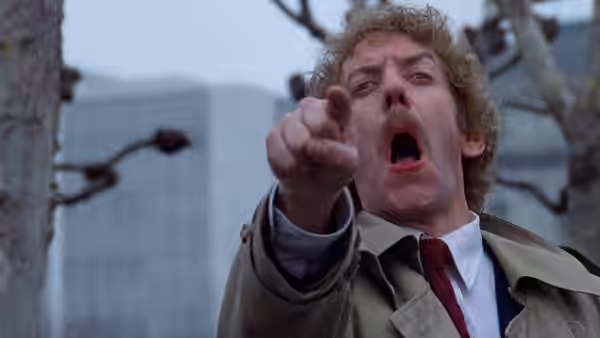
Charles Rosen’s production design and Chapman’s lighting make the city a place of stairwells and back alleys, shot from low down and often at a tilt, with faces half in shadow. It is showy, and now and then we noticed the angle before we noticed the scene. Denny Zeitlin’s score sets a small piano theme against low brass and electronic groans, and the sound department gives the pod people a signal: when they spot one of the unchanged they point and let out a raw, open-mouthed shriek. The film also keeps showing refuse lorries at dawn loaded with grey dust, and you work out what the dust is before the characters do.
The pods themselves are wet, practical work, fibres reaching for skin and pink froth peeling back, and Kaufman shows them in daylight in a garden so there is nothing to hide behind. Douglas Stewart’s editing carries the second half through a run of pursuits across the city, and this is the one stretch that resembles other films: people run, hide, are found. At 116 minutes it is longer than Siegel’s version and does not feel it.
Kaufman is open about the debt. Kevin McCarthy, the lead of the 1956 film, throws himself across a windscreen shouting that they are coming, and Siegel himself drives a taxi. It is a fond touch and it quietly makes this a sequel: the man who ran out of the last film has been running ever since. The ending, which we will not describe, is the best-known thing about the film, and the reason to read nothing else before you watch it.
Watch it in the dark with the sound up, and keep an eye on the extras. The film teaches you to look at strangers the way Elizabeth learns to, and it takes about a day to wear off.