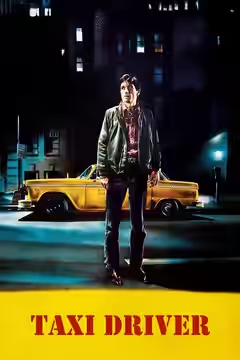
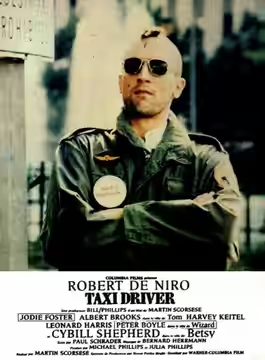
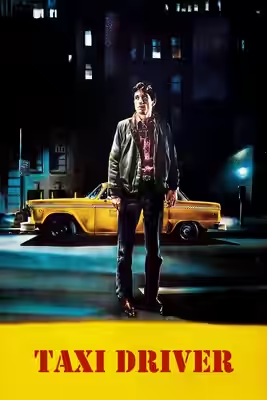
Martin Scorsese’s crime drama makes a lonely man’s company frightening through Robert De Niro’s restraint and Bernard Herrmann’s music. We recommend it strongly, with one reservation: its attention to Travis leaves too little room for everyone else.
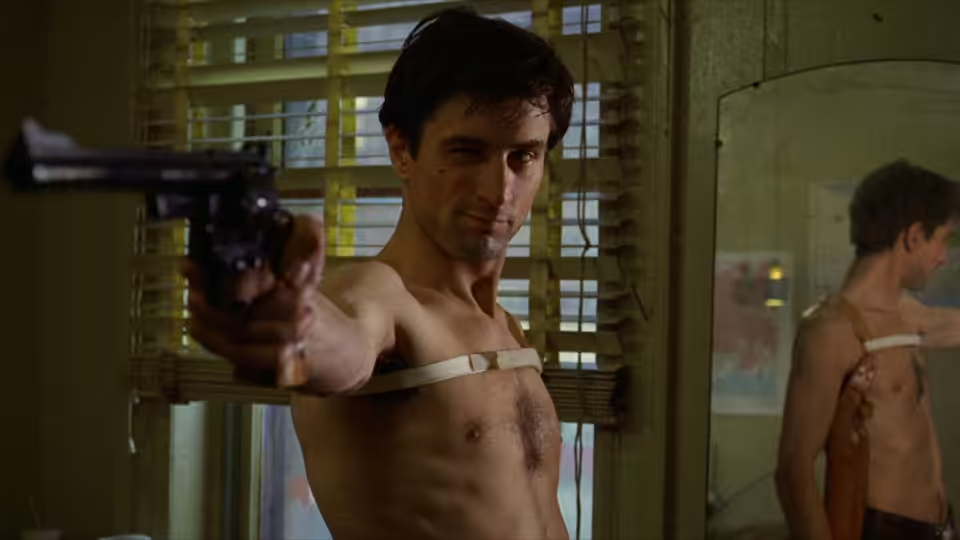
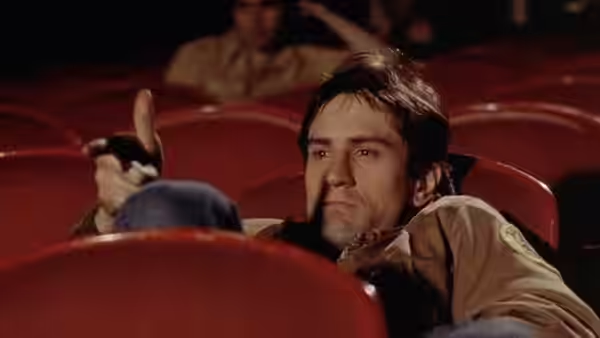
Taxi Driver is a frightening film about loneliness, and we would recommend it even to someone with little interest in crime drama. Martin Scorsese and writer Paul Schrader stay so close to Travis Bickle that his view of other people begins to crowd out our own. The film asks us to spend time with him before we have decided how much we trust him. Robert De Niro plays Travis with a reserve that makes those 114 minutes uncomfortable.
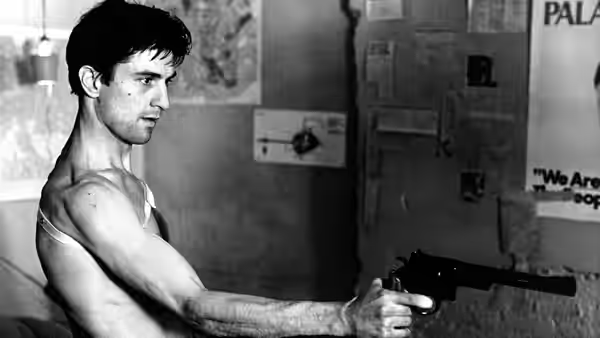
De Niro’s guarded manner keeps us watching for something that might explain Travis. We felt frightened by how little he needed to do. His restraint, set against Bernard Herrmann’s ominous music, makes the quietness itself troubling. There is no reassuring sense that we have been allowed to see everything important about this man. Scorsese lets that uncertainty persist without supplying explanations.
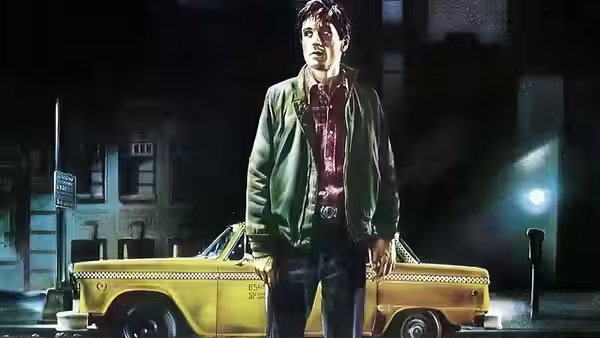
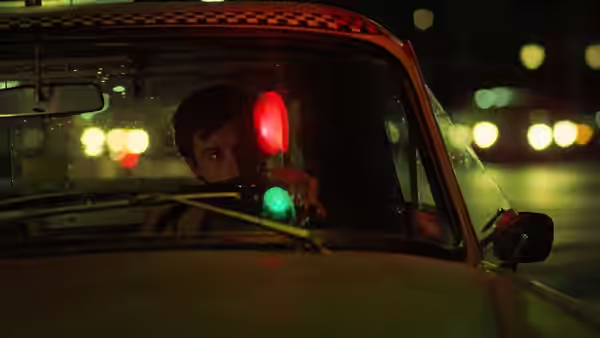
Michael Chapman’s cinematography gives New York the credibility of a place observed in available light. Yet the camera is so closely attached to Travis’s way of seeing that the streets never feel like neutral evidence about the city. We are being asked to look where he looks, with all the limitations that brings. Chapman makes the setting persuasive enough for this to be unsettling: we have to keep reminding ourselves that Travis’s judgement is not reliable.
Schrader’s dark humour matters because a film this intent on one troubled man could become solemn and repetitive. The jokes briefly interrupt the dread, then leave us with the same difficult man. Editors Tom Rolf and Melvin Shapiro sustain the concentration on him; we rarely get the relief of feeling that someone else has taken charge of our attention. Herrmann’s music follows the shifts in Travis’s mood, and its more open expressiveness gives us something to listen for beneath De Niro’s reserve.
Our reservation is how little room this leaves for anyone else. Cybill Shepherd’s Betsy and Jodie Foster’s Iris have to compete with a central performance that keeps pulling us back, and we wanted more time to consider them separately from Travis. Both are welcome presences because they make us curious about someone other than him. Scorsese’s determination to keep Travis at the centre sometimes prevents that curiosity from going anywhere.
The crime-film question of who deserves our loyalty becomes difficult here. De Niro holds our attention so completely that we can find ourselves feeling sorry for Travis before asking whether we trust him. Schrader and Scorsese make us examine that response, rather than treating loneliness as sufficient grounds to excuse a man. We can understand the wish to be somebody and still be alarmed by the person asking us to recognise him.
It carries an 18 certificate, and we would take its capacity to disturb seriously. This is a film to watch when there is time afterwards to talk, not something to put on for company while doing something else. We recommend it without promising an agreeable evening.