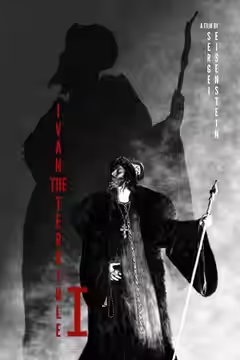
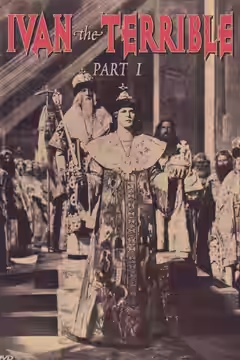
Sergei Eisenstein’s historical drama is worth seeing for its forceful images and Nikolay Cherkasov’s severe performance. Its formal style can keep the people remote, but there is enough visual invention to reward the effort.
We recommend Ivan the Terrible, Part I, with a warning that its people are not easy company. Sergei Eisenstein makes a historical drama whose highly formal presentation demands close attention. That can sound like an evening of homework, but the force of the images is considerable. The attraction is watching a director commit so completely to an imposing style, even when we wish he would allow the performances a little more room.
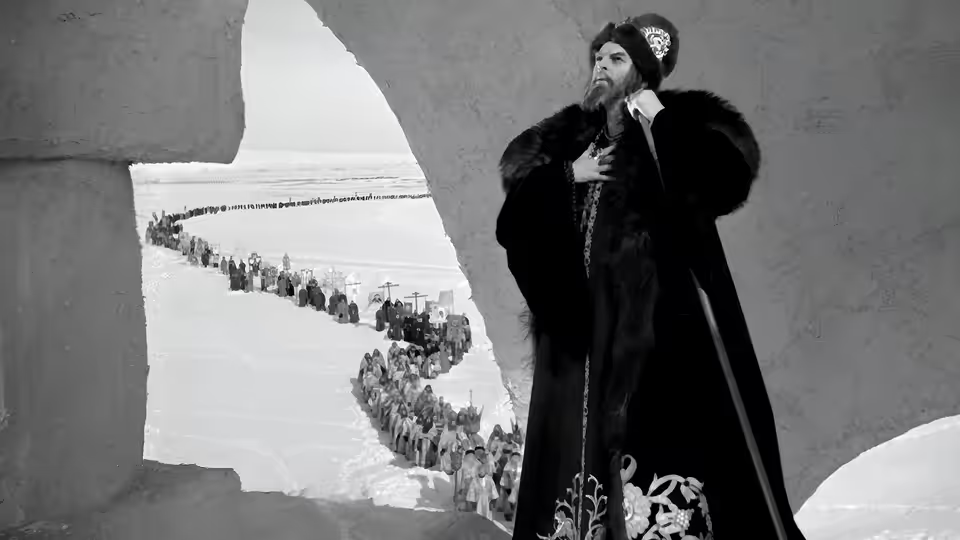
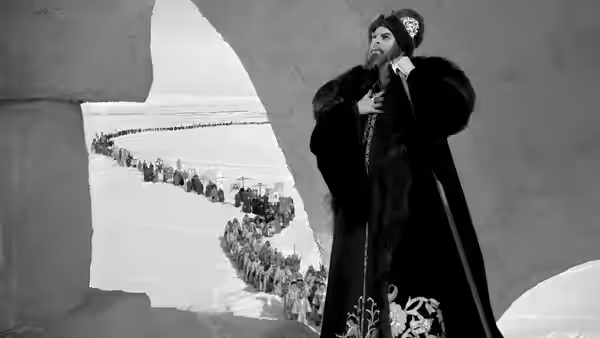
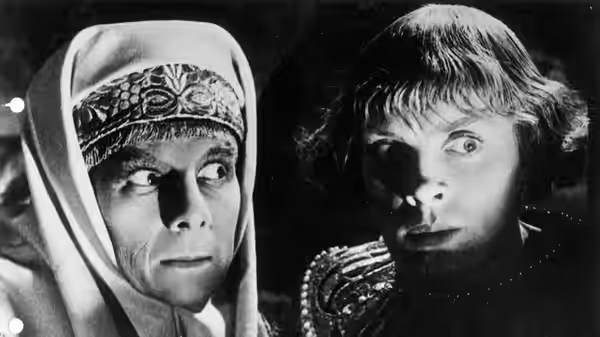
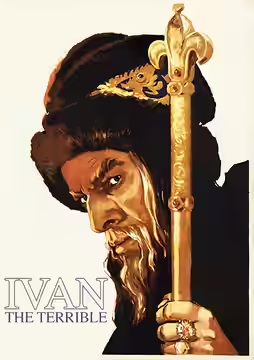
At the centre, Nikolay Cherkasov gives Czar Ivan IV the physical authority the film needs. His performance feels conceived for this precise way of arranging and photographing people; a more casual actor would seem to have wandered into the wrong production. We found him unsettling. The stiffness of his bearing makes Ivan difficult to approach even when he has our full attention, and the performance makes that distance feel appropriate to his royal position.
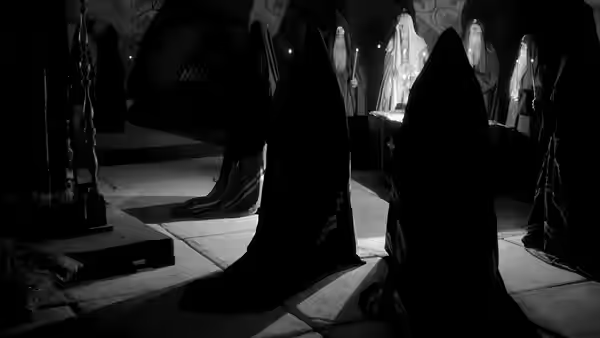
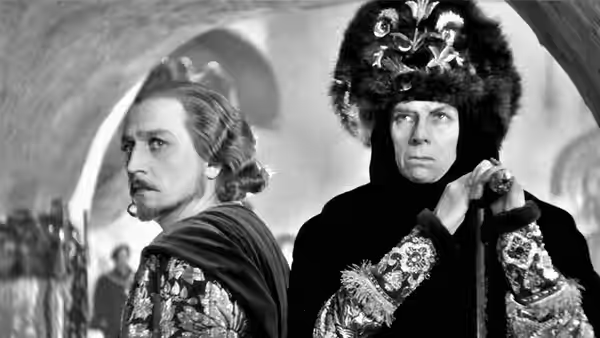
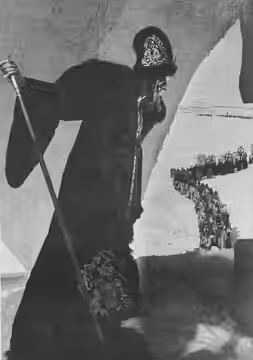
Andrey Moskvin and Eduard Tisse’s cinematography rewards close attention to the arrangement of figures within the frame. Faces matter, but so does the space allotted to them, and the emphatic composition makes looking at people an unusually tense business. We cannot simply settle into the scene and wait for the next line. The images keep directing our attention towards the way people occupy space together, giving even formal encounters a force that the dialogue alone could not supply.
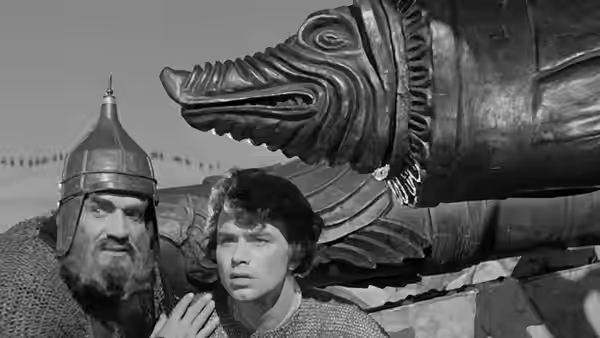
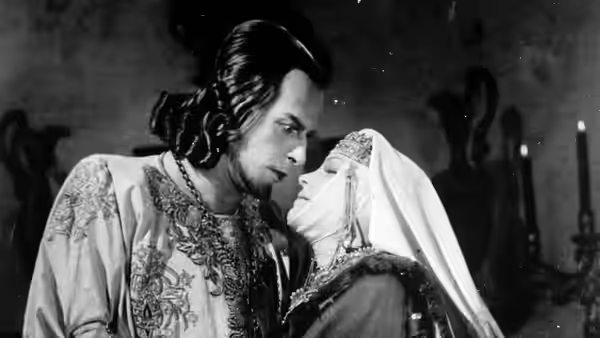
Iosif Shpinel’s production design gives the actors surroundings that make their formality feel deliberate. The settings have enough presence to compete with the people, which is useful in a film about a court. Leonid Naumov and Nadezhda Buzina’s costume design also helps establish figures who seem inseparable from their rank. The combined effect is persuasive, although we sometimes wanted a face or a movement that did not appear quite so carefully prepared.
Sergei Prokofiev’s music adds weight to a film that already carries plenty. We like its willingness to be forceful; a discreet accompaniment would feel oddly apologetic beside these images. It also helps us accept the performances on their own deliberately heightened terms. Yet the accumulated emphasis can become tiring, and a little less insistence would occasionally let an image work harder on its own.
Sergei Eisenstein also edits, and his patience with the images is mostly justified. At 95 minutes, the film has room to establish its manner without asking for a vast commitment of time. Some passages nevertheless feel held at the same pitch for too long. The slow patches come when the film seems to have made its point and continues to press it, leaving us waiting for a change in rhythm.
As historical drama, this offers little of the conversational ease that can make a remote court feel familiar. That is a fair choice, and we would not ask for a modern-sounding guide to explain everyone. The cost is that we sometimes stop caring what the people want, particularly when the staging becomes more compelling than the performance within it. Give it an uninterrupted sitting, with the lights down and the telephone elsewhere.