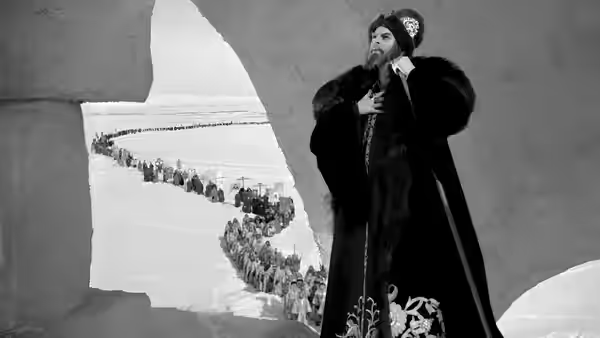
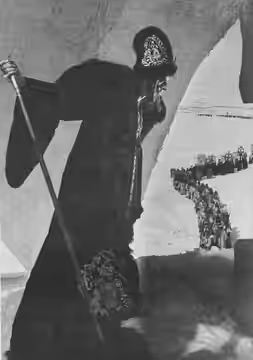
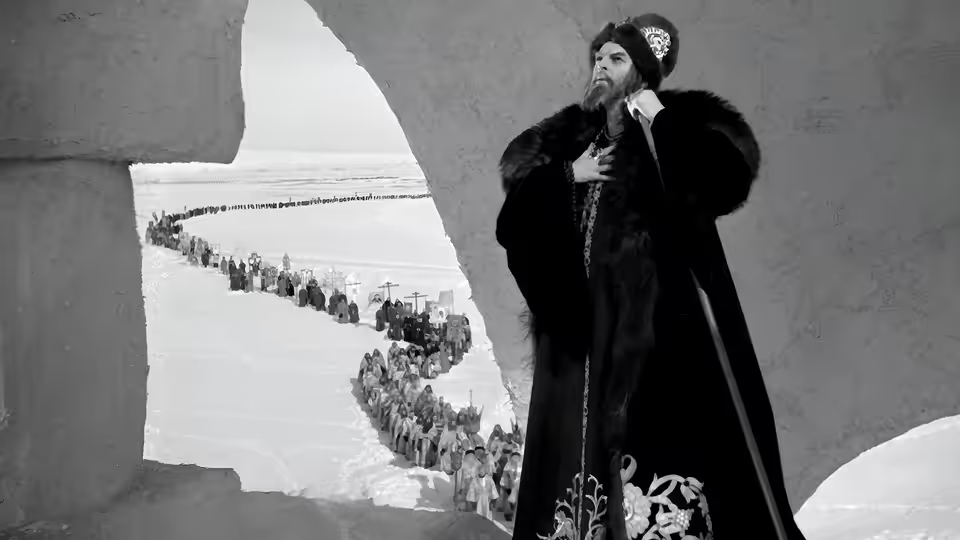
Ivan stands by a window overlooking a procession winding through the snowy landscape
Film review

Ivan the Terrible, Part I

1944 · Directed by Sergei Eisenstein · 1h 35m

In a sentenceNobody at this court looks capable of having a quiet word

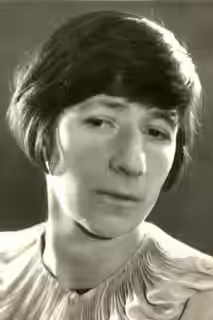
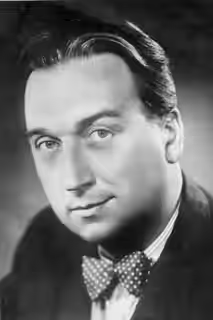
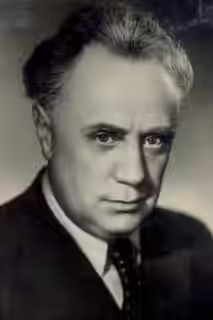
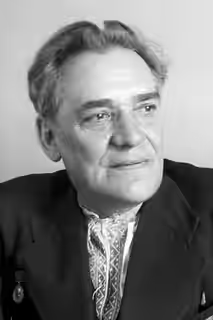
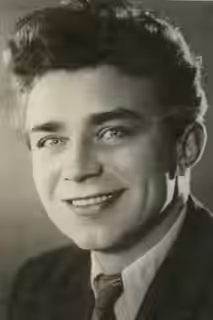
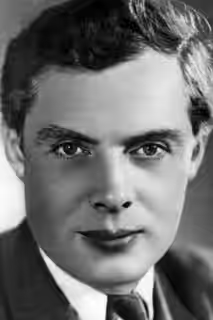
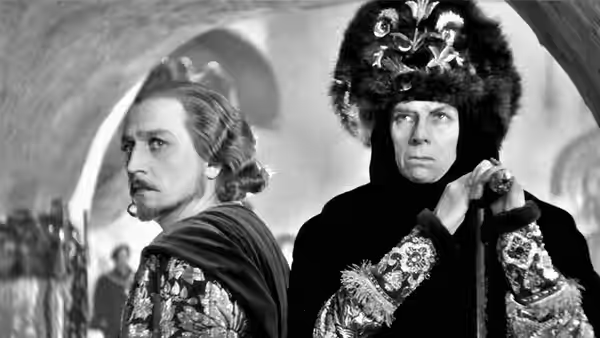
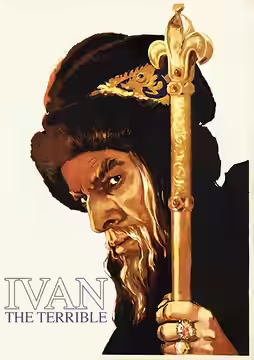
Czar Ivan IV (Nikolay Cherkasov) occupies the centre of a royal court, with Czarina Anastasia Romanovna (Lyudmila Tselikovskaya) beside him. Boyarina Efrosinia Staritskaya (Serafima Birman) and Prince Andrei Kurbsky (Mikhail Nazvanov) are among the aristocratic figures around the ruler. His attendants include Czar’s Guard Malyuta Skuratov (Mikhail Zharov) and Czar’s Guard Aleksei Basmanov (Amvrosii Buchma). Novgorod’s Archbishop Pimen (Alexander Mgebrov) brings the church into this gathering of royalty, nobility and men in the czar’s service, the principal figures of Sergei Eisenstein’s historical drama.

Fi1m review

Sergei Eisenstein’s historical drama is worth seeing for its forceful images and Nikolay Cherkasov’s severe performance. Its formal style can keep the people remote, but there is enough visual invention to reward the effort.

We recommend Ivan the Terrible, Part I, with a warning that its people are not easy company. Sergei Eisenstein makes a historical drama whose highly formal presentation demands close attention. That can sound like an evening of homework, but the force of the images is considerable. The attraction is watching a director commit so completely to an imposing style, even when we wish he would allow the performances a little more room.

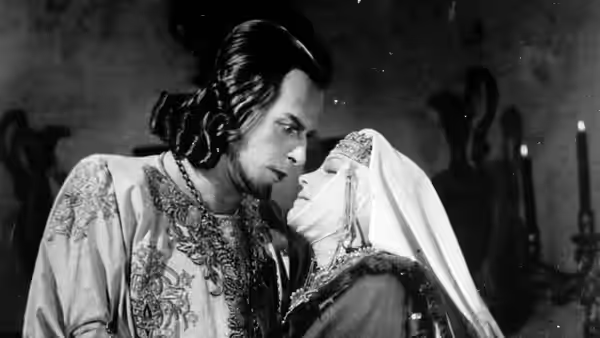
At the centre, Nikolay Cherkasov gives Czar Ivan IV the physical authority the film needs. His performance feels conceived for this precise way of arranging and photographing people; a more casual actor would seem to have wandered into the wrong production. We found him unsettling. The stiffness of his bearing makes Ivan difficult to approach even when he has our full attention, and the performance makes that distance feel appropriate to his royal position.

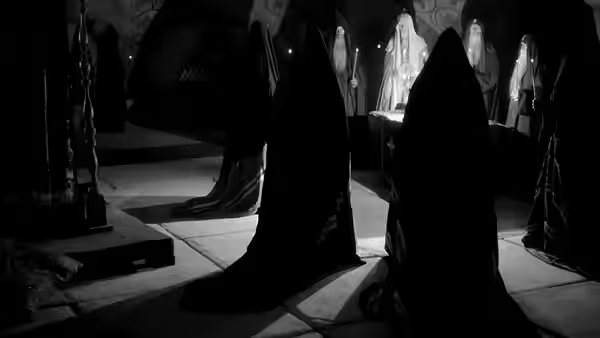
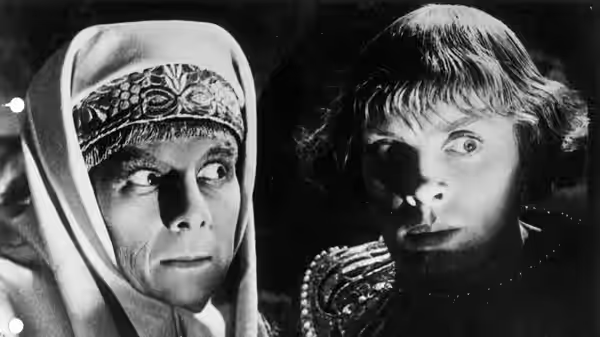
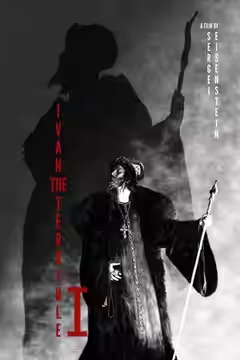
Andrey Moskvin and Eduard Tisse’s cinematography rewards close attention to the arrangement of figures within the frame. Faces matter, but so does the space allotted to them, and the emphatic composition makes looking at people an unusually tense business. We cannot simply settle into the scene and wait for the next line. The images keep directing our attention towards the way people occupy space together, giving even formal encounters a force that the dialogue alone could not supply.

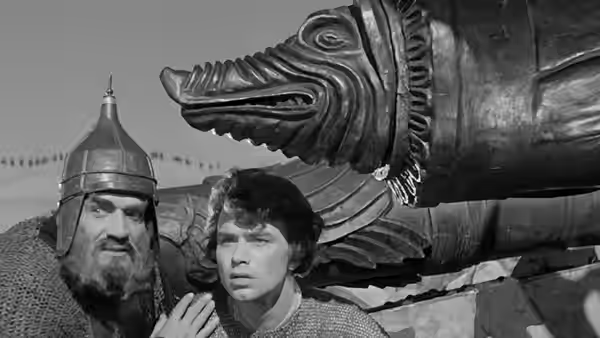
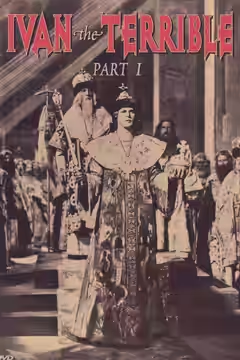
Iosif Shpinel’s production design gives the actors surroundings that make their formality feel deliberate. The settings have enough presence to compete with the people, which is useful in a film about a court. Leonid Naumov and Nadezhda Buzina’s costume design also helps establish figures who seem inseparable from their rank. The combined effect is persuasive, although we sometimes wanted a face or a movement that did not appear quite so carefully prepared.

Sergei Prokofiev’s music adds weight to a film that already carries plenty. We like its willingness to be forceful; a discreet accompaniment would feel oddly apologetic beside these images. It also helps us accept the performances on their own deliberately heightened terms. Yet the accumulated emphasis can become tiring, and a little less insistence would occasionally let an image work harder on its own.

Sergei Eisenstein also edits, and his patience with the images is mostly justified. At 95 minutes, the film has room to establish its manner without asking for a vast commitment of time. Some passages nevertheless feel held at the same pitch for too long. The slow patches come when the film seems to have made its point and continues to press it, leaving us waiting for a change in rhythm.

As historical drama, this offers little of the conversational ease that can make a remote court feel familiar. That is a fair choice, and we would not ask for a modern-sounding guide to explain everyone. The cost is that we sometimes stop caring what the people want, particularly when the staging becomes more compelling than the performance within it. Give it an uninterrupted sitting, with the lights down and the telephone elsewhere.
Critical consensus AI synthesised

3 of 6
Positive
3
Mixed
0
Negative
0
Empire
6 April 2006 · David Parkinson
90*

The critic calls the film a bold, exciting experiment and a must-see. He praises its striking visual style and expressive mise-en-scène.

Read the full review →
Time Out
· RM
75*

The review calls it probably the most enjoyable of Eisenstein’s films. It points to the historical subject as a notable part of its appeal.

Read the full review →
RogerEbert.com
72*

The URL identifies a Great Movies review of Ivan the Terrible, Parts I and II. The page is blocked, so its verdict and specific praise or criticism cannot be verified.

Read the full review →

Straight answers AI written, from our review

Is Ivan the Terrible, Part I worth watching?
Ivan the Terrible, Part I is worth watching for its forceful images and Nikolay Cherkasov’s unsettling performance; we score it 80 out of 100. We recommend it to viewers who enjoy highly formal historical drama, with the caveat that its imposing compositions and emphatic music can become tiring, while the people remain emotionally remote.
How long is Ivan the Terrible, Part I, and what is it rated?
Ivan the Terrible, Part I runs 1h 35m. It is a drama and history film.
Where can I watch Ivan the Terrible, Part I in Thailand?
Ivan the Terrible, Part I is not on any streaming or rental service in Thailand at the moment. It is available in 5 other countries; change your country at the top of the page to see where. Availability is checked daily.
How does Ivan the Terrible, Part I compare to The Passion of Joan of Arc?
Ivan the Terrible, Part I is more emotionally remote than The Passion of Joan of Arc, which we recommend more strongly for making religious authority feel painfully immediate. Both use precise images to put faces under scrutiny, but Eisenstein’s carefully arranged court suits viewers drawn to formal staging, while Dreyer’s exhausting close-ups offer a more direct encounter with human fear.
What should I watch after Ivan the Terrible, Part I?
After Ivan the Terrible, Part I, try The Passion of Joan of Arc (1928, Fi1m 94): Faces under scrutiny and religious authority made frightening through precise, concentrated images. Then The Death of Stalin (2017, Fi1m 83): A comic route into the fear of standing too near unchecked power.

Cast

If you liked this, try…

  1. The Passion of Joan of Arc (1928, Fi1m 94)Faces under scrutiny and religious authority made frightening through precise, concentrated images.

  2. The Scarlet Empress (1934) · not on Fi1m yetAnother royal court where elaborate settings make private lives feel tightly controlled.

  3. Throne of Blood (1957) · not on Fi1m yetFor another severe portrait of authority, with stylised performances and little comfort.

  4. The Colour of Pomegranates (1969) · not on Fi1m yetRitual, costume and composition carry the drama more forcefully than ordinary conversation.

  5. The Death of Stalin (2017, Fi1m 83)A comic route into the fear of standing too near unchecked power.