Sergei Eisenstein’s court drama rewards patience with its colour banquet and Sergei Prokofiev’s score. Stiff performances and heavy pacing make this a qualified recommendation for those more interested in how films are made than in an absorbing story.
Ivan the Terrible, Part II: The Boyars’ Plot is an exacting 82 minutes, worth the effort chiefly for those already interested in historical cinema. Sergei Eisenstein gives the material an oppressive seriousness that can be compelling, although it too often becomes a demand for reverence. We wanted more freedom to consider these people without being continually impressed by their importance. The colour banquet and Sergei Prokofiev’s music provide persuasive reasons to persevere through some difficult stretches.
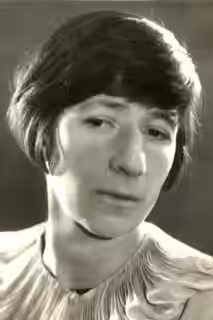
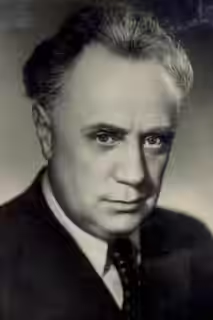
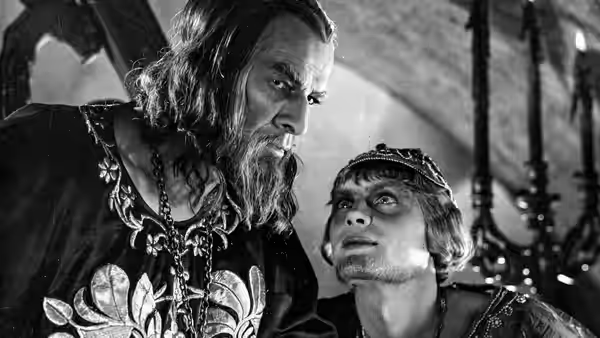
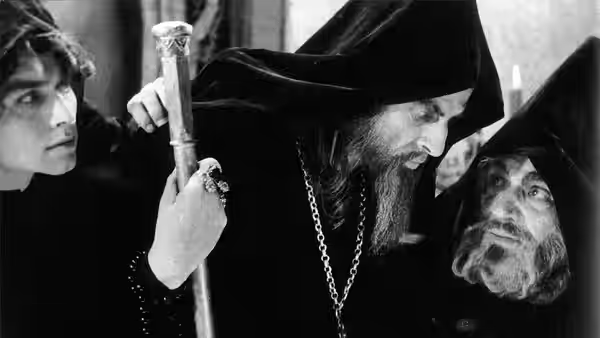
Nikolay Cherkasov gives Czar Ivan IV sufficient force to hold our attention, but the severity of the performance keeps us at a distance. There is something rewarding about having to study a face rather than simply accept its appeal. Serafima Birman, as Boyarina Efrosinia Staritskaya, is harder to defend: her performance feels fixed, with too little variation to sustain its force. Deliberately formal acting still needs changes of emphasis, and here the stiffness becomes tiring.
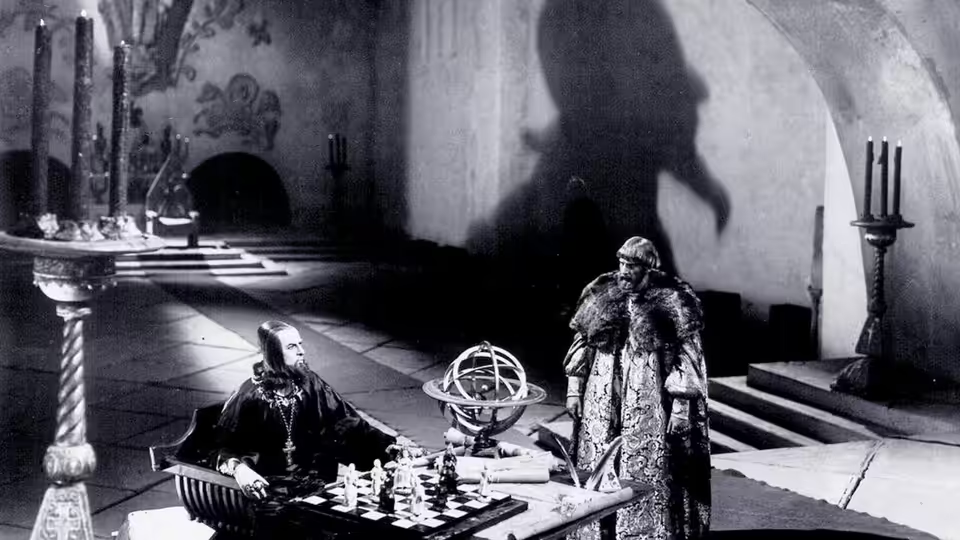
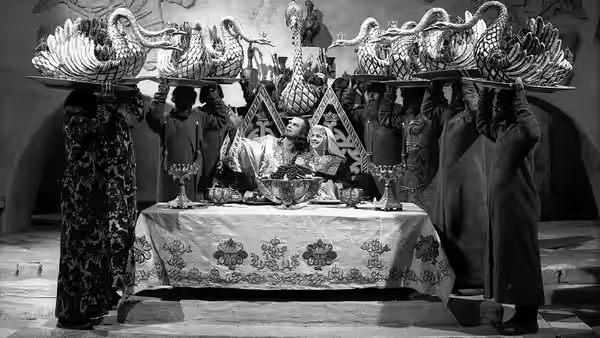
Eduard Tisse and Andrey Moskvin’s cinematography makes its strongest impression in the colour banquet. We were stirred by this sequence: the colour gives the ceremony an excitement that the performances alone seldom achieve. It is a pleasure to look closely, and the pleasure feels uncomfortable enough to suit this company. The sequence also makes us impatient with the surrounding drama, which so often demands attention without offering an equally strong reason to give it.
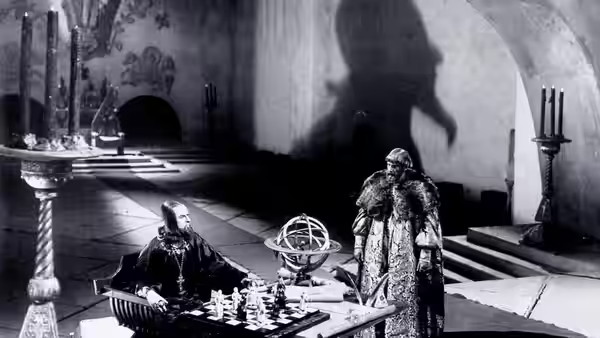
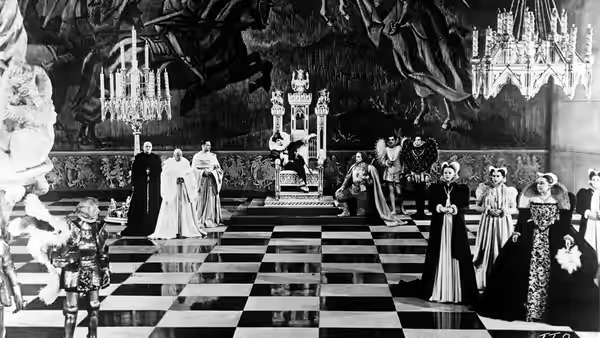
The production design, credited to Sergei Eisenstein and Iosif Shpinel, contributes substantially to that uncomfortable splendour. The court feels imposing without becoming somewhere we would wish to spend much time. That is effective, though the grandeur can overwhelm our interest in the people occupying it. The banquet puts the film’s appetite for ceremony to good use; elsewhere, the same solemnity can make human behaviour feel like another item arranged for inspection.
Sergei Prokofiev’s score is the element we would defend with the fewest reservations. It has vigour and menace, and its extravagance suits a film that would hardly benefit from discreet musical accompaniment. Crucially, the music sustains interest when the acting threatens to become merely emphatic. There is more variety of feeling here than in several of the performances, and listening becomes an important part of getting through the less involving passages.
Esfir Tobak’s editing maintains the pressure, but the film could use more changes of pace. At 82 minutes, it has no obvious excuse for feeling quite so demanding, yet duration is only part of what makes a film feel long. Too many moments seem to require the same degree of solemn attention. The cutting does not sufficiently relieve that insistence, leaving us with time to admire the work and rather too much time to notice our distance from it.
Historical drama is entitled to be theatrical; asking for casual behaviour here would miss what Sergei Eisenstein is attempting. Our reservation is that the formality so frequently limits what we can feel about the characters. There is enough invention to reward a patient viewer, particularly one interested in the relationship between images and music. Choose it for that encounter, and allow for an evening in which admiration will have to do some of the work of enjoyment.