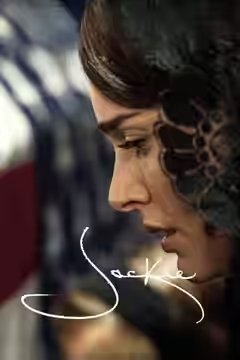
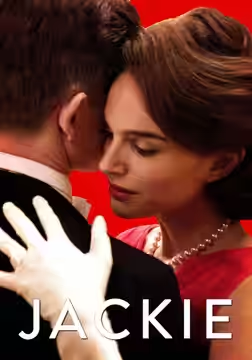
Pablo Larraín’s film about the week after Dallas is a close, unsettling portrait of a widow deciding what the country will remember, and Natalie Portman carries it. Mica Levi’s score does the rest; the priest scenes are where it starts explaining itself.
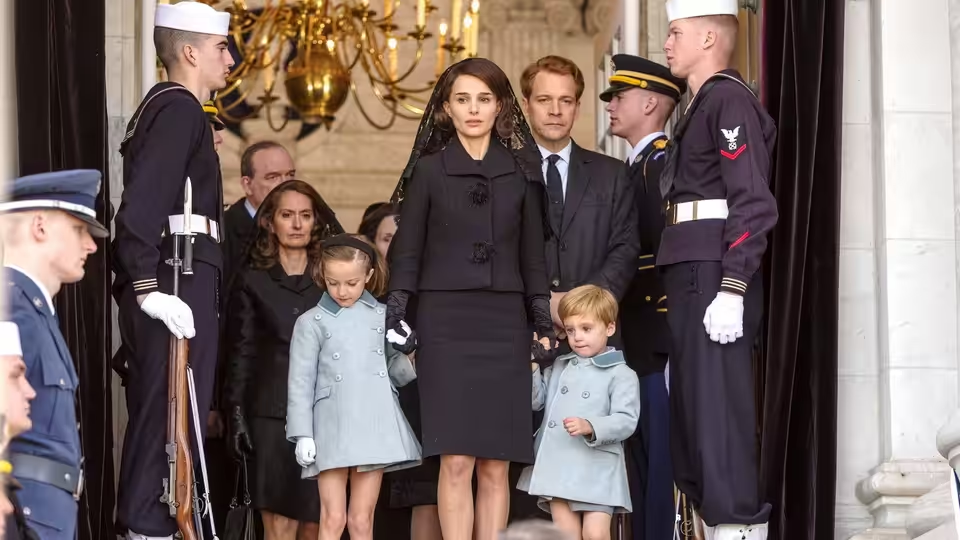
Pablo Larraín’s Jackie covers about a week. A few days after her husband is shot in Dallas, Jackie Kennedy (Natalie Portman) sits down with a journalist (Billy Crudup) who wants the whole story and is told which parts he may print. From there Noah Oppenheim’s script goes where her mind goes: to the motorcade, the flight home, the arguments over the funeral, and back to the televised tour of the White House she gave as First Lady. It is a hundred minutes about a woman deciding what a country will be allowed to remember, and it is among the better films of its kind and much the oddest.
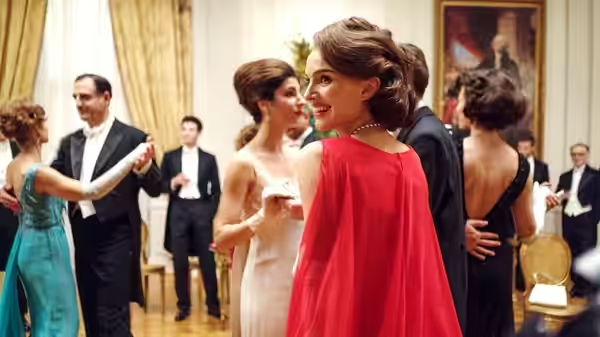
Portman carries it. The voice comes first, that soft finishing-school murmur, and for a few minutes we thought the whole performance would be an impersonation. It is not. Watch her on the television tour, smiling and glancing aside for approval between sentences, then watch her in the interview, dry-eyed, smoking, correcting a man who thought he was asking the questions. It is the same woman, and Portman lets you see how much work it costs her to be either version.
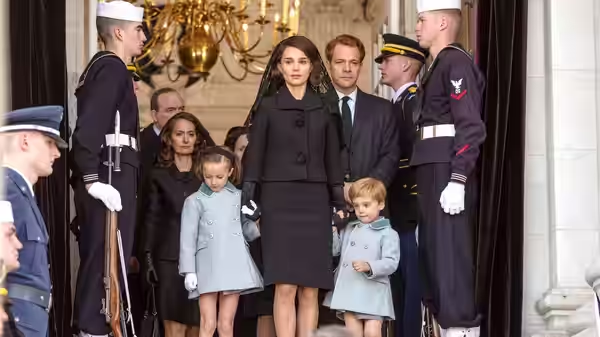
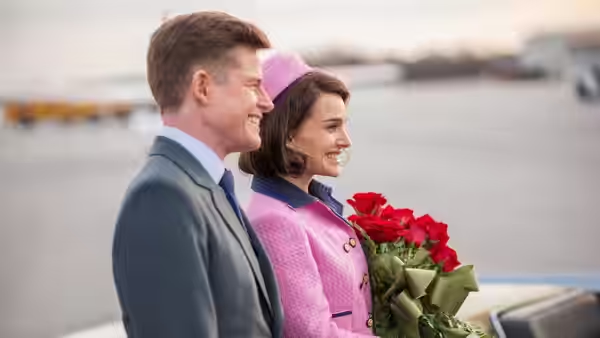
The hardest scene to watch is on the plane home. Jackie goes into the washroom and wipes her husband’s blood from her face, then her neck, then her hair. There is no music. Portman does it methodically, the way you would clean up a spill, and it was the method that got to us rather than the blood. We had seen the pink suit in photographs. We had not seen anyone treat the afternoon as a mess to be dealt with. Madeline Fontaine’s copy of the suit is exact down to the stains, and Larraín keeps her in it a long time.
Stéphane Fontaine’s soft, grainy image is close enough to old television that when Sebastián Sepúlveda cuts in real archive footage you cannot always find the join. Jean Rabasse rebuilt the White House rooms and lit them like a stage set, which is right, because they were one. Sepúlveda cuts the tour against the widow walking the same corridors at night, drinking, trying on gowns, with the Camelot record playing, and it is the best stretch. Over it sits Mica Levi’s score, strings that start a note and slide off as if the players had lost their nerve. It is more unnerving still in rooms this pretty.
Peter Sarsgaard’s Robert Kennedy is angry, tired and aware he has just become less important. Greta Gerwig’s Nancy Tuckerman says little and is the only person Jackie does not perform for. John Carroll Lynch and Beth Grant, as the Johnsons, hover on the plane, unsure whether to comfort her or take over, and Richard E. Grant’s Bill Walton is on hand to argue about the funeral. Caspar Phillipson’s President has a few minutes and looks so like the man it is faintly disturbing.
What does not work is the priest. John Hurt plays a clergyman Jackie walks with on the grounds, and the scenes exist so she can ask what it was all for and he can tell her what the film thinks. Hurt is good, gentle and unimpressed. The dialogue is not; each time the film cuts to them it stops and explains itself. The interview has the same problem, more mildly. Crudup’s journalist is there to have the Camelot line said to him, and the script underlines it twice. And the last quarter-hour ends three or four times before it stops.
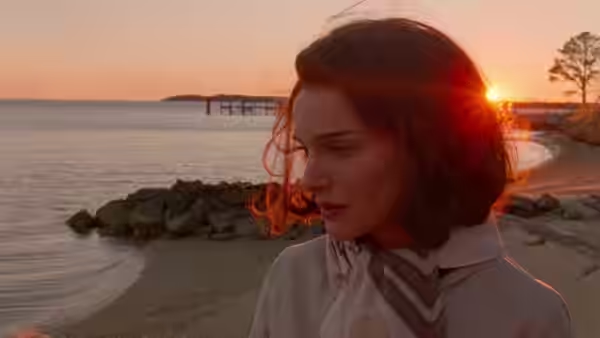
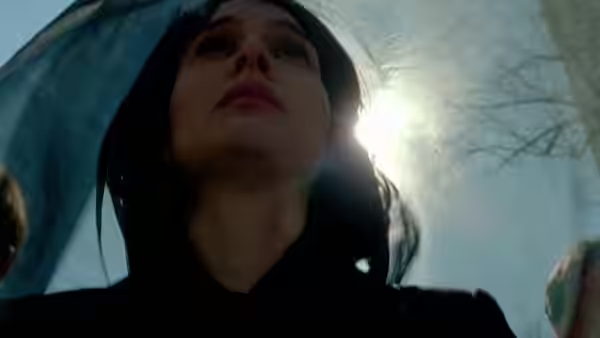
Larraín treats the whole legend with suspicion, keeps asking who is arranging it, and that is what most critics liked and a few found cold. We were not cold. Fontaine’s camera sits closer to her face than good manners allow, for longer than is comfortable; we think that is the idea.
It is a 15, for a few seconds of Dallas that Larraín does not soften. Watch it with the sound up. The score is doing at least half the work, and it deserves to be heard.