Truffaut’s film about two friends and the woman who joins them is quick, funny and generous for an hour, and then it grows up, which is harder. Moreau’s Catherine is the reason to see it; the men around her are drawn thinner than she deserves.
François Truffaut had made two films before this one, The 400 Blows and Shoot the Pianist, and both moved faster than anything else being made in France. Jules and Jim, adapted from Henri-Pierre Roché’s novel, is the one where the speed has a subject. It is about two friends, an Austrian and a Frenchman, who love the same woman across a war and the years after it, and it is told at the pace of people who are young and assume that will last. We would send most people to see it, with one warning we will come to.
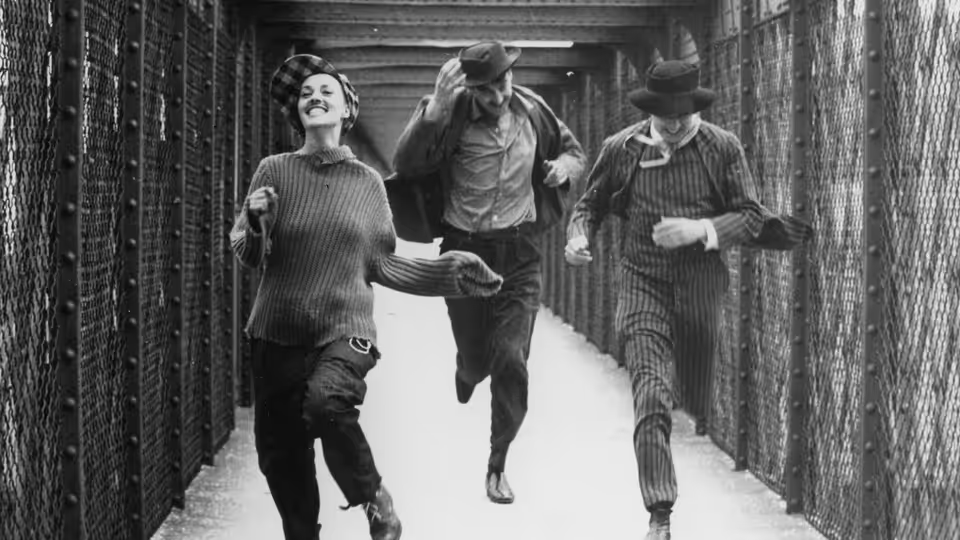
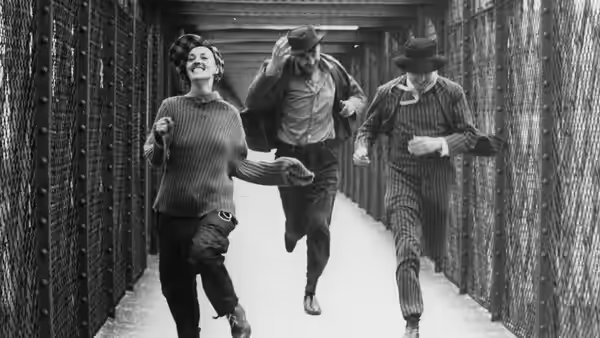
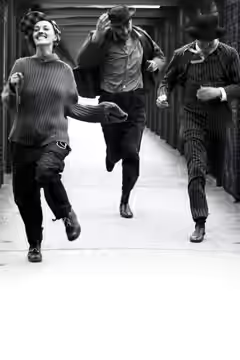
Oskar Werner plays Jules small, careful and kind, a man who seems to be apologising for taking up a chair. Henri Serre’s Jim is tall and unbothered and gets on with everyone. They are happy together before Catherine (Jeanne Moreau) arrives, and Truffaut spends the first twenty minutes showing us that happiness in short bursts: a boxing lesson, a café, a slide of a statue’s face. When Catherine does arrive she puts on a cap and a painted moustache, takes the two of them to a footbridge and shouts go before the count is finished. We laughed out loud, and it was the moment the film had us, because Raoul Coutard runs the camera alongside the three of them and Claudine Bouché cuts so that the cheat and the joy land at the same time.
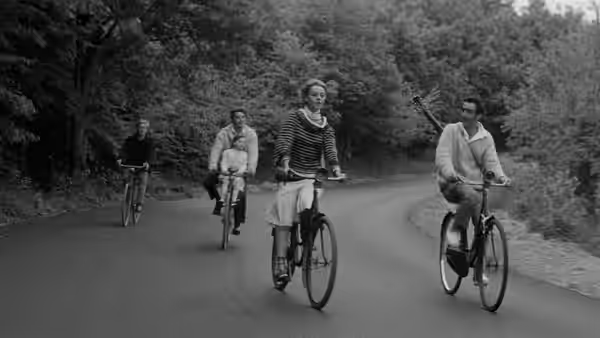
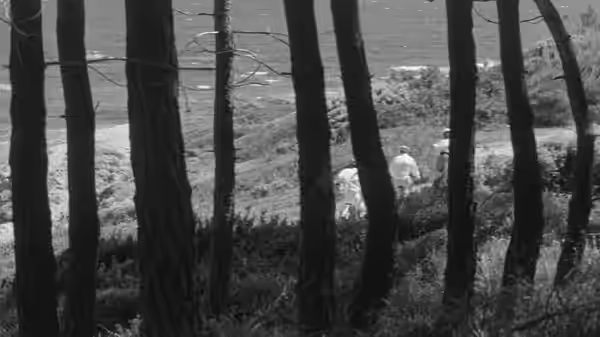
Coutard shoots in a wide frame and refuses to let it sit still. The camera wheels over rooftops, whips from face to face at a table, tracks along a beach after three people on bicycles. Bouché stops the picture dead on Moreau’s face three or four times in a row when Jim first looks at her properly, as if the film cannot decide which expression to keep. Elsewhere she cuts in old newsreel of the trenches, stretched to fit the frame, while Michel Subor’s narrator tells us each man is afraid of killing the other. The device should feel like a lecture. It does not, because the footage is real and the men we have just been laughing with have gone into it.
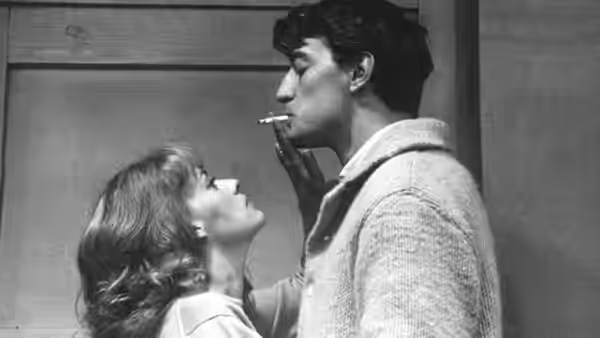
Georges Delerue’s score is light and quick and slightly sad, and Truffaut uses it the way he uses the narration: to carry the story over years in seconds. The scene everyone remembers is the song. Catherine sings a small tune about a whirlwind while Albert (Serge Rezvani) plays guitar and Jules and Jim sit and watch. Moreau’s singing is thin and a little flat and completely unguarded, and it moved us more than we expected, because for once nobody in the room is performing. They are just listening to a woman they all want, and knowing it.
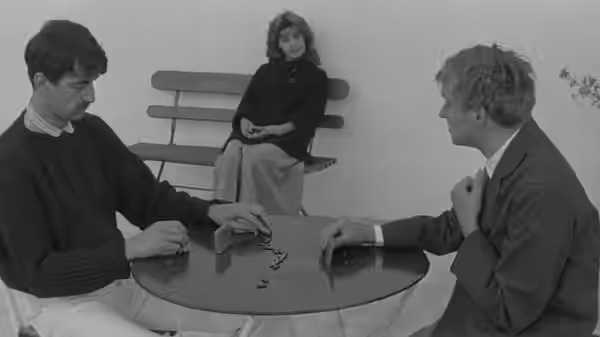
Then the film slows down, and the second half takes a turn we will not describe. What we can say is that the chalet by the Rhine, where much of it happens, is a smaller world than Paris, and the film knows it. Fred Capel’s rooms are bare and white and the same three people keep walking into them. The freedom of the first hour turns into a set of arrangements, and Truffaut is honest enough not to pretend the arrangements are still fun. The cost is that scenes repeat, and Subor’s narrator is asked to explain more than he should.
The warning is Catherine. Moreau is extraordinary, and the film lets her be a person for long stretches: funny, cruel, bored, alert to any slight. But when the men talk about her, and they talk about her a great deal, she becomes weather, a force to be endured and admired, and the narrator joins in. Jim in particular is thinly written, a man who wants what he is told to want, and Serre has less to play than Werner does. Most critics have forgiven this. We forgive most of it, because Moreau keeps stepping out of the frame the men have built for her.
At 106 minutes it is Truffaut’s most loved film and not his most careful. See it for the first hour, which has few equals for speed and warmth, and stay for what that speed turns out to cost. Watch it with someone you have known a long time.