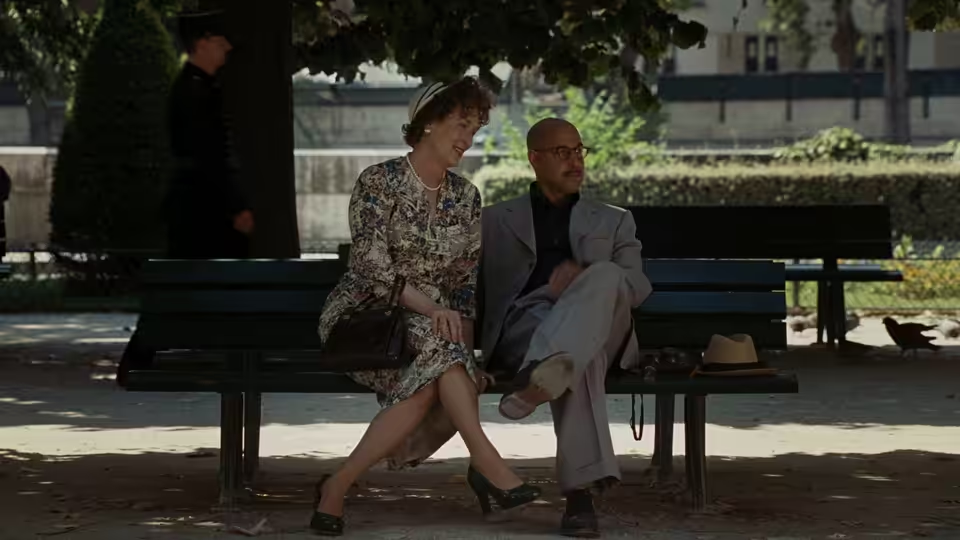
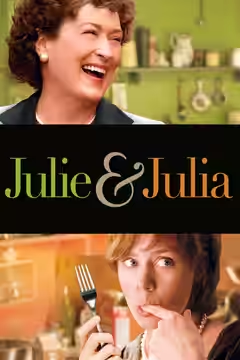
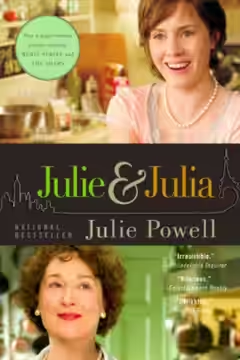
Meryl Streep and Stanley Tucci give Julie & Julia a funny, affectionate marriage worth spending an evening with. Nora Ephron’s parallel stories are less evenly matched, leaving Amy Adams with the harder job and the film a little overlong.
Nora Ephron’s Julie & Julia is a warm, uneven film about cooking that is most persuasive when it watches a marriage. Meryl Streep and Stanley Tucci give Julia Child and Paul Child an affection that feels established, comfortable and still capable of delight. We recommend it for that company, with the caveat that the two stories do not hold our attention equally. The trouble is built into the pairing of Julia Child’s life with Julie Powell’s account of her own.
Nora Ephron, who also writes the screenplay, wants to give both women their due. That is a reasonable ambition, and there is something appealing about treating cooking as work worthy of a person’s time and a film’s sustained attention. The kitchen is allowed to matter without much apology or explanation. But the parallel construction repeatedly asks us to feel a connection that the individual stories do not always earn.
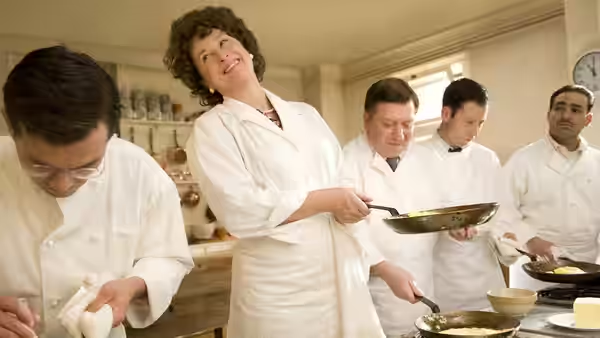
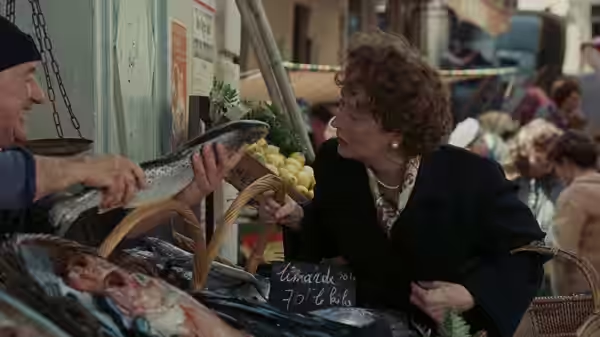
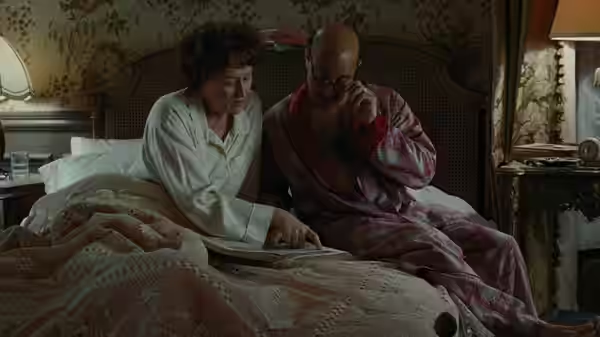
Meryl Streep makes Julia’s enthusiasm funny without treating her as a fool. The performance is large, but Julia’s humour never cancels out her intelligence, and the warmth lasts after we have stopped smiling. Stanley Tucci helps by giving Paul an affection that does not need to compete with hers. We were moved by their ease together: the pleasure they take in one another makes the marriage feel worth spending time with.
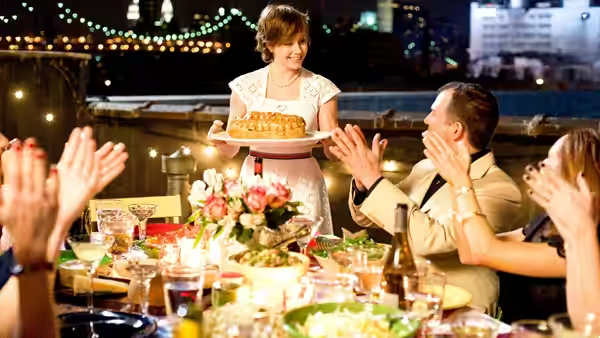
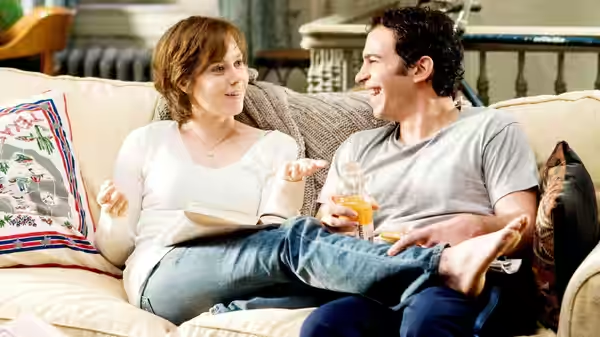
Amy Adams has the less rewarding half, and blaming her for the imbalance would be unfair. Julie’s story has a narrower emotional range, and it relies too heavily on Julia to keep us interested. Nora Ephron’s screenplay needs to make Julie’s experiences compelling in their own right before asking us to spend quite so much time with them. Richard Marks’s editing keeps the two accounts in circulation, but the regular returns to Julie begin to feel dutiful.
Stephen Goldblatt’s cinematography and Mark Ricker’s production design make this an inviting film to look at, though we wanted the food to command more attention. The images encourage us to settle in, and the cooking sometimes feels secondary to the generally agreeable surroundings. Alexandre Desplat’s music adds warmth, occasionally more than a scene needs when the actors have already supplied it. These choices are pleasant in themselves, but together they can make the film reluctant to let anything feel awkward for long.
At 123 minutes, it also stays a little too long. There are stretches when the repeated movement between stories becomes tiring, and cutting back Julie’s share might have helped. Still, the attention given to companionship, appetite and women’s work is welcome, even when the film makes too much fuss about joining them together. Romantic drama often depends on keeping people apart; Julia and Paul’s enjoyment of being together supplies enough interest here.
Anyone coming for a concentrated portrait of Julia Child should expect frustration, since the film insists on keeping Julie beside her. Those willing to accept the imbalance will find humour and tenderness, particularly whenever Meryl Streep and Stanley Tucci share the screen. We would happily spend an evening with them, even when the film makes us wait our turn. Allow a little patience for the other half.