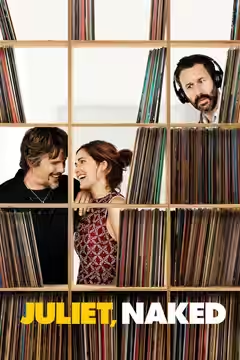
Juliet, Naked is an amiable romantic comedy whose leads make its convenient plotting easier to forgive. Rose Byrne and Ethan Hawke give it warmth and adult weariness, though the explanatory emails sometimes seem to have outnumbered the jokes.
Music fandom can be exhausting for the person who does not share it, and Juliet, Naked understands that irritation. Jesse Peretz makes a modest, likeable romantic comedy from Nick Hornby’s novel, with enough affection for its people to keep the jokes from becoming sour. We would recommend it to anyone who enjoys watching adults make slightly foolish attempts to begin again. The qualification is that the film often explains those attempts after the actors have already made them clear.
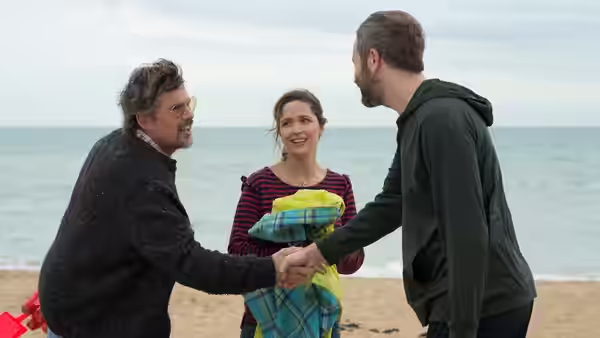
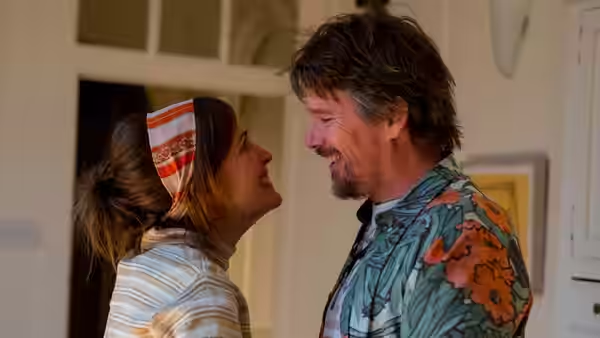
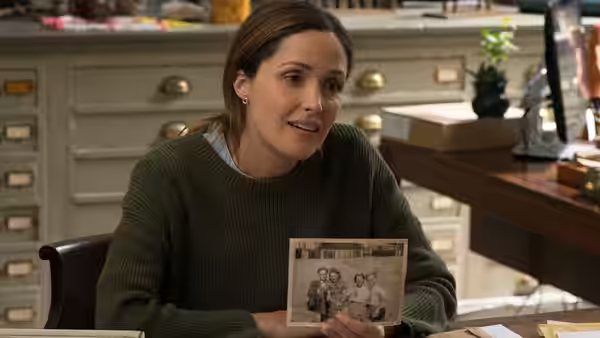
Rose Byrne gives Annie Platt enough wit to make the familiar business of wanting a fresh start worth following. The performance allows annoyance and affection to coexist without stopping to explain which feeling is winning. That matters in a romance where dissatisfaction could easily become an excuse for moving someone towards the next available man. Annie remains interesting even when the question of whom she might choose is less so.
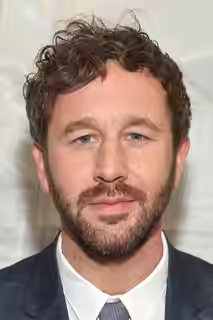
Ethan Hawke makes Tucker Crowe easy company without asking us to mistake charm for an adequate answer to every complaint. There is a welcome suggestion of weariness in the performance, which gives the romantic possibilities a little more weight than the writing supplies. Chris O’Dowd has a less comfortable job as Duncan Thomson: the comedy around fandom asks for a broader performance than the scenes between the other leads. He gets laughs, but the difference can make it harder to take Duncan seriously.
The screenplay by Tamara Jenkins, Evgenia Peretz and Jim Taylor is most persuasive when enthusiasm about music becomes awkwardness between people. The songs sound credible enough to make the devotion surrounding them understandable, an important detail in a story about the attachments listeners form. The emails are less successful, repeatedly putting feelings into words after the performances have done the job. We grew impatient with them because Annie’s dissatisfaction was already clear in Rose Byrne’s delivery.
Remi Adefarasin’s cinematography gives the actors room without doing much to sharpen the comedy, while Sarah Finlay’s production design remains unobtrusive. That restraint suits the ordinary disappointments, though the images seldom make an exchange more revealing than the dialogue already makes it. Nathan Larson’s music is similarly careful about the scale of these troubles. It helps sustain the warmth, but there are stretches where a stronger visual or musical personality would have given us something to enjoy beyond another conversation.
Robert Nassau and Sabine Hoffmann keep the film moving, and at 97 minutes it does not ask for an unreasonable commitment. Still, briskness cannot disguise every convenient change of direction, and the emotional progress sometimes feels agreed in advance. A romantic comedy can be predictable and satisfying; we need to believe that these particular people are making decisions rather than being shuffled towards the next scene. Jesse Peretz is better at making their company pleasant than at making every step convincing.
The film’s kindness counts for something, especially when it considers how much music can mean to a devoted listener. It takes that attachment seriously enough to make the jokes about fandom affectionate rather than dismissive. There is pleasure in a romantic comedy that allows its people to be awkward without making every embarrassment a public spectacle. Choose it for Rose Byrne and Ethan Hawke, with modest expectations of the surprises.