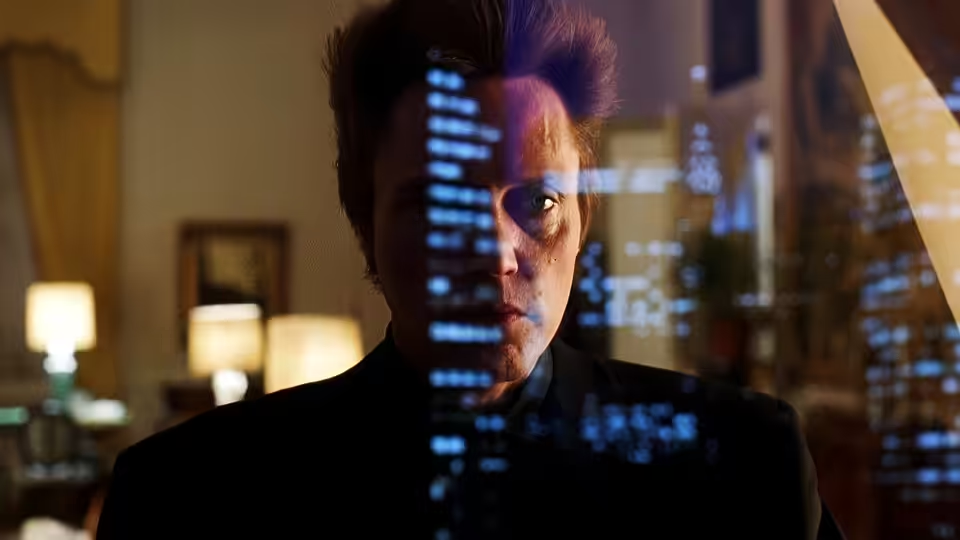
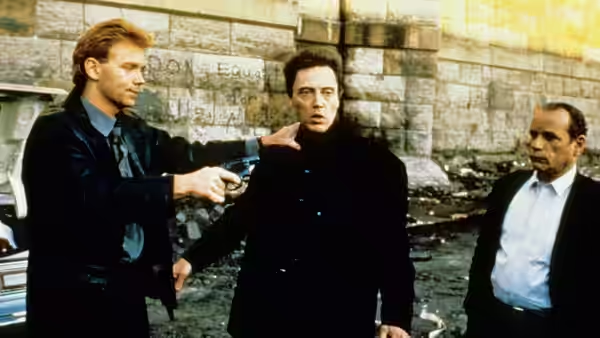
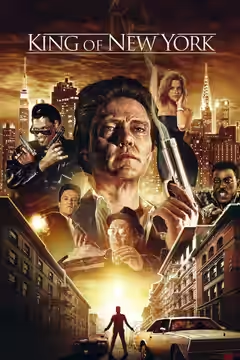
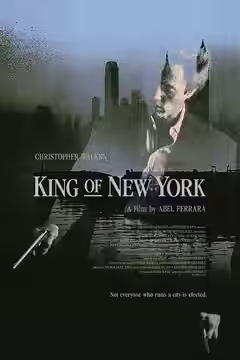
Abel Ferrara shoots New York at night in blues so deep the city looks underwater, and Christopher Walken has seldom been better at the centre of it. The film wants us to take Frank White’s good intentions seriously and never decides whether it does.
Abel Ferrara’s gangster film is about a drug lord who comes out of prison wanting to be a philanthropist, and it never settles what it thinks of him. Frank White’s crew has kept the business warm while he was away, and his first act as a free man is to announce that he will take the whole city’s trade and spend the money on a hospital. Nicholas St. John’s script treats this as sincere. Whether the film does, it keeps putting off, and that is most of what is wrong with it. What is right is Christopher Walken, Bojan Bazelli’s camera and four or five set pieces, and that is enough for an evening.
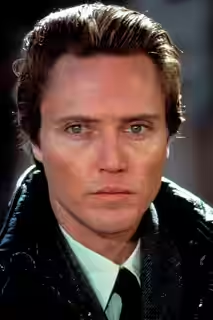
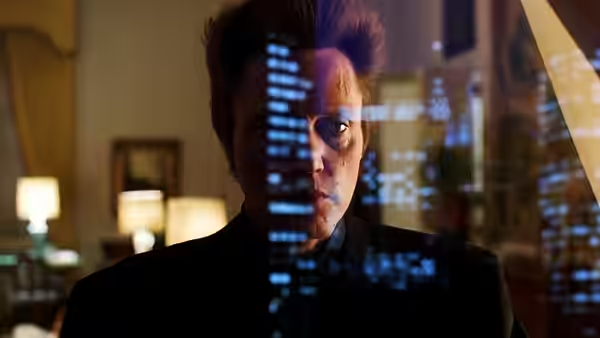
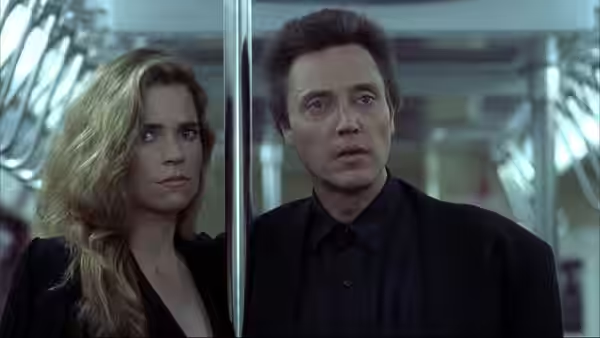
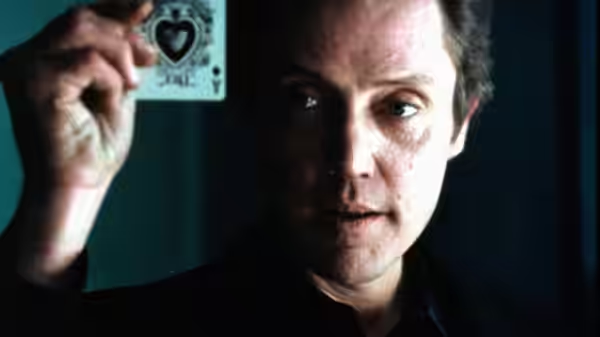
Walken plays Frank as a man who decided long ago how he would move and speak. He is soft-voiced, courteous and unnervingly still, and when he does move, in a club, to a rap track, his crew grinning around him, the film holds its breath with him. The opening minutes, Frank in the back of a limousine looking at the city he has been kept from, no dialogue, Walken’s face doing all of it, moved us more than a gangster’s homecoming had any right to. He looks at the streets as if he had missed them more than any person; that, not the hospital, is what he wants.
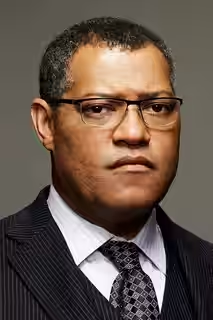
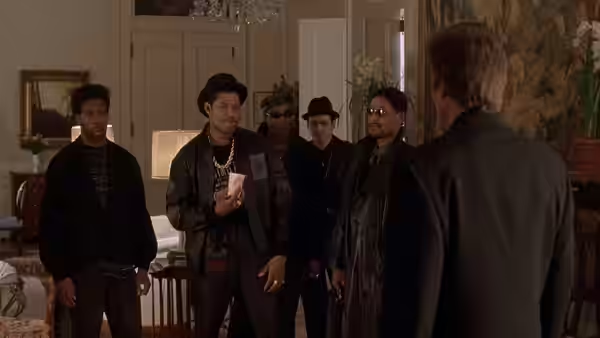
Laurence Fishburne’s Jimmy Jump is the other reason to watch. He is loud where Frank is quiet, giggling, wearing his gold and his long coat as a dare, and he kills people with a pleasure the film does not pretend to disapprove of. A raid on a crack house, Jimmy’s crew coming through the door with guns and noise, is staged with real skill, and we watched it with a grin we were not proud of. Joey Chin’s Larry Wong, the Chinatown supplier who hears Frank out and declines, gives the film its few minutes of calm.
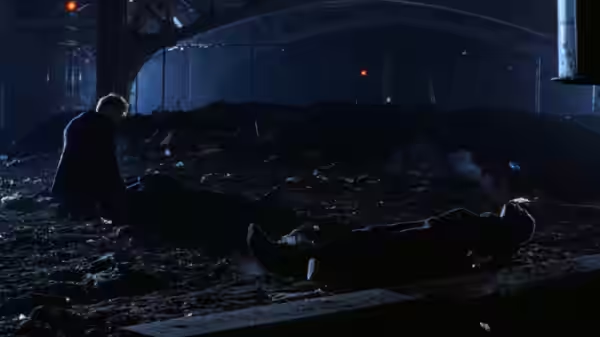
Bazelli shoots almost everything at night, in blues and blacks, with the city’s lights smeared across wet car windows. Alex Tavoularis gives Frank a hotel suite that is all cream and lamplight, so he looks like a guest who has stayed past his welcome. Carol Ramsey puts Frank in black and his crew in colour and metal, so you can tell who is trying to pass for respectable. Joe Delia’s low, synthesised score mostly gets out of the way of the rap tracks, which arrive loud and stay. Anthony Redman cuts the shootouts hard and fast, a car chase in the rain especially, and the conversations so short that ideas are raised and dropped inside a scene.
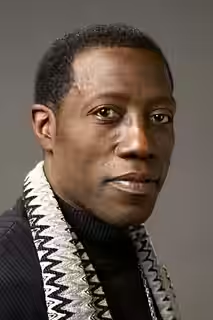
The police are where the film loses its footing. David Caruso’s Dennis Gilley and Wesley Snipes’s Thomas Flanigan are young detectives who watch Frank walk free from every hearing and decide the law is not enough. Victor Argo’s Roy Bishop, their tired superior, is the only man on screen who has read the rulebook, and Argo is quietly excellent; his one long scene with Frank is the best written in the film. But Caruso is asked to boil over in every scene, and does, and around the hour mark the detectives take a turn we will not describe, except that afterwards the film can no longer tell us whose side it is on.
That is the trouble with the hospital. Frank says it to everyone who will listen, and the film neither believes him nor calls him a liar. Nicholas St. John has written a man who thinks he is Robin Hood, and Ferrara would rather watch him shoot than ask him about it. By the last half hour we were still enjoying the pictures and had stopped believing a word anyone said.
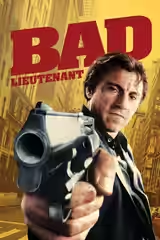
Ferrara’s Bad Lieutenant (1992) never takes its eyes off one man’s conscience, which is the discipline this film lacks. King of New York runs 103 minutes and Walken is not in enough of them. See it for him, for Fishburne, for Bazelli’s night city and for the dance. Do not expect it to know what it thinks about the man it cannot stop looking at.