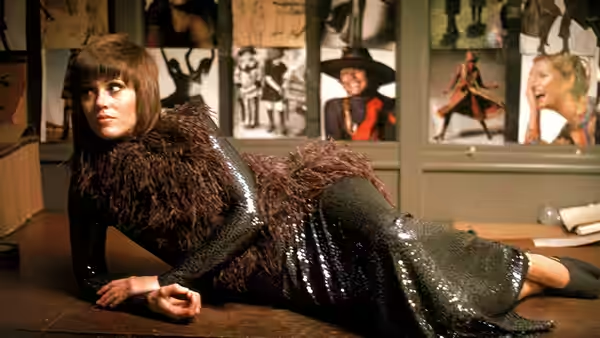
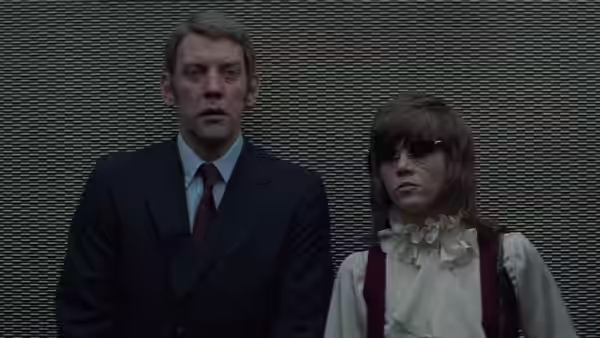
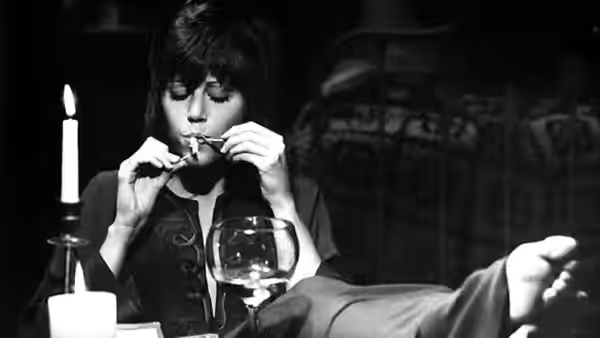
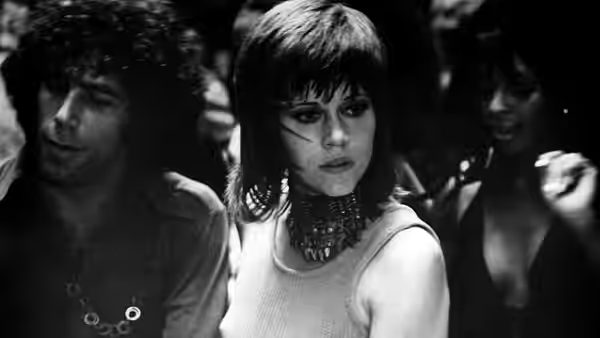
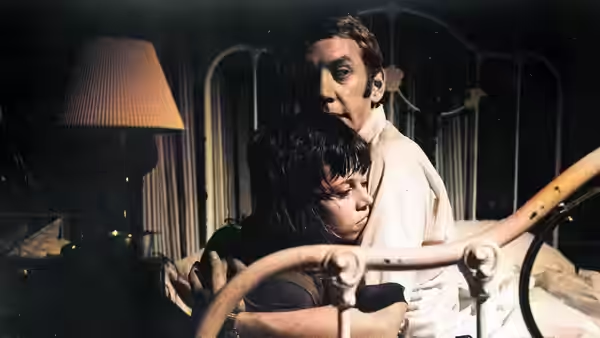
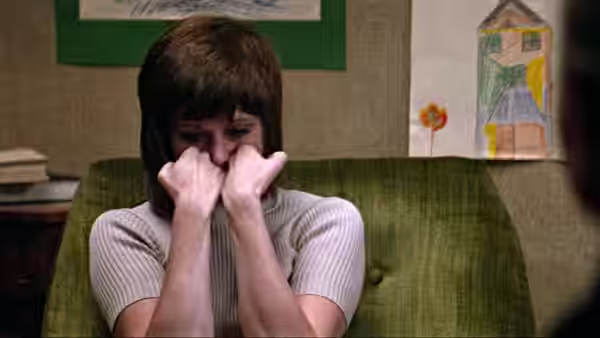
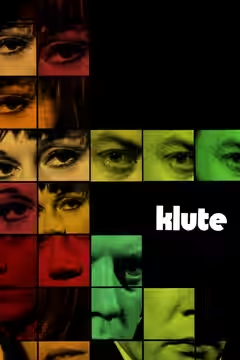
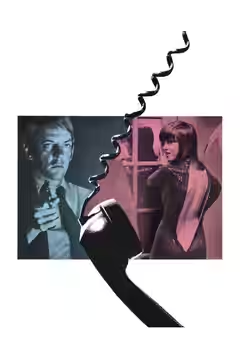
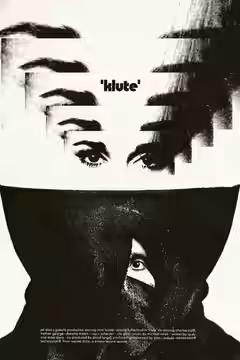
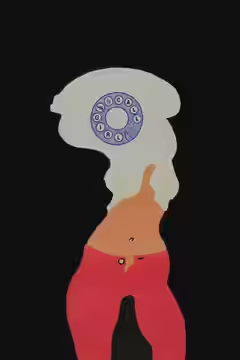
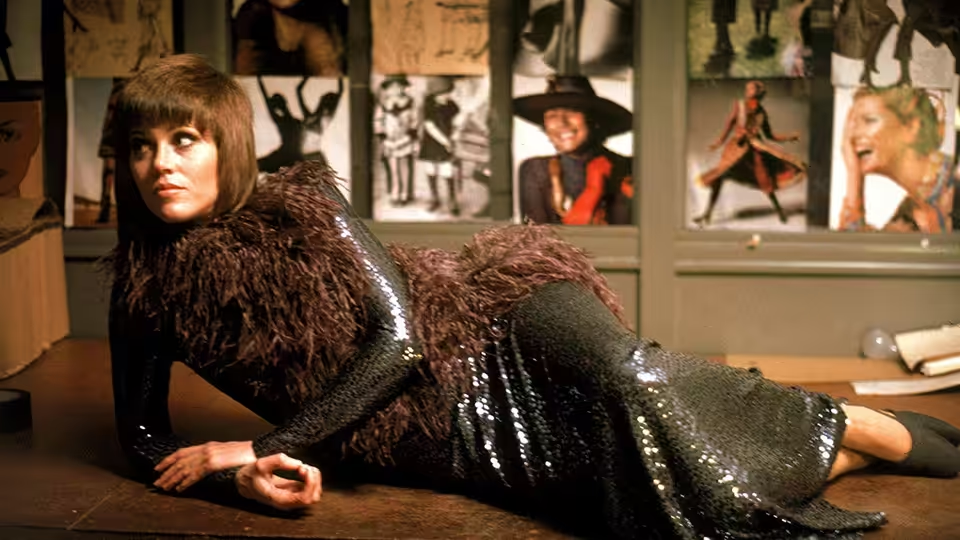
Bree Daniels (Jane Fonda) reclines across a desk in a feathered outfit
Film review

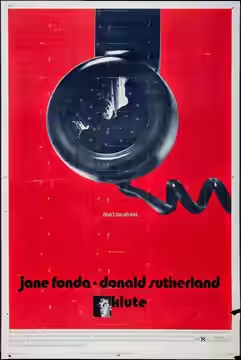
Klute

1971 · Directed by Alan J. Pakula · 1h 54m

In a sentenceJane Fonda makes the detective feel like an interruption in his own film

Bree Daniels (Jane Fonda) works as a call girl, while John Klute (Donald Sutherland) is a private investigator pursuing a mystery. Peter Cable (Charles Cioffi), Frank Ligourin (Roy Scheider) and Arlyn Page (Dorothy Tristan) figure alongside them. The enquiry shares the story with Bree’s life, her independence and the loneliness beneath her self-sufficiency. As Klute seeks answers, attention turns to Bree herself: what another person might understand about her, what remains private and how much an investigation can reveal. His professional interest has to accommodate a woman whose life cannot simply be reduced to information.

Plays from YouTube when you press play; nothing loads from them until then.

Fi1m review

Jane Fonda’s controlled, moving performance makes Klute a thriller worth seeking out. Alan J. Pakula sustains the unease, though the detective story is too transparent to justify all the attention it receives.

Klute is worth seeing for Jane Fonda even when its mystery becomes unconvincing. Alan J. Pakula has made a thriller whose attention to Bree Daniels is more rewarding than the case involving her, and he gives that attention time to matter. We recommend it for her performance and for its persistent unease. Anyone coming chiefly for an intricate investigation should be warned that the detective work is the least persuasive reason to stay.

Jane Fonda’s control is what makes Bree so absorbing. Her independence never feels like a quality the film has assigned her and left the actress to demonstrate; we can sense the effort required to maintain it. We were moved by how hard she makes Bree work at seeming self-sufficient. The performance allows us to care about her without suggesting that caring entitles us to a complete explanation. That is difficult to sustain in a mystery, where every person risks becoming another source of information.

Donald Sutherland’s John Klute has an awkward place in a film so firmly occupied by Bree. We are encouraged to keep considering her, while he is more readily understood through his function as an investigator. That leaves the title character feeling underwritten at times, although his performance accommodates the imbalance without trying to compete for our attention. The film is right to let our interest settle where it does. Giving the detective a larger share would not necessarily make the drama richer.

Gordon Willis’s cinematography does much of the work of keeping us uneasy. The images make the atmosphere of threat persuasive even when the plotting fails to convince, and the direction offers little reassurance. Carl Lerner’s editing is more effective at holding our attention on the people than at making the enquiry feel urgent. Michael Small’s music helps sustain the suspense, though the strongest tension remains our concern for Bree. The craft keeps the film watchable through passages that the writing has not made sufficiently compelling.

The screenplay by David E. Lewis and Andy Lewis gives Bree enough complexity to sustain that interest, but its mystery is less assured. The case is too transparent, and some of its workings are difficult to credit. Once we begin doubting the investigation, further attention to it can feel like a delay. There are stretches when we want the film to stop attending to its thriller obligations and return to the woman at its centre.

What makes Klute worth that frustration is how seriously it takes the loneliness beneath Bree’s self-sufficiency. A crime film can use such a woman simply to complicate a detective’s work; Jane Fonda makes that seem an inadequate reason for spending time with her. The director allows the character study enough space to survive the less convincing material around it. The result rewards an interest in people more reliably than an appetite for clues. Choose it for Jane Fonda, and expect to be less impressed by the investigation.

Critical consensus AI synthesised

69
Positive
4
Mixed
3
Negative
1

The available reviews lean towards approval, with Jane Fonda’s performance the clearest point of agreement, even among the dissenters. Critics repeatedly place her at the centre of the film, praising her control and complexity, while the more favourable accounts value its study of loneliness and alienation. Praise also gathers around the atmosphere, particularly Gordon Willis’s cinematography and Pakula’s chilly direction, which give the thriller its unease.

The reservations concern the mystery: several critics find it transparent, implausible or dependent on familiar murder-mystery conventions. For Slant Magazine, those weaknesses do little to diminish the force of the character study; Variety, by contrast, finds the film tedious and short of suspense, with Fonda its only rewarding element. The spread is wide, then, despite the agreement about its lead performance. Limited accessible text for some reviews makes the middle ground harder to characterise precisely.

Radio Times
★★★★★ · Alan Jones
100

Jones praises the film as an exceptional adult thriller. He singles out Jane Fonda’s performance and the suspenseful atmosphere created by Gordon Willis’s cinematography.

Read the full review →
Slant Magazine
8 August 2019 · ★★★★½ · Chuck Bowen
90

Bowen praises the film as a piercing examination of loneliness, despite finding its mysteries implausible. He singles out Jane Fonda’s performance as Bree for its elegance, complexity, and heartbreaking self-sufficiency.

Read the full review →
Empire
1 January 2000 · empire
70*

The review finds the film an effective study of alienation, though its mystery is fairly transparent. It praises Pakula’s chilly direction and singles out Jane Fonda’s performance as the film’s centrepiece.

Read the full review →
The New Yorker
25 June 1971 · Pauline Kael
70*

Kael calls Klute a superior thriller-melodrama, though it falls short of being a work of art. She especially praises Jane Fonda’s controlled, compelling performance, while faulting the film’s murder-mystery conventions.

Read the full review →
RogerEbert.com
65*

The page is blocked, so the critic’s verdict cannot be verified. No specific praise or complaint is available from the page content.

Read the full review →
The New York Times
24 June 1971 · Vincent Canby
65*

The page’s inaccessible text does not reveal the critic’s verdict. It also does not allow a reliable assessment of what the review singles out for praise or complaint.

Read the full review →

Straight answers AI written, from our review

Is Klute worth watching?
Klute is worth watching for Jane Fonda’s moving performance and its persistent unease; we score it 82 out of 100. We recommend it most warmly to anyone drawn to character-led crime drama, since Bree Daniels’s independence and loneliness hold our attention more reliably than the transparent, sometimes unconvincing investigation.
How long is Klute, and what is it rated?
Klute runs 1h 54m. It is a thriller and crime film.
Where can I watch Klute in Slovenia?
Klute is not on any streaming or rental service in Slovenia at the moment. It is available in 12 other countries; change your country at the top of the page to see where. Availability is checked daily.
How violent or frightening is Klute, and is it suitable for children?
Klute has a US R certificate, and its adult subject matter and sustained atmosphere of threat make it a poor choice for children. Bree works as a call girl, and we find the film persistently unsettling; the certificate warrants caution for younger teenagers, but we cannot give a precise account of its violence or graphic content.
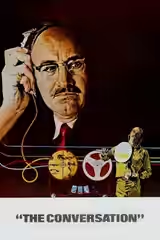
How does Klute compare to The Conversation?
Klute is our recommendation for Jane Fonda’s character study, while The Conversation is the more assured choice for suspense. Both make solitude matter as much as the clues, but we find the investigation in Klute less persuasive; The Conversation turns repeated listening into gripping tension, despite a few over-arranged plot decisions.

Cast

Awards

Academy Awards, 1972

Nominated
Best Writing, Original Screenplay
Won
Best Actress

If you liked this, try…

  1. The Conversation (1974, Fi1m 92)For another investigation in which solitude matters as much as the clues.

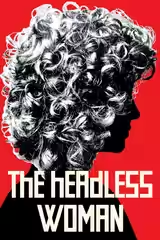
  2. The Headless Woman (2008) · not on Fi1m yetFor the unease of watching someone resist an explanation of herself.

  3. In the Cut (2003) · not on Fi1m yetA more explicit, abrasive thriller about desire and the danger of misreading intimacy.

  4. Decision to Leave (2022) · not on Fi1m yetA detective’s fascination becomes as absorbing as the case he is investigating.

  5. The Silent Partner (1978) · not on Fi1m yetFor patient suspense and characters whose private calculations are worth watching closely.