Jean Vigo’s L’Atalante is a funny, sensual romance we recommend warmly. The storytelling has rough joins, but Dita Parlo, Jean Dasté and Michel Simon make the life aboard its barge matter.
Jean Vigo’s L’Atalante is a romance we recommend warmly, including to anyone who suspects that an old film about marriage will be improving rather than enjoyable. It is funny, frank about desire and interested in the work people do when they have to live together. The barge matters because it makes that work visible: the couple’s home is also a place with jobs to be done. Vigo does not tidy up the people for our approval.
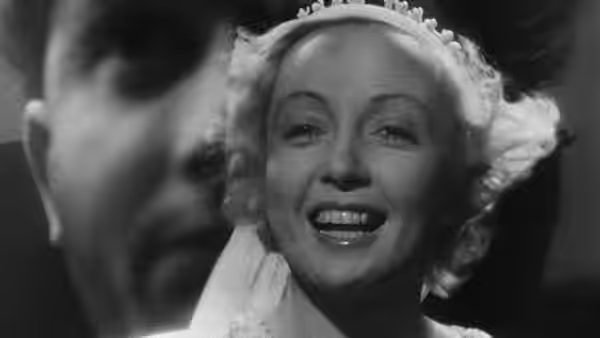
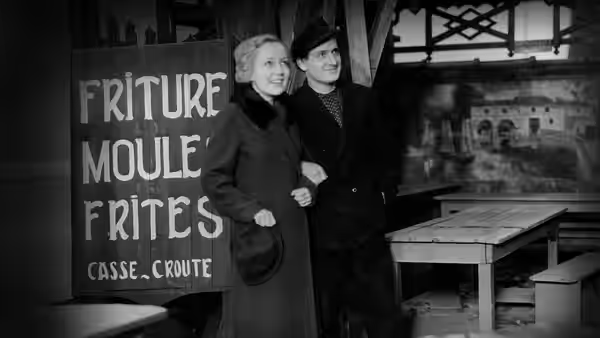
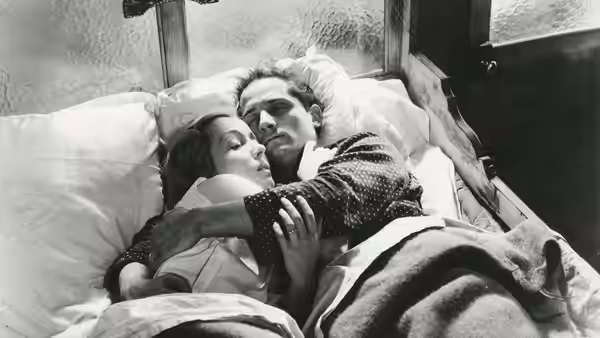
Dita Parlo’s Juliette and Jean Dasté’s Jean are allowed to be awkward company. Parlo gives Juliette a directness that keeps her from becoming a decorative young bride, while Dasté allows Jean to seem difficult without making him merely a problem to be solved. We can feel the attraction without being asked to believe that it makes sharing a life easy. Their physical performances give the relationship a persuasive intimacy, and Vigo leaves them room to be funny without treating their desires as a joke.
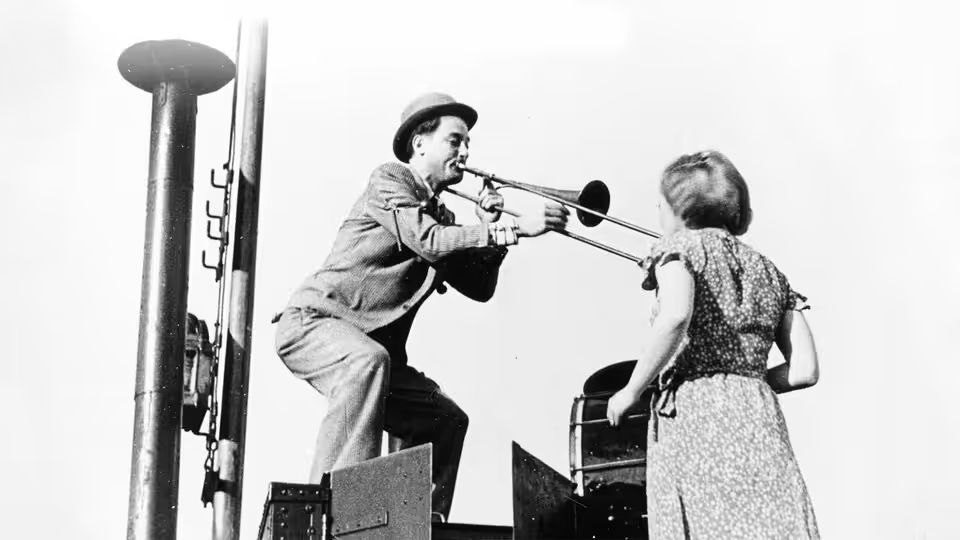
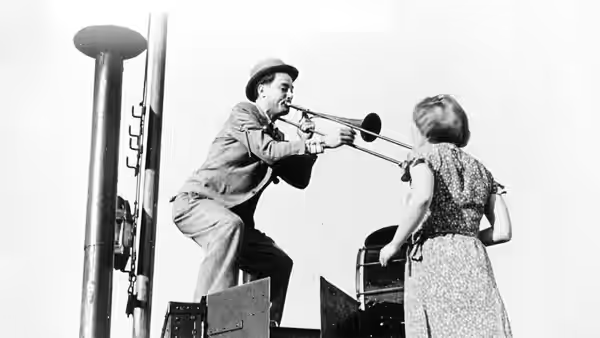
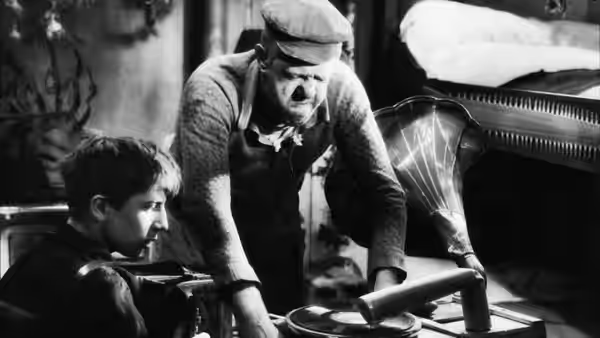
Michel Simon’s Père Jules could easily commandeer the film, and there are stretches when we are content to let him. Simon makes the character’s untidiness and self-possession funny without appearing to wait for a laugh. We laughed, then found ourselves unexpectedly fond of him, because that ungainly physical presence gives the barge someone who seems thoroughly at home there. He also prevents the couple’s troubles from becoming the only thing we are allowed to notice.
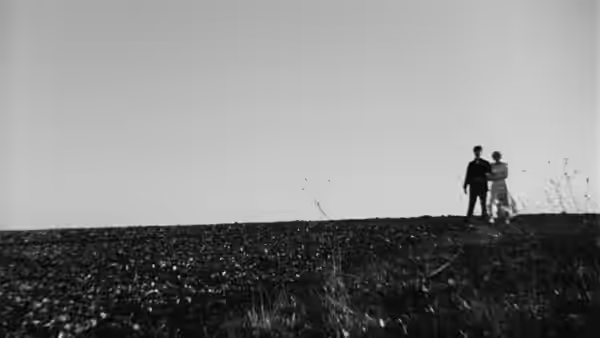
Boris Kaufman’s cinematography keeps the barge recognisably workaday even when the images turn strange and sensual. There is roughness in the photography, and we would not pretend every image is equally clear or controlled. The movement from ordinary boat life into fantasy feels persuasive because we remain interested in the people experiencing it. Kaufman’s dreamlike passages draw their force from the plain physical life around them, so we never feel that the film has stopped to demonstrate how beautifully it can photograph desire.
Louis Chavance’s editing is less consistently persuasive. Continuity can be ragged, and some transitions ask us to do a little more work than the scene warrants. That matters in a film whose pleasures depend on taking an interest in small changes between people: an awkward join can briefly make their behaviour harder to read. It is a real qualification to the recommendation, though the looseness never made us stop caring about Jean and Juliette.
Maurice Jaubert’s music is more sure-footed. It works with the surrounding sounds rather than trying to smother them, so the romance can grow without cutting us off from the place where these people live. Jaubert can give a scene a lift without making every small exchange sound momentous. His score helps the stranger images feel close to the ordinary ones, and gives the film a steadiness that the cutting sometimes lacks.
At 88 minutes, this is not a romance that requires an evening of dutiful patience. It does ask us to accept that love can be comic, inconvenient and physically urgent within the same relationship. The rough edges will trouble anyone who wants each scene to lead neatly into the next. Watch it with someone who will forgive you for preferring Père Jules.