Ridley Scott’s fantasy rewards a taste for elaborate imagery, though its characters struggle to hold our attention. Tim Curry supplies welcome mischief in a film chiefly worth considering for committed fairy-tale enthusiasts.
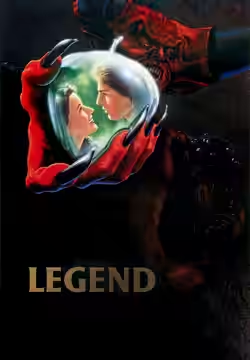
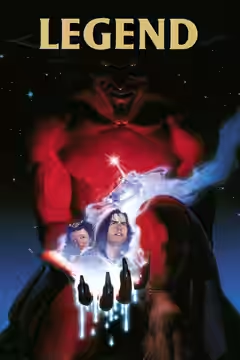
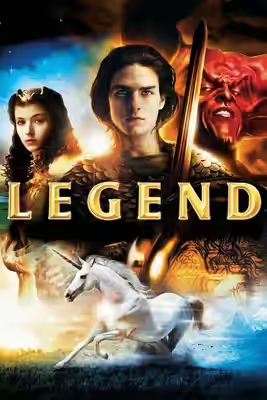
Ridley Scott’s Legend is a fantasy adventure worth considering for its appearance and Tim Curry, provided a thin story is not a deal-breaker. At 94 minutes, it still has stretches in which there seems little to follow beyond the next elaborate image. The director wants us to accept fairy-tale simplicity without embarrassment, and we are happy to meet him there. The trouble is how seldom William Hjortsberg’s screenplay makes its people interesting enough to justify the attention spent on their surroundings.
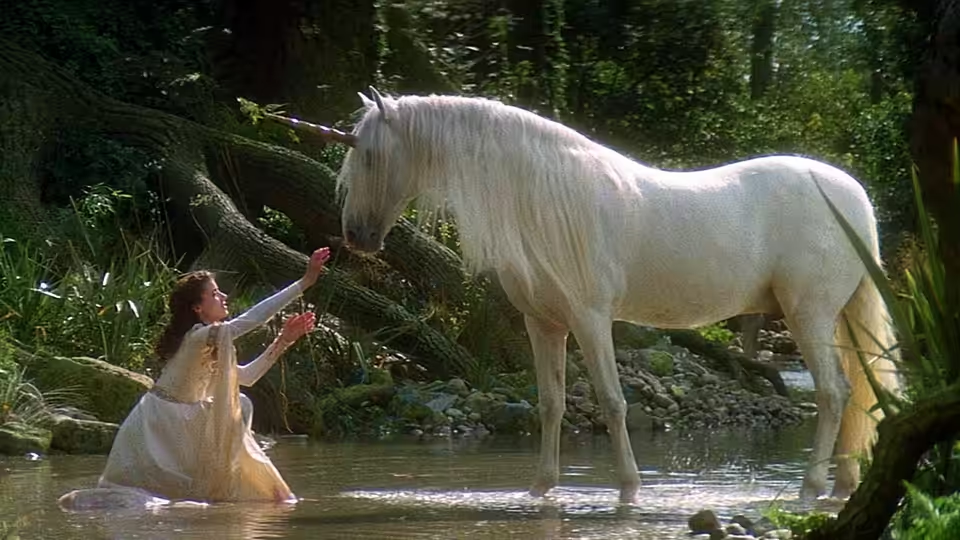
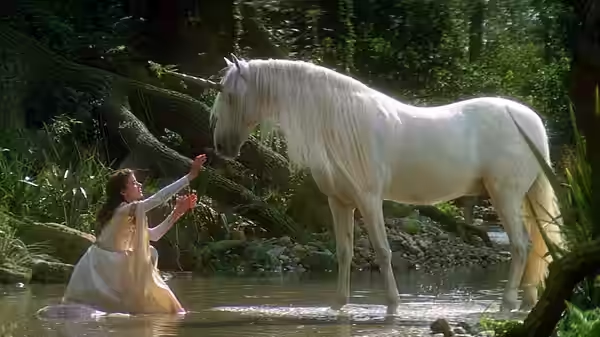
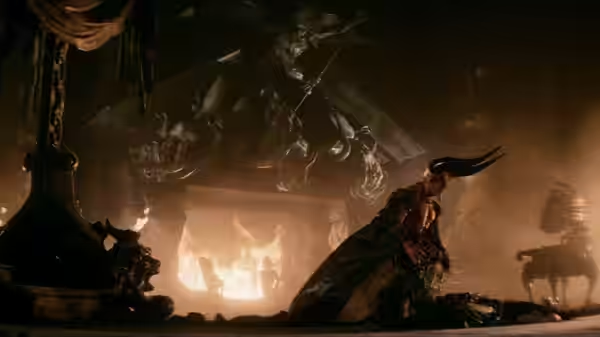
Alex Thomson’s cinematography makes the crowded frames readable, drawing our eyes through the detail rather than losing them in it. Assheton Gorton’s production design rewards that scrutiny, although the decorative excess can become tiring. Everything receives so much visual attention that the actors sometimes struggle to hold ours. There is pleasure in looking closely, even if we occasionally find ourselves inspecting the surroundings because the people have become dull.
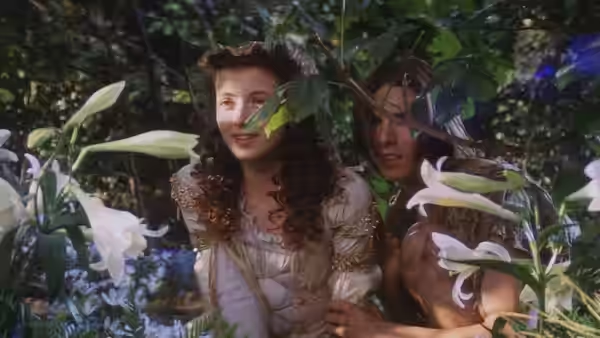
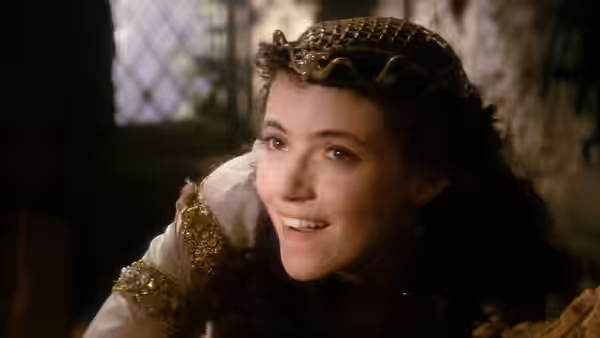
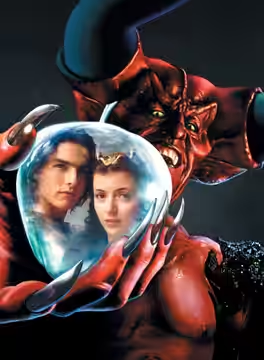
Tom Cruise, as Jack, and Mia Sara, as Princess Lili, have the harder task of making that world matter to us. Their earnestness is apparent, but William Hjortsberg gives them too little individuality. We felt detached from them because their exchanges seldom suggest two people with much to discover about each other. The film asks for affection before it has given us enough reason to feel it, and the performances cannot quite make up the difference.
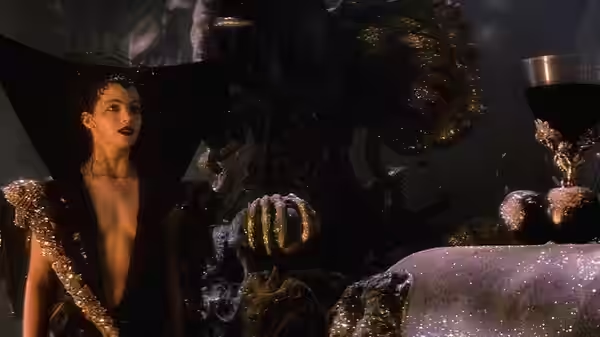
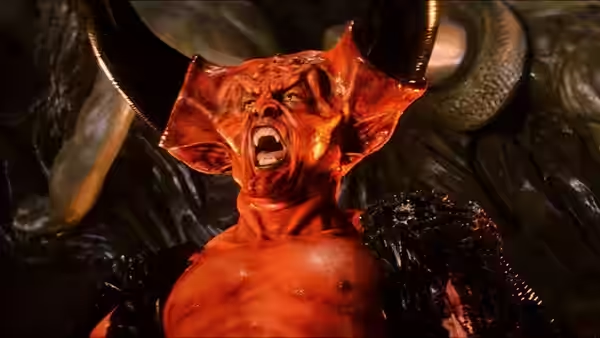
Tim Curry has a better time as the Lord of “Darkness”, and so do we. He gives the dialogue a relish missing elsewhere, allowing a line to sound as though someone actually wants to say it. The performance has enough wit to make the surrounding solemnity seem even more burdensome. We found ourselves waiting for him to speak again; his enjoyment of the language briefly makes this stiff fairy tale feel playful.
Terry Rawlings’s editing keeps presenting images worth looking at, but the scenes do not build much urgency between them. The film can feel oddly slow for its length, particularly when its blunt distinctions between good and evil are being pressed upon us again. Simple storytelling is perfectly reasonable in a fantasy. What becomes wearing is the repetition, which leaves little room for characters to surprise us or for a conversation to develop beyond its immediate purpose.
The music is credited to Jerry Goldsmith, Johannes Schmölling, Edgar Froese and Christopher Franke, and it underlines how much of the appeal lies outside the writing. There is more feeling in the musical sweep than in several of the exchanges it supports. Yet the insistence on wonder also becomes wearing, with too many moments demanding the same wide-eyed response. A little more quiet would give the performances room to establish a different pace.
We would not improve Legend by making it explain every strange thing, or by demanding complicated motives from everyone in a fairy tale. The problem is that its people offer so little company between the striking images. Ridley Scott’s care for appearances is easy to appreciate, and Tim Curry makes a persuasive case for staying with it. Try it if elaborate fantasy design is a pleasure in itself; come expecting engaging heroes and the evening may feel longer than 94 minutes.