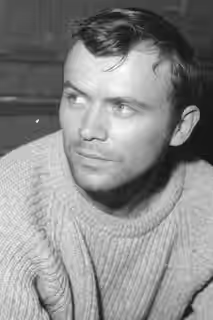
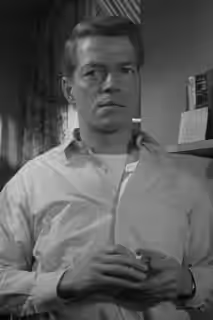
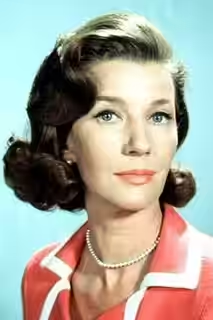
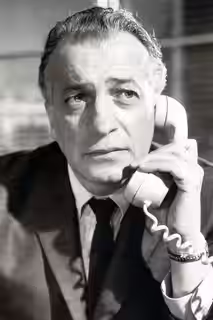
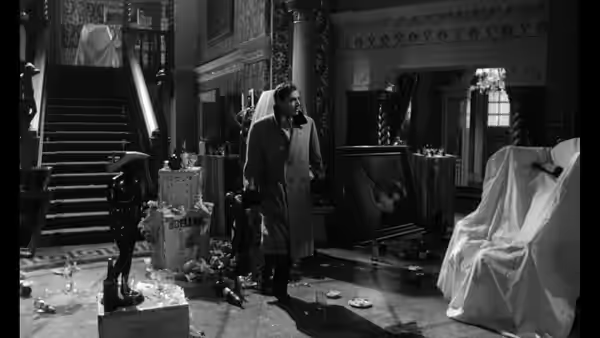
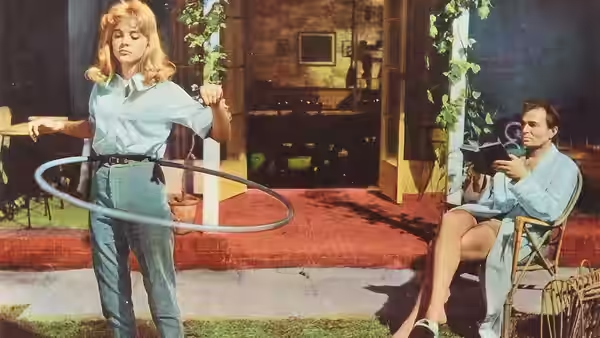
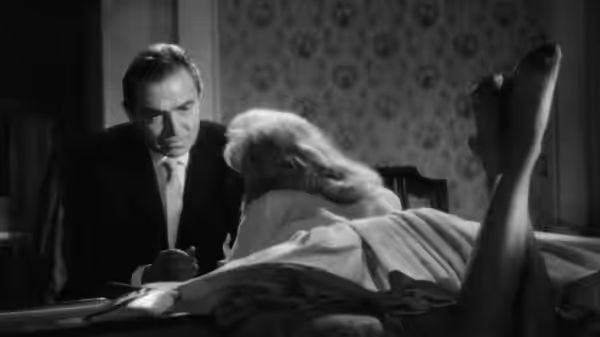
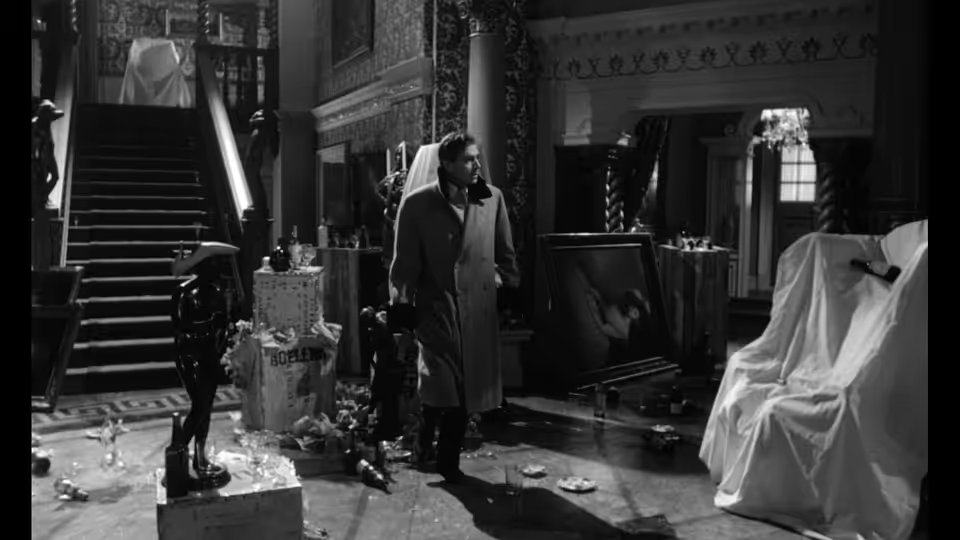
Humbert Humbert (James Mason) stands among covered furniture in a cluttered room
Film review

Lolita

1962 · Directed by Stanley Kubrick · 2h 34m

In a sentenceJames Mason ruins a whole household without once raising his voice or loosening his tie

A small American town at the start of a summer. Professor Humbert Humbert (James Mason), a European scholar due to take up a teaching post in the autumn, needs lodgings for the season. The widow Charlotte Haze (Shelley Winters) shows him round a cluttered house he has already decided against, until she opens the garden door on her daughter Dolores (Sue Lyon), stretched on a towel in a bikini and a wide straw hat. He agrees to stay. Charlotte wants a cultured husband and goes after him with cocktails, a dance at the country club and a great deal of talk about art; Lolita wants her records and her boyfriend; Humbert wants the girl, and spends the summer pretending to want nothing at all.

Plays from YouTube when you press play; nothing loads from them until then.

Fi1m review

Kubrick keeps his distance from Nabokov’s monster, which is the right call and a chilly one, and James Mason and Shelley Winters do the feeling for him. A good film that runs half an hour long and is better than most critics now allow.

The poster asked how they ever made a film of Lolita, and the honest answer is that they did not, quite. Stanley Kubrick’s 1962 film, from a screenplay credited to Vladimir Nabokov, takes the novel’s story of a middle-aged European scholar who marries a widow to get at her daughter and tells it with the door closed. Nothing is shown. Almost nothing is said. What we get instead is 154 minutes of manners, in which a courteous man in good tweed ruins everyone within reach and the camera neither looks away nor looks closer. It is a good film, and a colder one than its admirers sometimes remember.

Humbert Humbert (James Mason) arrives in a small American town needing somewhere to spend the summer. The widow Charlotte Haze (Shelley Winters) shows him a spare bedroom he has already decided against. He is halfway to a polite refusal when she opens the garden door on her daughter Dolores (Sue Lyon), stretched on a towel in a bikini and a straw hat, and he changes his mind. The hour that follows is the best hour, and it is a comedy. Charlotte pursues her lodger with cocktails, a dance at the club and a great deal of French; Humbert, trapped behind her, watches the girl over her shoulder.

We laughed a good deal in that hour, at Charlotte’s chatter about art, at the wince Mason lets flicker across a face otherwise set to polite. Then we felt uneasy about laughing, because Winters plays the loneliness under the talk so plainly that the joke goes sour while you are still enjoying it. Charlotte is the only person in the film who wants something honest, and the film knows it. It is a frightening performance from Mason because it is so agreeable: a man who would be good company at any dinner table in the world and who never once tells the truth.

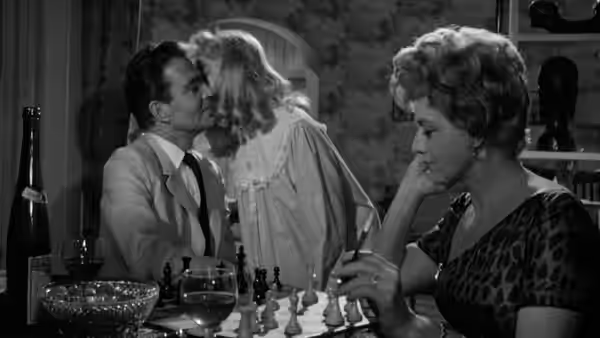
Oswald Morris shoots it in a bright, tidy black and white. The Haze house is chintz and ornaments, lit as if for a catalogue, and the suburbs look a fraction off, which suits a story told by a foreigner who never quite reads the place. Anthony Harvey cuts sparingly and lets scenes run; a trip to a drive-in horror picture is played almost entirely on three hands finding each other on an armrest, and a game of chess between Humbert and Charlotte is one long shot of a man not listening. Nelson Riddle’s music is a jaunty little cha-cha that follows Lolita around like a jingle, and Bob Harris’s love theme swoons over it in a way the picture never permits Humbert to. Gene Coffin puts Charlotte in leopard print and Lolita in gingham, and that does a good deal of the film’s talking.

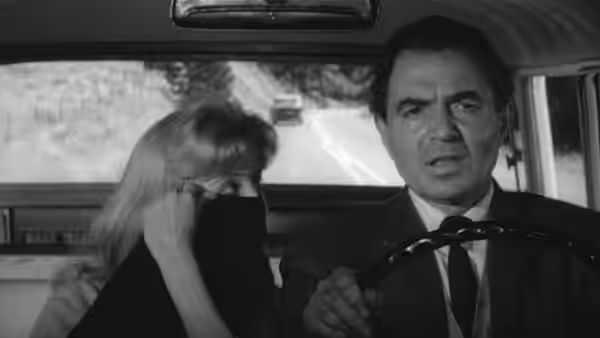
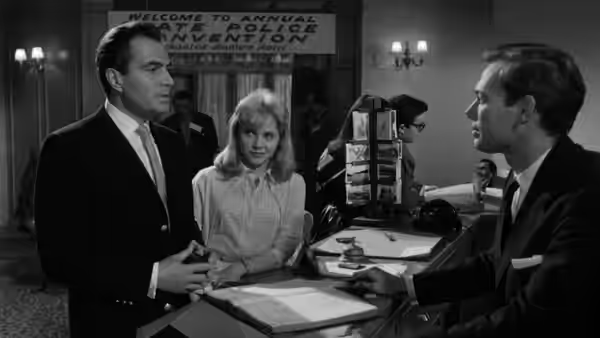
The second half leaves the Haze house and takes a turn we will not describe, and it is where the film loses its shape. Scenes that were tight in the first hour start to sprawl: hotel lobbies, roadside stops and telephone calls run on past the point where they have told us anything. At 154 minutes the film carries half an hour it does not need. Lyon, meanwhile, is better than she is usually given credit for: bored, gum-chewing, and more in charge than the film admits. Kubrick keeps her older than the novel’s child, and the film does not say whether that was cowardice or necessity.

The reviews so far are cool on it: too long, too cold, a director who cannot film happiness. Too long is fair. The rest we think is wrong. Kubrick’s distance is the only decent way to tell this story, and it leaves space for Mason and Winters to do the feeling, which they do. There is no happiness in this story. He was right not to fake one.

See it for the two leads and for an opening hour as sharp as anything Kubrick made. The 15 certificate is a curiosity, since there is nothing on screen to earn it, only the knowledge of what is not being shown, which is the whole method. Give it the full evening; it needs it.
Critical consensus AI synthesised

3 of 6
Positive
0
Mixed
1
Negative
2
Los Angeles Times
17 January 2002 · KEVIN THOMAS
65*

Thomas says the film remains worth seeing despite its excessive length and limitations. He singles out James Mason’s performance, along with the impressive work of Shelley Winters and Peter Sellers.

Read the full review →
Time Out
· GA
40*

The review suggests Kubrick’s adaptation is less affecting than Nabokov’s novel. It criticizes his cold, distanced direction for failing to portray happiness.

Read the full review →
Variety
31 December 1961 · Variety Staff
30*

The review finds the film occasionally amusing but ultimately shapeless and disappointing. It praises James Mason’s performance and Peter Sellers’s comic characterizations.

Read the full review →

Straight answers AI written, from our review

Is Lolita worth watching?
Lolita (1962) is worth watching for James Mason and Shelley Winters, and for an opening hour as sharp as anything Kubrick made; we scored it 73. It is a cold film that keeps its door closed on the story it tells, and at 154 minutes it carries half an hour it does not need. Give it the full evening.
How long is Lolita, and what is it rated?
Lolita runs 2h 34m. It is a drama film.
Where can I watch Lolita in Hungary?
Lolita is not on any streaming or rental service in Hungary at the moment. It is available in 33 other countries; change your country at the top of the page to see where. Availability is checked daily.
How violent or frightening is Lolita, and is it suitable for children?
Lolita (1962) carries a UK 15 certificate, but there is no violence and nothing explicit on screen; the subject is a middle-aged man's pursuit of a young girl, and the film tells it entirely through manners and implication. It is not for children, since the certificate rests on what is understood rather than shown, and that is the whole method.
How does Lolita compare to Dr. Strangelove or: How I Learned to Stop Worrying and Love the Bomb?
Lolita (1962) and Dr. Strangelove are both Kubrick comedies about men who ruin everything while behaving politely, but Lolita half-suppresses its giggle and Strangelove lets it out completely, with bombs. Strangelove is the tighter and funnier film; Lolita is the longer and chillier one, and suits a viewer who wants two fine performances over sustained jokes.
Is Lolita based on a true story or a book?
Lolita (1962) is based on Vladimir Nabokov's novel of the same name, and Nabokov is credited with the screenplay. The film tells the novel's story with the door closed, showing nothing and saying almost nothing outright, and Kubrick makes the girl older than the novel's child. You do not need to have read the book, though readers will notice how much has been left off screen.
What should I watch after Lolita?
After Lolita, try Dr. Strangelove (1964, Fi1m 93): Kubrick lets the giggle he half-suppresses here out completely, with bombs. Then Bigger Than Life (1956, Fi1m 85): James Mason as another reasonable man going quietly wrong inside a tidy American house; and The Night of the Hunter (1955, Fi1m 91): Shelley Winters again as a widow who trusts the wrong lodger, shot like a nightmare.

Cast

Awards

Academy Awards, 1963

Nominated
Best Writing, Adapted Screenplay

Golden Globes, 1962

Won
New Star of the Year – Actress

If you liked this, try…

  1. Dr. Strangelove (1964, Fi1m 93)Kubrick lets the giggle he half-suppresses here out completely, with bombs.

  2. Bigger Than Life (1956, Fi1m 85)James Mason as another reasonable man going quietly wrong inside a tidy American house.

  3. The Night of the Hunter (1955, Fi1m 91)Shelley Winters again as a widow who trusts the wrong lodger, shot like a nightmare.

  4. The Servant (1963, Fi1m 89)Another black-and-white study of a household rotting politely from the inside.

  5. Death in Venice (1971) · not on Fi1m yetVisconti’s version of the same disease, slower, sadder and without the jokes.

Lolita (1962) review: superb Mason, cold Kubrick, too long (Hungary) | Fi1m