Kubrick keeps his distance from Nabokov’s monster, which is the right call and a chilly one, and James Mason and Shelley Winters do the feeling for him. A good film that runs half an hour long and is better than most critics now allow.
The poster asked how they ever made a film of Lolita, and the honest answer is that they did not, quite. Stanley Kubrick’s 1962 film, from a screenplay credited to Vladimir Nabokov, takes the novel’s story of a middle-aged European scholar who marries a widow to get at her daughter and tells it with the door closed. Nothing is shown. Almost nothing is said. What we get instead is 154 minutes of manners, in which a courteous man in good tweed ruins everyone within reach and the camera neither looks away nor looks closer. It is a good film, and a colder one than its admirers sometimes remember.
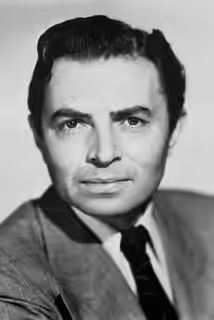
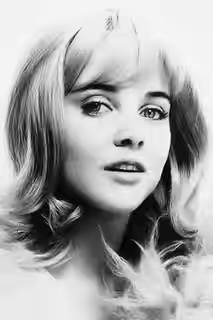
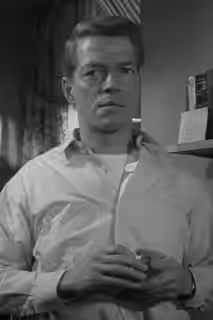
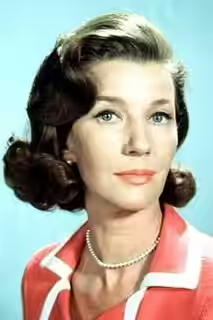
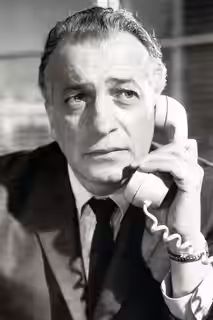
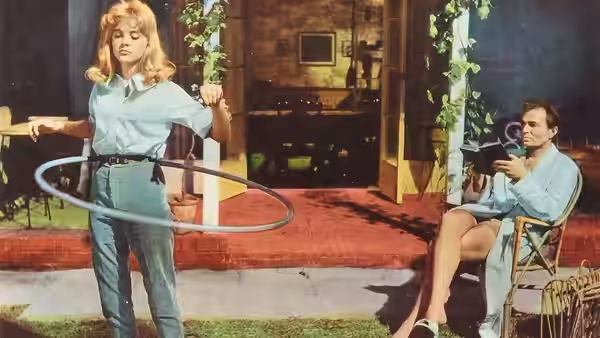
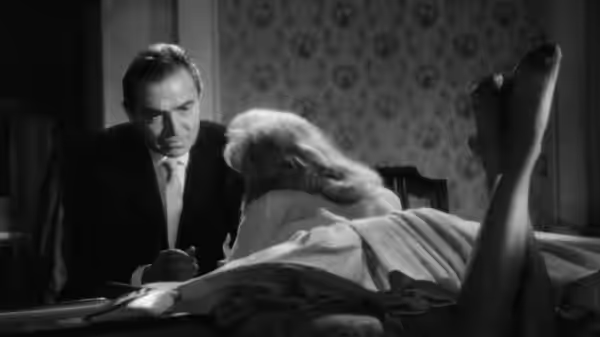
Humbert Humbert (James Mason) arrives in a small American town needing somewhere to spend the summer. The widow Charlotte Haze (Shelley Winters) shows him a spare bedroom he has already decided against. He is halfway to a polite refusal when she opens the garden door on her daughter Dolores (Sue Lyon), stretched on a towel in a bikini and a straw hat, and he changes his mind. The hour that follows is the best hour, and it is a comedy. Charlotte pursues her lodger with cocktails, a dance at the club and a great deal of French; Humbert, trapped behind her, watches the girl over her shoulder.
We laughed a good deal in that hour, at Charlotte’s chatter about art, at the wince Mason lets flicker across a face otherwise set to polite. Then we felt uneasy about laughing, because Winters plays the loneliness under the talk so plainly that the joke goes sour while you are still enjoying it. Charlotte is the only person in the film who wants something honest, and the film knows it. It is a frightening performance from Mason because it is so agreeable: a man who would be good company at any dinner table in the world and who never once tells the truth.
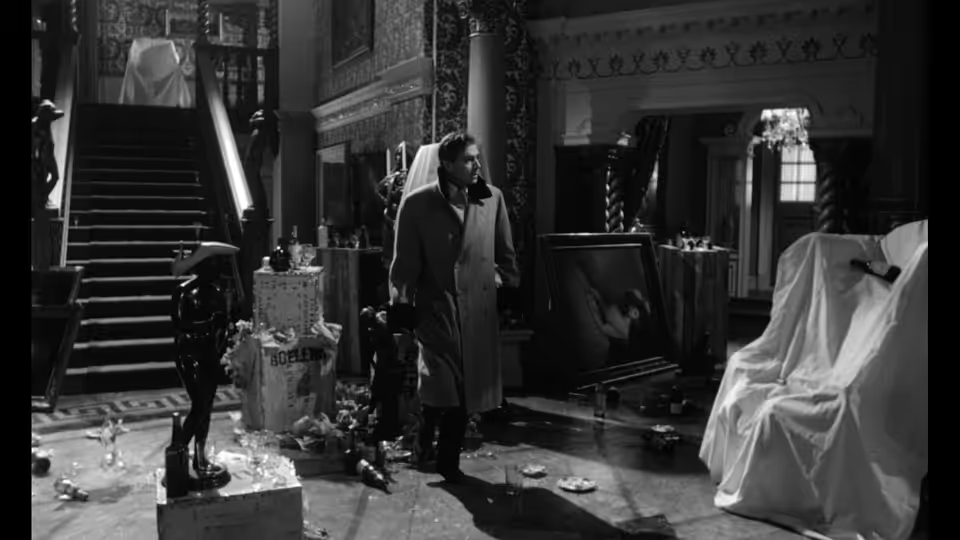
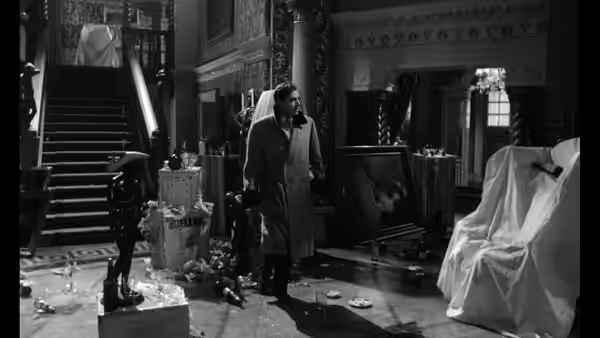
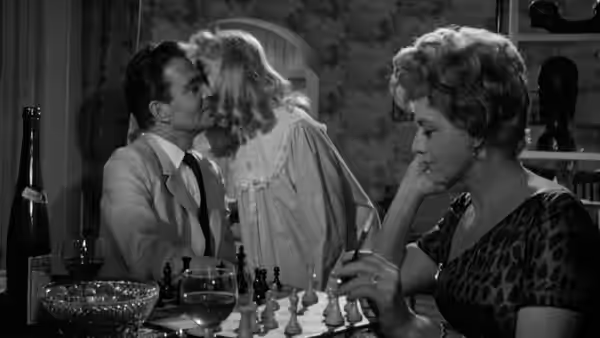
Oswald Morris shoots it in a bright, tidy black and white. The Haze house is chintz and ornaments, lit as if for a catalogue, and the suburbs look a fraction off, which suits a story told by a foreigner who never quite reads the place. Anthony Harvey cuts sparingly and lets scenes run; a trip to a drive-in horror picture is played almost entirely on three hands finding each other on an armrest, and a game of chess between Humbert and Charlotte is one long shot of a man not listening. Nelson Riddle’s music is a jaunty little cha-cha that follows Lolita around like a jingle, and Bob Harris’s love theme swoons over it in a way the picture never permits Humbert to. Gene Coffin puts Charlotte in leopard print and Lolita in gingham, and that does a good deal of the film’s talking.
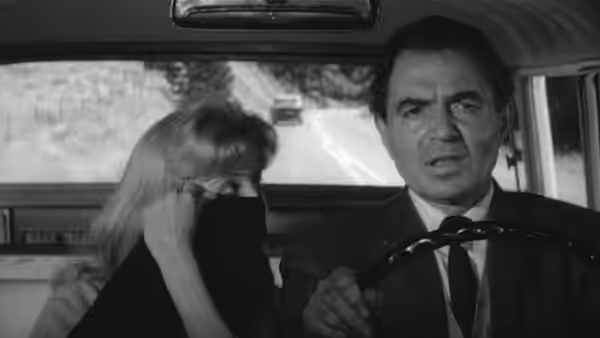
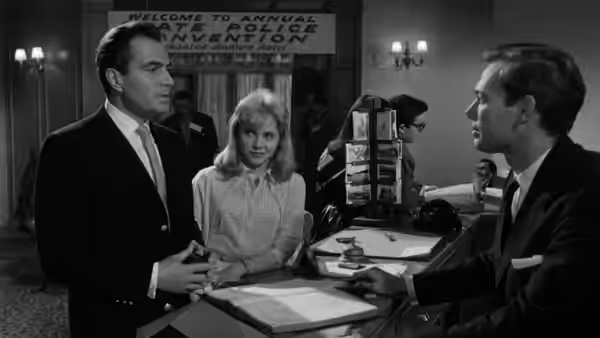
The second half leaves the Haze house and takes a turn we will not describe, and it is where the film loses its shape. Scenes that were tight in the first hour start to sprawl: hotel lobbies, roadside stops and telephone calls run on past the point where they have told us anything. At 154 minutes the film carries half an hour it does not need. Lyon, meanwhile, is better than she is usually given credit for: bored, gum-chewing, and more in charge than the film admits. Kubrick keeps her older than the novel’s child, and the film does not say whether that was cowardice or necessity.
The reviews so far are cool on it: too long, too cold, a director who cannot film happiness. Too long is fair. The rest we think is wrong. Kubrick’s distance is the only decent way to tell this story, and it leaves space for Mason and Winters to do the feeling, which they do. There is no happiness in this story. He was right not to fake one.
See it for the two leads and for an opening hour as sharp as anything Kubrick made. The 15 certificate is a curiosity, since there is nothing on screen to earn it, only the knowledge of what is not being shown, which is the whole method. Give it the full evening; it needs it.