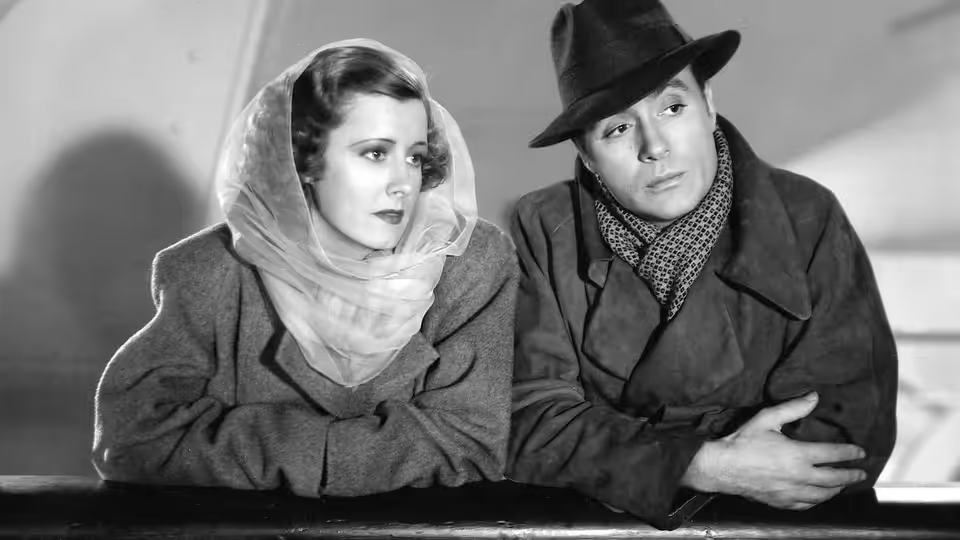
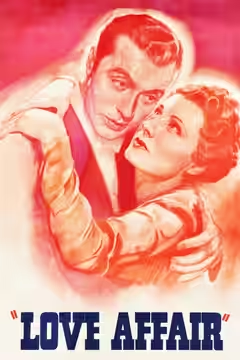
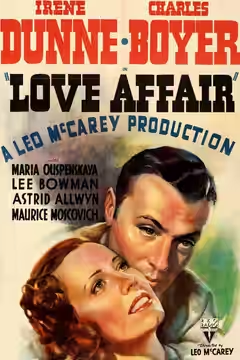
Leo McCarey’s 1939 original is still the best version of this story, mainly because Irene Dunne and Charles Boyer talk like two people who are enjoying themselves. The second half asks you to forgive some heavy plotting; the last scene makes that easy.
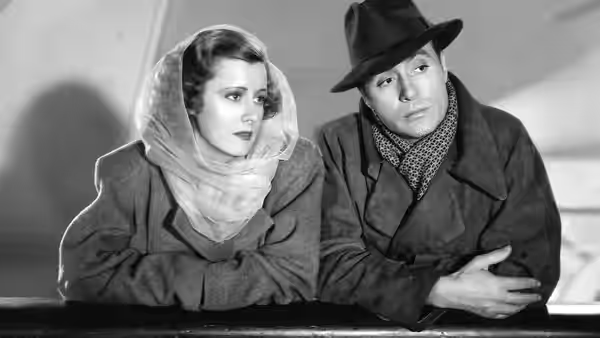
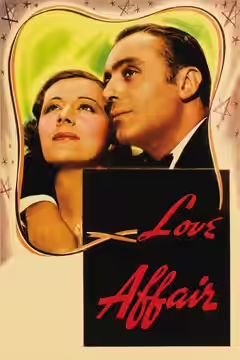
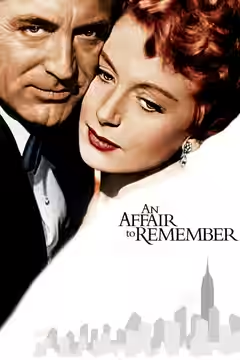
Michel Marnet (Charles Boyer) is a French painter who has not painted much, engaged to an heiress and sailing to New York to marry her. Terry McKay (Irene Dunne) is an American singer sailing home to a fiancé of her own. They meet on deck, they talk, and Leo McCarey gives the two of them most of his first forty minutes and almost nothing else to do. Love Affair is the film McCarey remade himself as An Affair to Remember in 1957, and which was remade again under its own name in 1994. This one is still the best of the three, and the reason is the talk.
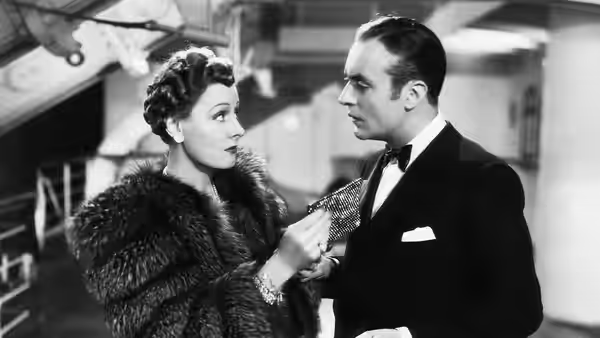
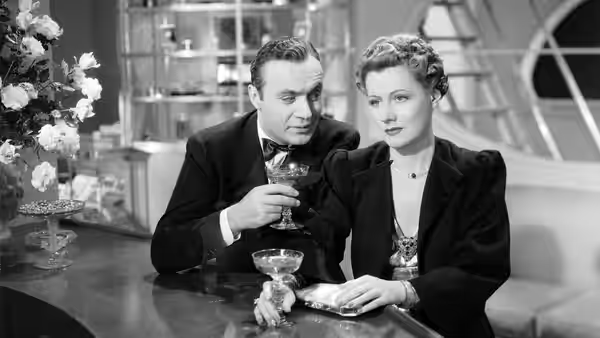
Boyer and Dunne speak to each other the way people do when they are enjoying it and slightly alarmed by that. Delmer Daves and Donald Ogden Stewart’s screenplay, from a story by McCarey and Mildred Cram, gives them lines that sound half made up on the spot, and McCarey lets them wander off the point and back. The ship is plainly a set and a back projection and Rudolph Maté does not pretend otherwise; he lights the deck at night so the faces are bright and the sea is a grey smear behind them, and the effect is of two people in a room with nowhere else to go. We laughed a good deal. It is worth saying that the film is a comedy for its first half, whatever the poster promises.
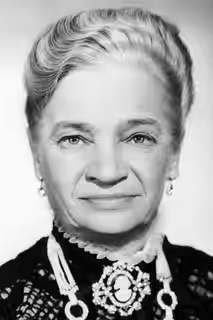
The stop at Madeira is where it turns. Michel takes Terry up the hill to his grandmother (Maria Ouspenskaya), a tiny, upright woman living alone with a piano and a chapel, and she and Terry take to each other in a way the film does not explain and does not need to. Terry goes into the chapel and kneels; Michel, who has not done this in years, follows her in after a moment. Then the grandmother plays and Terry sings, and Roy Webb has the sense to keep his own music out of it. That scene moved us more than we expected, and what did it was Ouspenskaya’s face watching the two of them, already knowing something about her grandson’s chances that we did not.
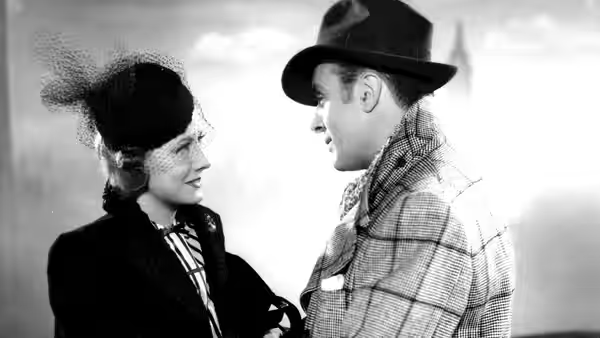
By the time the ship reaches New York they have agreed to meet in six months at the top of the Empire State Building, if Michel has learned to earn a living and both are still free. What happens after that we will not describe, except to say that the film stops being a comedy and leans hard on coincidence to do it. A stretch involving Terry, a job and a room full of singing children is sweeter than it needs to be. Lee Bowman’s Kenneth Bradley and Astrid Allwyn’s Lois Clarke, the two fiancés, are given nothing to be but obstacles, and Bowman in particular has the thankless task of being kind in a film that has no use for his kind of kindness.
Dunne carries the second half. She can hold a smile on her face while her eyes report something else entirely, and Edward Dmytryk and George Hively keep the cutting slow enough that we can watch her do it. Howard Greer and Edward Stevenson dress her for the crossing in fur and long lines, and afterwards in plain dresses a working woman could afford. Boyer, who could have coasted on his voice, plays Michel smaller and smaller as the film goes on, so that by the last scene he is barely moving.
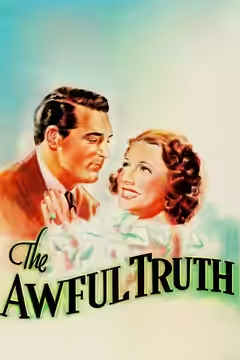
That last scene is the one most people remember, and rightly. It is long, it is in one room, and nearly all of it is two people not saying the thing. We sat quite still through it and were not composed at the end, which we had not planned on. McCarey had worked with Dunne two years earlier on The Awful Truth, where the joke was that two people could not stop talking. Here they cannot start.
At 88 minutes it is short, and it needs to be; the plot would not stand another reel. See it before you see either remake, and see it with someone who believes black-and-white weepies are for their grandmother. The grandmother is the best argument against them.