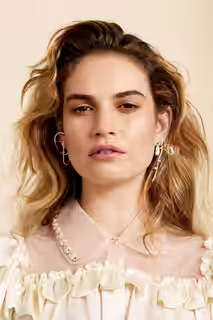
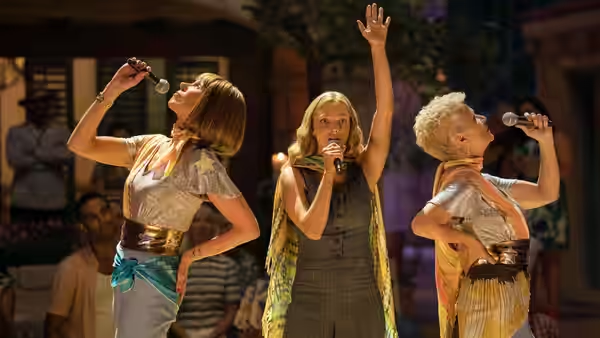
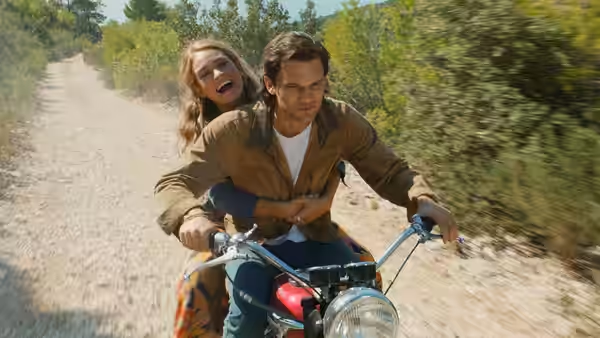
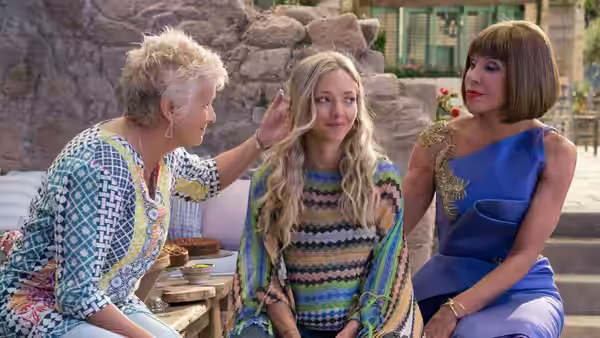
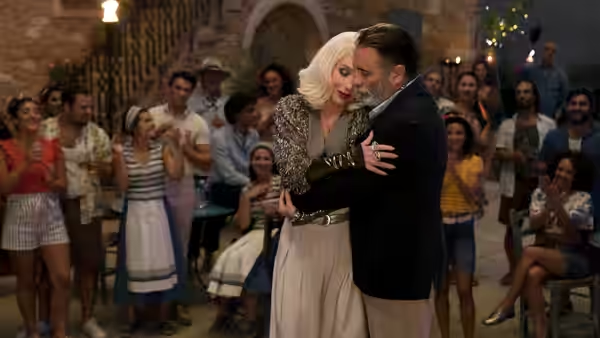
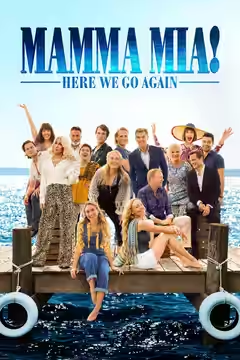
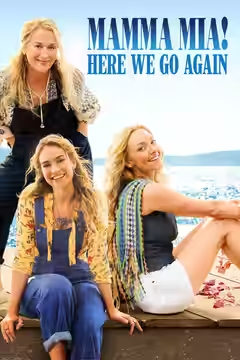
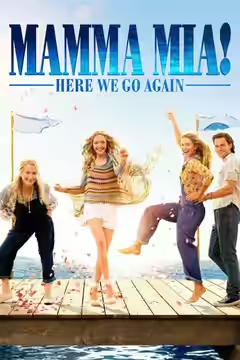
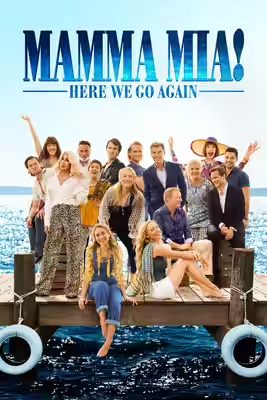
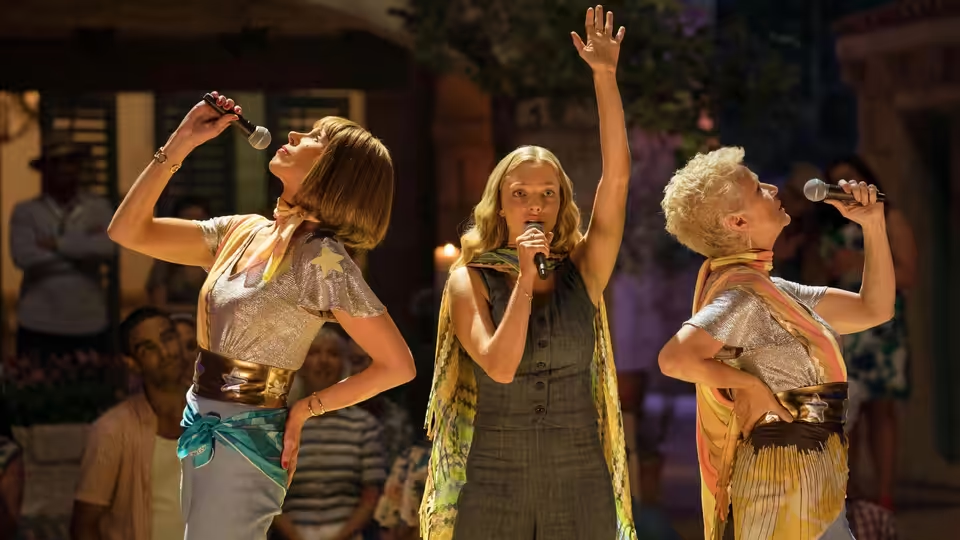
Young Donna (Lily James), Young Tanya (Jessica Keenan Wynn) and Young Rosie (Alexa Davies) sing together outdoors
Film review

Mamma Mia! Here We Go Again

2018 · Directed by Ol Parker · 1h 54m · MPA PG-13

In a sentenceLily James gives the impression that an awkward conversation would improve considerably with backing singers

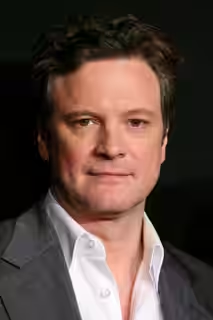
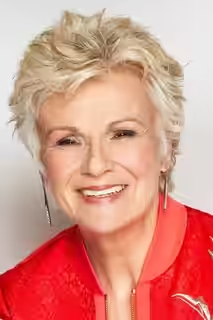
Sophie (Amanda Seyfried) shares the story with Young Donna (Lily James), whose earlier romances unfold alongside Sophie’s life. Songs carry the action between the two periods in a holiday-romance setting. Tanya (Christine Baranski) and Rosie (Julie Walters) have younger counterparts in Young Tanya (Jessica Keenan Wynn) and Young Rosie (Alexa Davies). Sam (Pierce Brosnan) and Harry (Colin Firth) also feature in an ensemble built around ABBA songs. Donna’s romantic past supplies the prequel strand, while the musical numbers connect her experiences with Sophie’s.

Plays from YouTube when you press play; nothing loads from them until then.

Fi1m review

Lily James makes this uneven musical sequel worth an evening. The romantic backstory runs long, but Ol Parker gives the songs enough warmth to make the slower stretches forgivable.

Ol Parker understands the basic appeal of an ABBA musical, even when his screenplay takes an unnecessarily long route to the next song. This is an enjoyable sequel with a romantic backstory that needs a firmer cut. It follows Sophie and looks back to Young Donna, asking the music to connect their experiences across two periods. The performers help it past some unlikely plotting by treating the songs as things worth singing. We can forgive quite a lot when they do.

Lily James is the main reason to return. Her Young Donna gives the musical numbers enough enthusiasm to keep their silliness from becoming an excuse for careless work. We grinned through “When I Kissed the Teacher”, because Lily James puts such conviction into the number that holding ourselves aloof would have felt like hard work. She is persuasive in the romance for much the same reason. There is no embarrassment in her singing, and no suggestion that enjoying ourselves requires us to stop caring about the performance.

Peter Lambert’s editing does its most useful work in the movement between Donna and Sophie. Bringing the two periods together gives their experiences a connection that the romantic complications cannot always supply on their own. Amanda Seyfried takes Sophie’s feelings seriously, helping the film keep some tenderness amid the busier musical comedy. We were more moved by the connection between these women than we expected; the cutting lets their performances speak to one another without another lengthy explanation. Those passages earn the sentiment that the weaker scenes simply assume.

Robert Yeoman’s photography gives the holiday romance a suitably cheerful look, though the brightness becomes a little insistent. The production design by Alan MacDonald and John Frankish is similarly indulgent, making the setting feel ready for a musical number at any moment. Michele Clapton’s costumes make the period kitsch part of the pleasure rather than a distraction from the cast. All that visual encouragement helps when the story hesitates. Ol Parker’s staging is less reliable, and some numbers depend too heavily on our affection for the music.

The music credited to Benny Andersson, Björn Ulvaeus and Anne Dudley is often enough to carry a scene whose writing offers little help. Familiar material arrives with an advantage no screenplay could earn in a few scenes: many of us already know how it makes us feel. The less familiar selections have to work harder, and some expose how thinly the surrounding episodes have been written. The musical performances are generally persuasive enough to make these changes in quality manageable. Even the weaker choices get a committed hearing from the cast.

Christine Baranski’s Tanya gives the comedy a precision the writing does not always deserve. Julie Walters, as Rosie, adds to the easy ensemble warmth, though the broader jokes are less dependable. Ol Parker too often extends a romantic episode after its purpose is clear, and moving between past and present cannot disguise the waiting. A jukebox musical needs some life between the songs, and this one occasionally settles for keeping its cast occupied. The passages of romantic backstory could be shorter.

Anyone looking for the plot to justify every burst of singing will have a long evening. The film assumes an appetite for this music and does little to accommodate anyone without it. With that appetite, the weaker jokes and slack stretches are manageable, and Lily James gives the romance enough conviction to matter. Choose it for a night when a good chorus matters more than a tidy story.

Critical consensus AI synthesised

70
Positive
15
Mixed
6
Negative
2

Most critics welcome the sequel as a warmer, funnier and more affecting return, with several finding it an improvement on the original. Praise centres on Lily James, whose spirited performance gives young Donna’s romantic adventures conviction and helps sell the musical numbers. The ensemble’s comic energy also wins approval. For many reviewers, the ABBA songs carry surprising emotional weight, even when the story connecting them is slight.

The spread runs from wholehearted enthusiasm to disappointment, with thin plotting, uneven pacing and weaker song choices accounting for most reservations. Critics also disagree over how successfully the musical numbers are staged and whether Cher is well used. Time Out finds the sequel cheesier and less magical than its predecessor, particularly without Meryl Streep’s earlier contribution. The Hollywood Reporter praises the sharper script but finds the reliance on recycled hits and weaker ABBA material disappointing.

The Guardian
22 July 2018 · ★★★★★ · Mark Kermode
100

Kermode loves the sequel and says he cannot imagine it being better. He praises its knowing, ingenious use of ABBA songs and singles out the emotional impact of “My Love, My Life.”

Read the full review →
Los Angeles Times
18 July 2018 · Justin Chang
90*

Chang finds the sequel unexpectedly enchanting and a marked improvement on the original. He especially praises Lily James’s spirited performance and the cross-cutting that deepens the bond between Donna and Sophie.

Read the full review →
Little White Lies
20 July 2018 · 3/4/4 · Manuela Lazic
80

Lazic finds the sequel brighter, funnier and more touching than expected. She praises Lily James’s fresh take on young Donna and the way familiar songs gain emotional weight.

Read the full review →
The i Paper
18 July 2018 · ★★★★ · Stuart Heritage
80

Heritage finds the sequel much funnier and better than its predecessor, despite its depleted selection of ABBA hits. He praises Lily James’s vivacious performance and Cher’s exuberant moment, while lamenting that Pierce Brosnan gets no solo.

Read the full review →
Variety
17 July 2018 · Owen Gleiberman
80*

Gleiberman finds the sequel a swooning, kitschy musical whose ABBA songs overcome its soap-opera convolutions. He especially praises Lily James’s energetic performance of “When I Kissed the Teacher.”

Read the full review →
Vulture
17 July 2018 · Emily Yoshida
75*

Yoshida finds the film a breezy, sincere extension of the original, even if its plot is slight. She especially praises Lily James for selling the musical numbers with heart, and singles out the final sequence for its emotional payoff.

Read the full review →

Straight answers AI written, from our review

How long is Mamma Mia! Here We Go Again, and what is it rated?
Mamma Mia! Here We Go Again runs 1h 54m and is rated PG-13 by the MPA in the US. It is a comedy and romance film.
Where can I watch Mamma Mia! Here We Go Again in the US?
Mamma Mia! Here We Go Again is available to rent from Apple TV and Amazon Prime Video from $3.99. Availability is checked daily; the links above go straight to each service.
What should I watch after Mamma Mia! Here We Go Again?
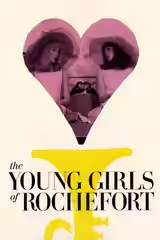
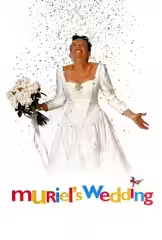
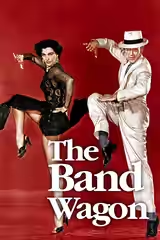
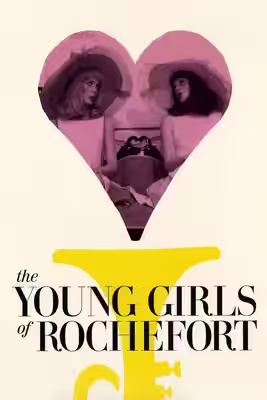
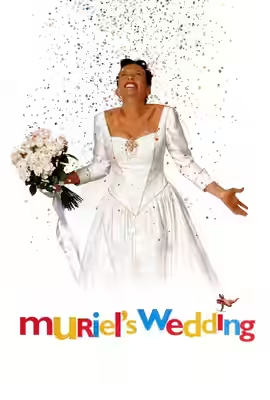
After Mamma Mia! Here We Go Again, try The Young Girls of Rochefort (1967, Fi1m 84): For songs, romantic crossings and a town arranged around the pleasure of dancing. Then Muriel's Wedding (1994, Fi1m 81): More ABBA, with sharper embarrassment and a much harder look at wanting romance; and The Band Wagon (1953, Fi1m 84): For musical comedy that gives its performers room to be funny between songs.

Cast

Awards

European Film Award – People's Choice Award for Best European Film, 2019

Nominated
European Film Award – People's Choice Award for Best European Film

If you liked this, try…

  1. The Young Girls of Rochefort (1967, Fi1m 84)For songs, romantic crossings and a town arranged around the pleasure of dancing.

  2. Muriel's Wedding (1994, Fi1m 81)More ABBA, with sharper embarrassment and a much harder look at wanting romance.

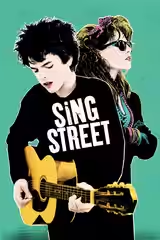
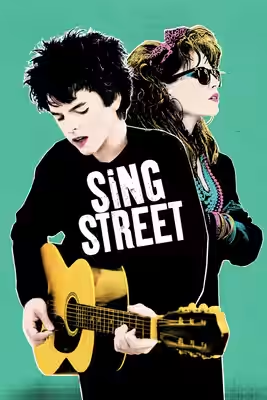
  3. Sing Street (2016) · not reviewed yetFor young performers making music feel like a practical response to romantic panic.

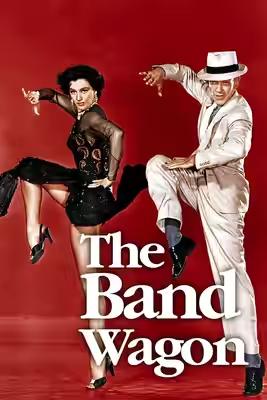
  4. The Band Wagon (1953, Fi1m 84)For musical comedy that gives its performers room to be funny between songs.

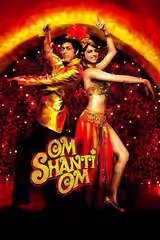
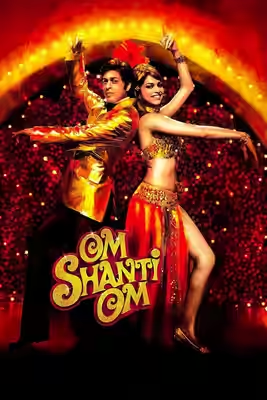
  5. Om Shanti Om (2007) · not reviewed yetFor romance and musical excess delivered with more conviction than any sensible plot requires.

Free account

Know what to watch tonight

Two lists that know where things are streaming, collections you can share, your own score beside ours, and Discover that remembers what you have seen.

  • Want to see, sorted by what is streaming now
  • Seen, with your score out of ten
  • No adverts, ever