Travis Knight’s reboot is bright, cheerfully cast and has a Skeletor worth the ticket in Jared Leto. But the script cannot decide whether it is in on the joke or is the joke, and at 141 minutes the winking wears thin.
Travis Knight, who made Kubo and the Two Strings and Bumblebee, has been handed a toy line from the 1980s and asked to make it work for people who were not born then. Masters of the Universe is bright, brisk in patches and cast with care, and it has a villain worth the evening. It also cannot get through a scene without reminding us how silly all of this is, and after 141 minutes of that we stopped finding the reminder funny.
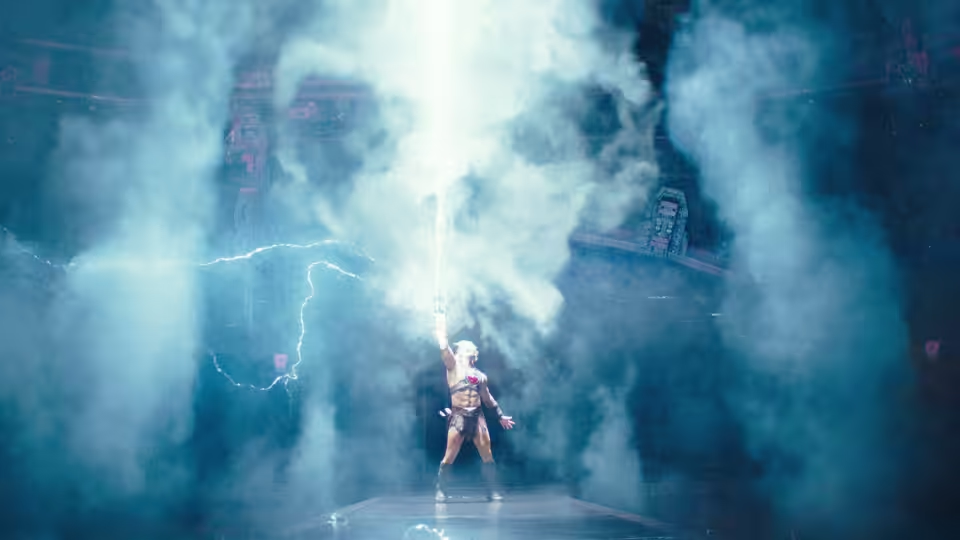
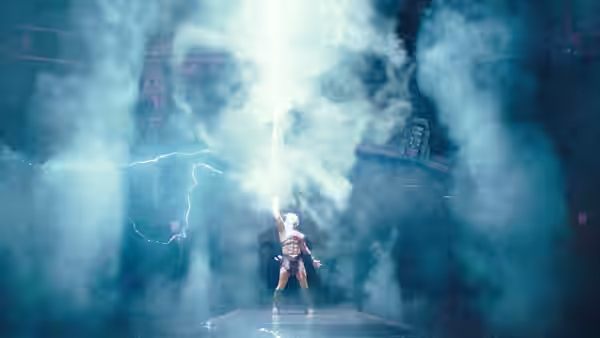
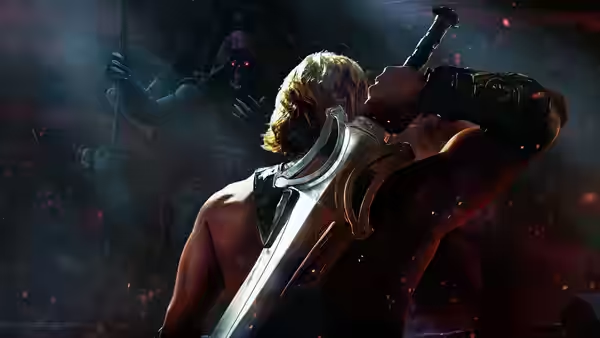
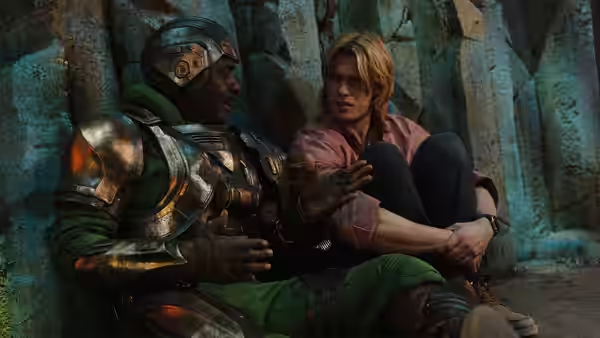
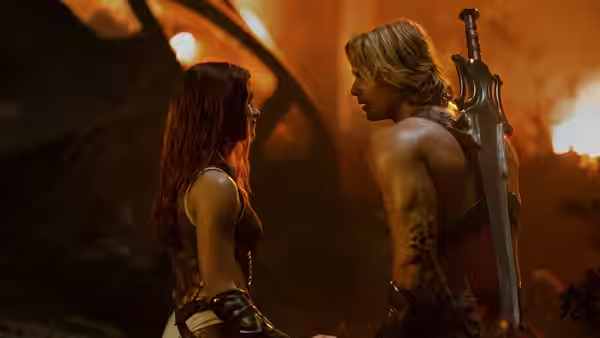
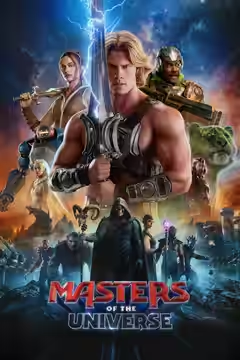
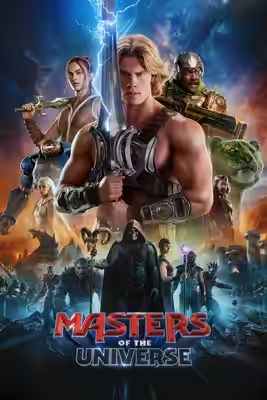
Nicholas Galitzine plays Adam, a prince who would rather not be one, and his gift here is bewilderment. He looks at the sword, the harness and the furry shorts the way the rest of us do, and for a while that is a good joke. Camila Mendes’s Teela does most of the competent work and pulls him out of trouble he has wandered into. Idris Elba’s Duncan is the steadying adult, played as if he has been in this film several times before and knows where the exits are. When the sword goes up and the light comes, Galitzine straightens, drops his voice, and the film has a proper hero for about a minute before someone in the scene points out how he looks.
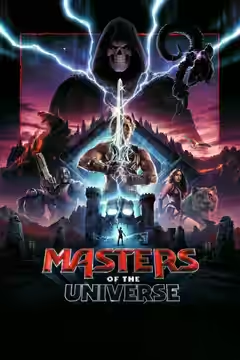
Fabian Wagner shoots Eternia in the flat, saturated primary colours of the cartoon, and after a decade of blockbusters lit like a wet car park that alone is a relief. Guy Hendrix Dyas builds the sets as if the toys had been scaled up rather than rethought, with the same fat curves and painted panels, and Richard Sale keeps the costumes close to the packaging. It looks like the thing it is adapting, which is the right decision, and one the film then apologises for at every opportunity.
Jared Leto’s Skeletor is the reason to go. He plays him as a vain, aggrieved man in a skull, someone who has been slighted once and has decided the entire planet should hear about it, and he never once winks at us. Alison Brie’s Evil-Lyn watches him with the patience of a woman who has already worked out how this ends and is staying for the view. Their scenes have a snap the hero’s scenes never find, because the villains are allowed to mean it. We grinned every time the film cut back to them, and we noticed we had started waiting for it to.
The script is credited to four writers, Adam Nee, Aaron Nee, Chris Butler and David Callaham, with a story shared between the Nees, Alex Litvak and Michael Finch, and it reads like it. Half the lines are gags about how daft the property is; the other half want us moved by a boy finding his purpose; and they are frequently in the same scene. Each time a moment between Adam and James Purefoy and Charlotte Riley’s king and queen threatens to land, a quip arrives to make sure it does not. We laughed at the first joke about the outfit. By the sixth we wanted the film to stop asking whether we were laughing and get on with it, and somewhere past the halfway mark we were bored, then cross about being bored by something built with this much care.
Paul Rubell cuts the fights cleanly enough that we always knew who was hitting whom, which is more than many films of this size manage. But the picture is 141 minutes long and does not have 141 minutes of story, and the middle stretch settles into chase, quip, chase. Daniel Pemberton’s score is loud, brassy and entirely unembarrassed, the one department that decided to play the material straight, and when it swells under the transformation you can hear the film this might have been.
The comparison the film keeps inviting is Barbie, and it is the wrong one; Barbie was about its toy, and this is merely made of it. Knight’s own Bumblebee is the better precedent, an old property played warm and small and sincere, and it did not need to keep telling us it knew what it was. This is a good deal better than the 1987 version. That is not a high bar.
Take a child who has never heard of He-Man; they will enjoy the colours and will not notice the apologies. If you were that child the first time round, be ready to be told, roughly every ten minutes, how you ought to be feeling about it. It carries a 12A.