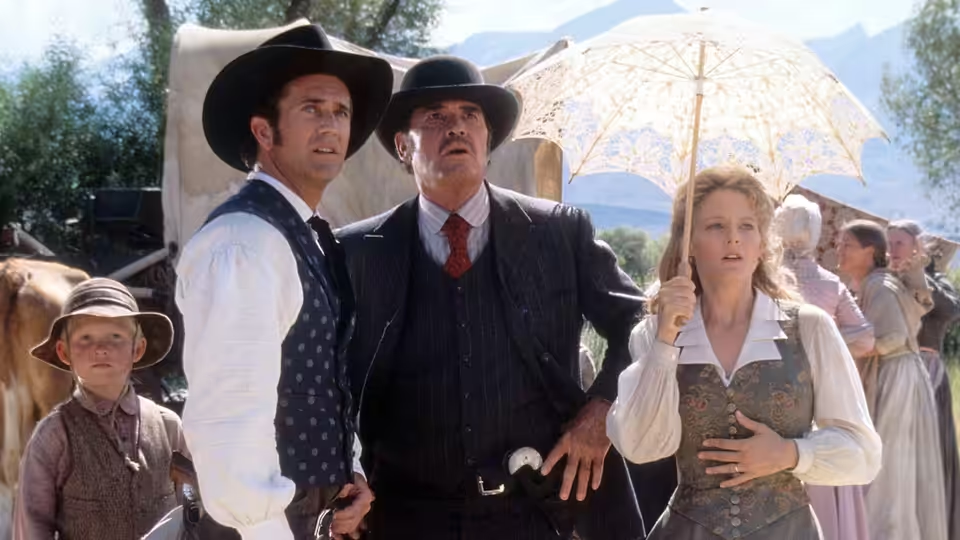
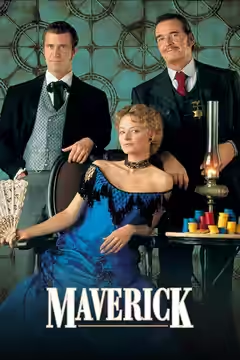
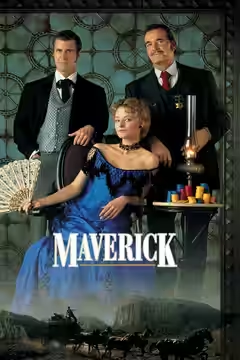
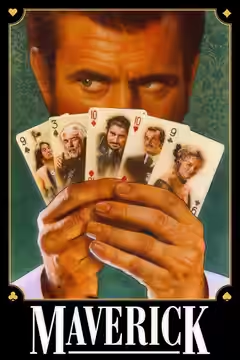
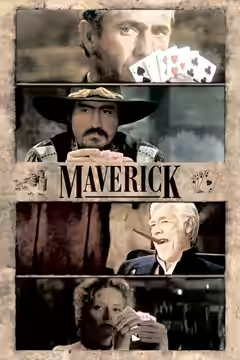
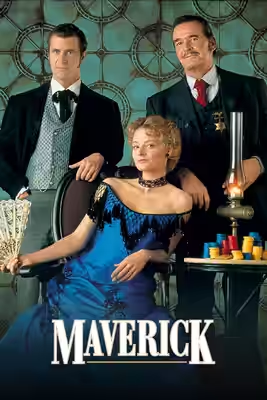
Richard Donner’s big-screen version of the television Western is sunny, handsome and about twenty minutes too long. Mel Gibson grins, Jodie Foster steals, and James Garner, who played the part first, quietly shows them both how it is done.
Richard Donner and the screenwriter William Goldman have taken a television series from the 1950s and made it into a 127-minute Western comedy in which nobody we care about is ever in real danger. That is a legitimate thing to make. Maverick is pleasant company for most of its length, it looks the way a Western ought to look, and it has one performance that is better than the film around it. It is also slack, repetitive and long, and it mistakes its own charm for a plot.
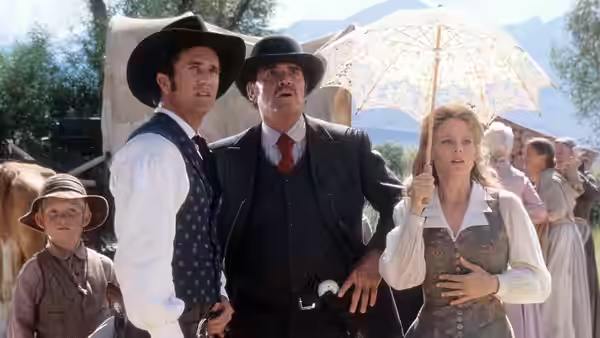
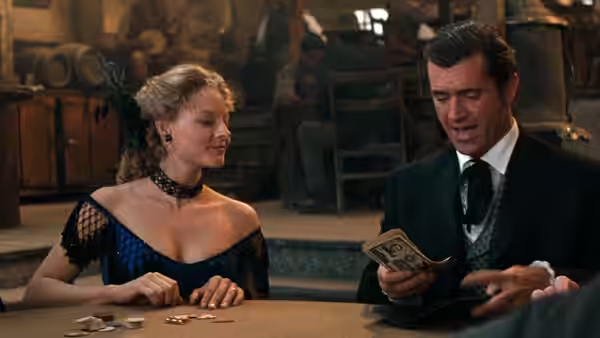
The first act is the best of it. Gibson sits down opposite Alfred Molina’s Angel, asks for a minute to feel the cards, loses on purpose, and then does not lose again, and the scene is written and played with the kind of patience the rest of the film could have used. Foster arrives in a dress too large for the town, says something sweet and lifts Gibson’s wallet, and Garner’s marshal watches the pair of them with the face of a man who has seen this before and expects to see it again. Then the three of them share a stagecoach, the driver dies at the reins, and Gibson has to climb out along the horses to stop it. We laughed, properly, because Donner stages it as a stunt and shoots it as a joke, and because Garner spends the whole sequence declining to help.
Vilmos Zsigmond shoots the country wide and gold, with the riders small against the rock, and he lights the interiors warm so that even the saloon brawls look hospitable. Thomas E. Sanders builds the Lauren Belle as a floating hotel of brass rails and red plush, and the last stretch aboard it is the only part of the film that feels designed rather than assembled. April Ferry dresses Foster in bustles and bows she can hide things in and puts Gibson in frilled shirts a real gambler would have been shot for. Randy Newman’s score is all banjo and bounce, and it tells us the film is a lark at every opportunity, which is more often than we needed telling.
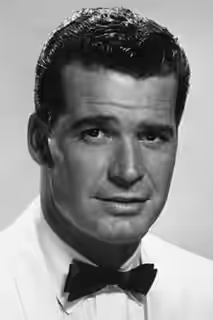
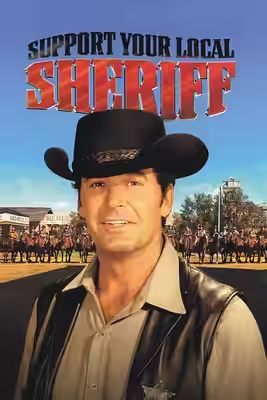
Garner is the reason to watch. He played Bret Maverick on television in the 1950s, and here, as the marshal, he does less than anyone else on screen and gets more out of it. He lets Gibson do the talking, waits, and then lands a dry line about two seconds after we have stopped expecting one. Foster is better than the part. She plays Annabelle as a woman who has decided the way to get through the West is to be underestimated by everyone in it, and she makes the accent slip exactly when it is funny for it to slip. Gibson is loose and likeable and never stops performing, and after an hour we wanted him to.
The trouble is the middle. Goldman’s script is built as a run of debt-collecting episodes, each with a new face and a new double-cross, and each ending roughly where the last one did, with Maverick a little richer or a little poorer and the riverboat no nearer. Graham Greene is good as Joseph, and his scheme with Paul L. Smith’s Archduke is a sharp joke about who is fooling whom in the West, but it belongs to a different film and the editors Stuart Baird and Michael Kelly cut it in as if it were a sketch. We looked at our watch during the second hour, and then felt ungrateful about it, because nothing on screen was actually bad. It was simply the same thing again, told with the same grin.
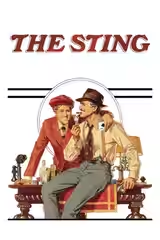
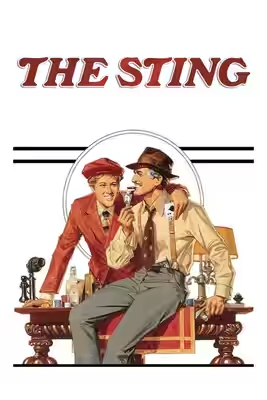
Goldman wrote Butch Cassidy and the Sundance Kid (1969), and this is that film’s banter without that film’s sadness. It is also, plainly, The Sting (1973) with horses, down to the way every scene turns out to have been rigged by someone we were not watching. The 1957 series got through a swindle in fifty minutes and did not pause for admiration afterwards. The film pauses often.
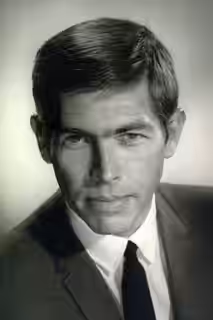
The second half takes a turn or two we will not describe, and the riverboat tournament, with James Coburn’s Commodore Duvall presiding and Dan Hedaya twitching across the table, is a well-made twenty minutes. See it with children on a wet afternoon, where its length matters less and its easiness matters more, and watch Garner. It carries a PG and earns it; nobody here would hurt a fly, and the film knows it, and that is both its appeal and its limit.