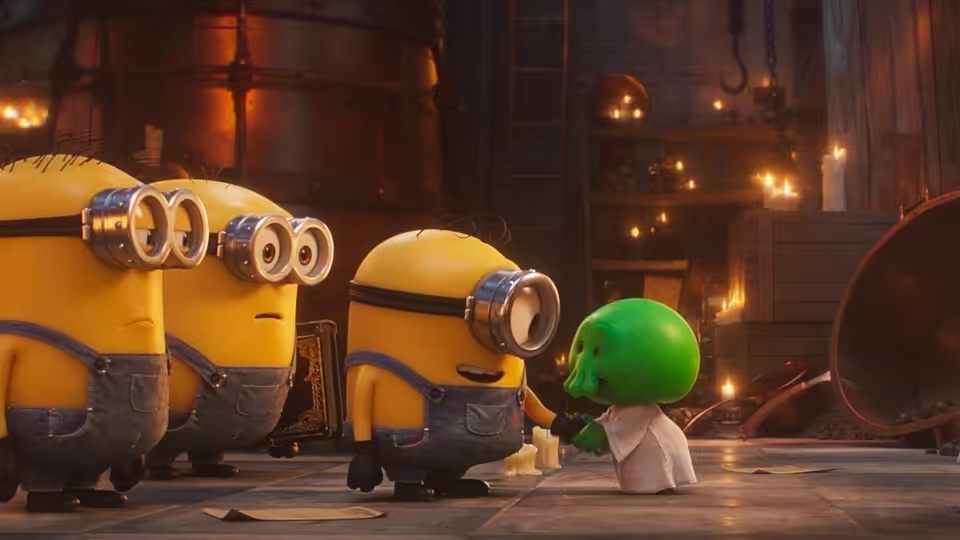
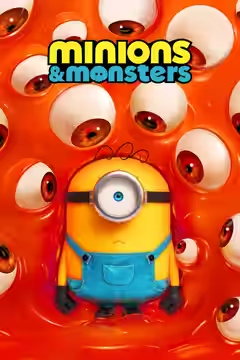
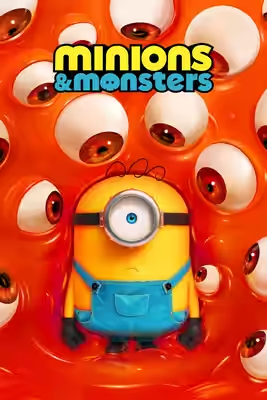
Pierre Coffin’s third standalone Minions film sends its yellow chorus to 1920s Hollywood and, for about an hour, has more ideas about cinema than we expected. Then it becomes the film it always was. Still the best of them.
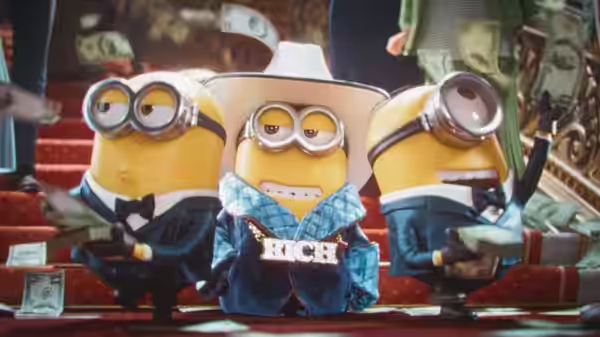
The Minions have been to the Sixties, to the Seventies and to the villain convention circuit, and each time the joke was the same: they are small, they are many, they speak a language made of soup and Spanish, and they break things. Minions & Monsters has the sense to put them somewhere the breaking means something. Pierre Coffin, who has directed these creatures and done their voices since Despicable Me (2010), sets them down in Hollywood in the 1920s, when the pictures did not talk either. That is the one good idea the series has ever had about itself, and for an hour Coffin and his co-writer Brian Lynch follow it properly.
The first half is the film to see. A horde that communicates by gesture and noise turns out to be perfectly built for silent comedy, and Coffin knows it. The gags come from the mechanics of early filmmaking, from cameras and sets and the people who get paid to stand in front of them, and they are pitched so that a child laughs at the fall while an adult recognises what is being fallen from. The town itself is drawn with more care than anything in the previous films: the backlots, the offices, the feeling of an industry inventing itself in a hurry. We laughed, properly and often, and then felt slightly caught out, because we had come in braced for ninety minutes of banana jokes.
The voices are cast well and used unevenly. Christoph Waltz purrs as if every sentence has a contract attached. Allison Janney’s Olivia is the sharpest thing in the film whenever she is on screen. Trey Parker, as Goomi, gets the tone the film is after, gleeful and a little unkind, and Jeff Bridges plays two parts, Frank and Elwood, with the same easy rumble for both. Jesse Eisenberg does his nervous patter as Dort. George Lucas voices George Lucas, which is the kind of gag that sounds better in a meeting than on a screen, and it is over quickly.
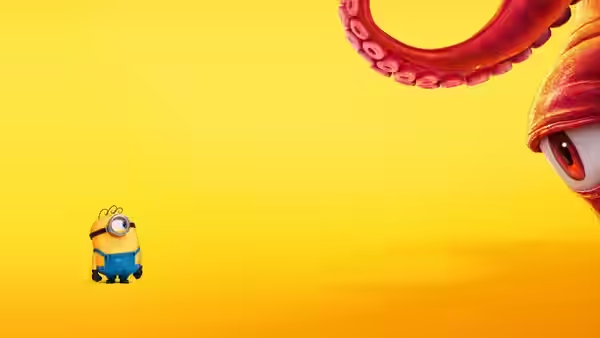
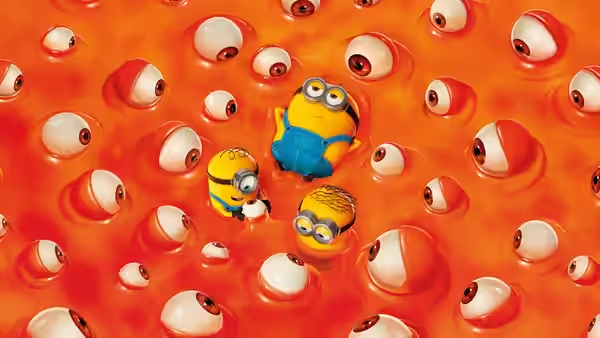
The second half takes a turn we will not describe, except to say that it is louder. The creature designs are good, big and strange and pleasingly unlike the Minions themselves, but from the midpoint on the film has one mode, which is chaos, and it stays in it. Gregory Perler’s cutting, which in the first half had the timing of a good silent two-reeler, speeds up until it is simply fast. John Powell’s score does the same, swelling under every chase to tell us how exciting this is, when the first half had trusted us to notice on our own. We were not bored, exactly. We were tired, in the way a parent is tired at the end of a birthday party, and we were a little cross that a film which had found something better had let it go.
The Minions themselves remain what they have always been, and the film’s cleverest move is to make that the story. Their rise and fall in the picture business is played as a joke about talent, or the lack of it, and about how easily a town falls in love with a novelty. It is not deep. It does not need to be. But when the second half arrives, the film stops making that joke and starts making the older, louder one, and we missed the difference.
Against the series’ own standard this is a clear step up. Minions (2015) and Minions: The Rise of Gru (2022) were sketch reels with a plot attached; this has a place, a period and, for a while, a subject. Most critics have said much the same, and we agree with them. The lone dissenting voice finds the Hollywood setting a promise the film breaks, and we would not argue with the diagnosis, only with the severity: an hour of good is an hour of good, whatever follows it.
Take the children. Stay for the first half with your full attention and let the second wash over you, which is roughly what it wants. It runs 90 minutes and carries a U certificate.