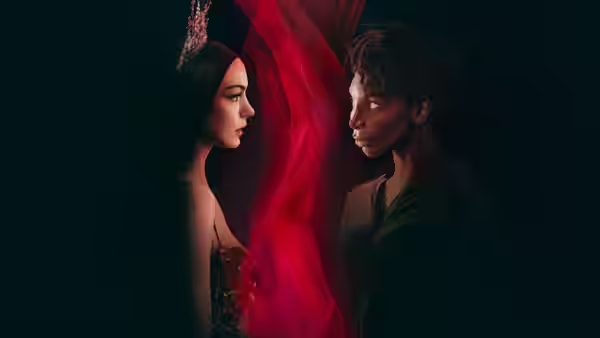
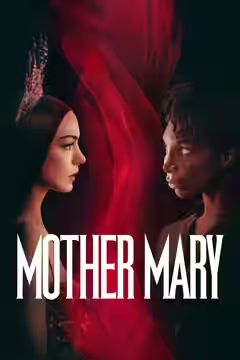
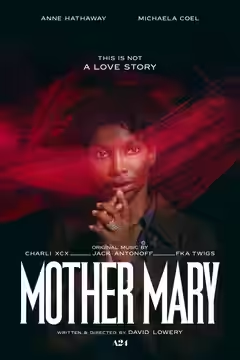
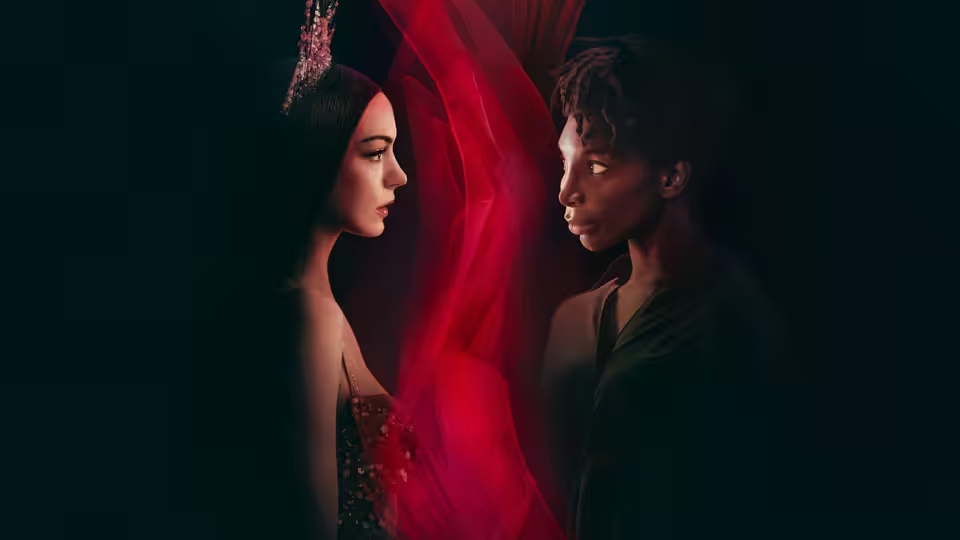
Mother Mary (Anne Hathaway) faces Sam Anselm (Michaela Coel) amid swirling red fabric
Film review

Mother Mary

2026 · Directed by David Lowery · 1h 52m · CHVRS 14A

In a sentenceAnne Hathaway makes a persuasive case for fewer conversations and another song

Mother Mary (Anne Hathaway) is a pop performer whose onstage appearances sit alongside a private drama involving Sam Anselm (Michaela Coel). Their relationship brings creativity and collaboration into extended conversations, while songs and dance offer another view of Mother Mary’s inner life. Hilda Offer (Hunter Schafer) and Imogen (FKA twigs) also appear. The story moves between concert spectacle and encounters between the two women, with the work of making art bound up in their connection. Musical performance becomes another means of expressing what passes between them.

Plays from YouTube when you press play; nothing loads from them until then.

Fi1m review

David Lowery’s pop psychodrama gives Anne Hathaway and Michaela Coel plenty to do, but too little that makes their characters matter. The performances and visual craft hold our attention longer than the writing deserves.

Mother Mary asks us to take a pop performer’s creative life seriously, and that is a reasonable place to begin. David Lowery writes, directs and edits a drama built around musical performances and conversations about creativity. Too often, the conversations win on length alone. The result is a mixed film with committed actors, persuasive concert scenes and a script that makes its people harder to care about the longer they explain themselves.

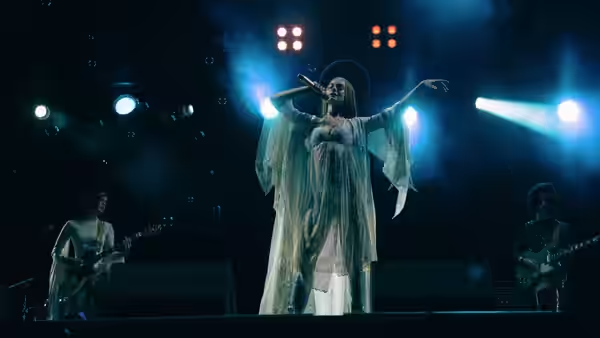
Anne Hathaway gives Mother Mary the presence the film needs onstage, where a pop star has to justify all the attention being paid to her. We were caught up in these performances: she makes the singing feel like something the character needs to do, and for a while the questions about creativity become worth asking. Her command of the musical scenes also creates a difficulty for the rest of the film. Once she has shown us that much, another prolonged conversation about her inner life feels like being kept after the concert.

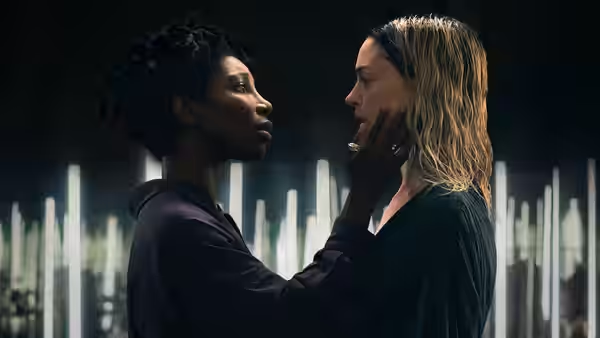
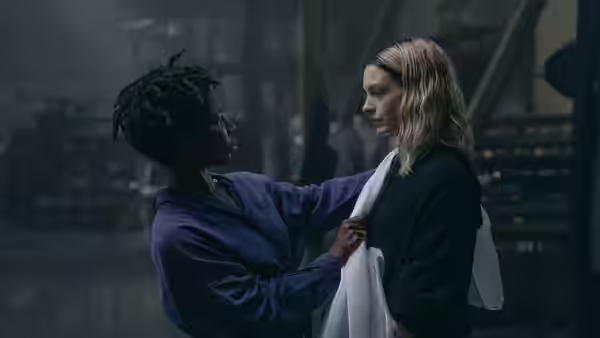
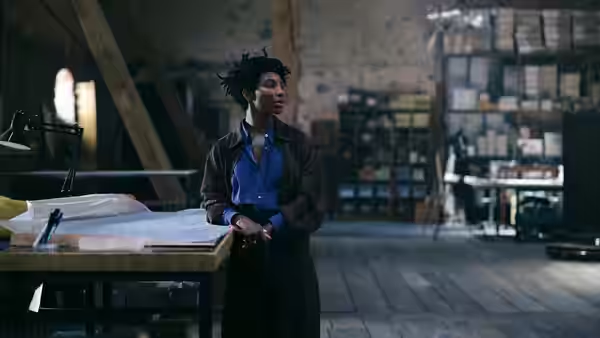
Michaela Coel is equally important as Sam Anselm, giving the dialogue an edge that keeps the exchanges from settling into solemnity. There is pleasure in watching her handle a sharp line, and the chemistry between the two leads provides some reason to stay with their relationship. But the writing leaves too much of that relationship unexplored. The actors work to make each exchange personal while the script keeps bringing the conversation back to its ideas about art.

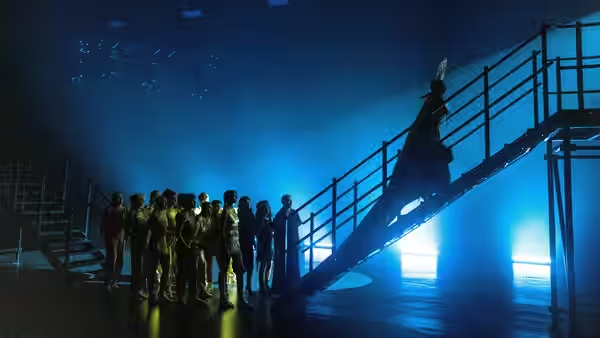
Andrew Droz Palermo and Rina Yang’s cinematography gives the theatrical imagery enough force to sustain our interest even when the drama stalls. Bina Daigeler’s costumes help make the scale and extravagance of the stage performances convincing. Francesca Di Mottola’s production design contributes to that theatrical confidence, although the surroundings sometimes command more attention than the people. These departments work well together, but their success makes the thinness of the character writing harder to overlook.

Daniel Hart’s music fits the heightened atmosphere, though atmosphere is already the one thing the film has in abundance. The musical performances and the wordless dance suggest how much could have been communicated without another explanation. The dance is particularly effective because movement allows the feeling to remain uncertain without making it seem evasive. These passages give the performances room to develop without the burden of so much dialogue.

As editor, David Lowery does not sufficiently protect the film from his work as writer. The dialogue-heavy stretches keep asking for patience after their dramatic interest has faded, and at 112 minutes the film feels longer than its material warrants. We became frustrated because the performances had made us ready to care, yet the conversations did not bring the two women any closer to us. A drama about creative collaboration needs a clearer sense of what these particular people mean to one another.

Pop stardom offers a drama plenty to work with: the labour of performing, the attention it attracts and the awkward business of making something with another person. This film is most convincing when the performance itself takes over, and least convincing when the script insists upon discussing what it means. That leaves considerable stretches to sit through for the sake of two actors who deserve a less obstructive screenplay. If extended conversations about creativity already sound like work, the concert scenes will not be enough to compensate.
Critical consensus AI synthesised

56
Positive
8
Mixed
7
Negative
6

The consensus on Mother Mary is mixed, with critics widely divided over its experiments but more united about its leads. Anne Hathaway and Michaela Coel draw praise across favourable and hostile reviews alike, with Hathaway’s stage performances and Coel’s commanding presence recurring as strengths. The visual and costume design also earn substantial approval, while several supporters single out the wordless dance sequence for expressing feelings that the dialogue struggles to reach.

The disagreement centres on whether the surreal storytelling gives the drama emotional force or obscures characters who already feel remote. IndieWire finds the film hypnotic and emotionally resonant; The Hollywood Reporter finds it dull and emotionally empty despite admiring its visuals and costumes. Between those positions, the reservations concern slow pacing, strained dialogue and ideas that fail to cohere. Even some enthusiastic reviews acknowledge that its strangeness can make it difficult to enter.

IndieWire
14 April 2026 · A- · David Ehrlich
90

Ehrlich finds the film beguiling, hypnotic, and emotionally resonant, praising its strange exploration of art’s power to heal. He especially singles out Anne Hathaway’s commanding performance and the film’s vivid visual and musical design.

Read the full review →
The AV Club
14 April 2026 · B+ · Natalia Keogan
83

Keogan gives the film a strongly positive verdict, calling it Lowery’s most successful sensory experience. She especially praises the uncanny, wordless dance that reveals the film’s emotional and metaphysical force.

Read the full review →
Empire
23 April 2026 · John Nugent
80*

Nugent finds the film a sublime, gorgeous meditation on creativity and collaboration, though its ideas are not entirely new. He especially praises the performances, songs, costume design, and cinematography as a unified artistic achievement.

Read the full review →
Little White Lies
23 April 2026 · 4/4/4 · Hannah Strong
80

The review finds the film strange, haunting and unusually original, though it can be wilfully inaccessible. It singles out Michaela Coel’s compelling performance and the film’s distinctive storytelling for praise.

Read the full review →
Slant Magazine
14 April 2026 · ★★★/4 · Rocco T. Thompson
75

Thompson sees the film as an ambitious, darkly divine pop exorcism whose elements may not fully cohere. He praises the vivid theatrical imagery and the charged performances of Anne Hathaway and Michaela Coel.

Read the full review →
Screen Daily
14 April 2026 · Nikki Baughan
70*

The headline indicates a positive verdict on the film as a finely crafted psychodrama. It singles out Anne Hathaway and Michaela Coel as impressive.

Read the full review →

Straight answers AI written, from our review

Is Mother Mary worth watching?
Mother Mary is a mixed pop psychodrama that we score 58, with more to offer admirers of Anne Hathaway and Michaela Coel than anyone seeking a compelling relationship drama. The concert scenes and wordless dance hold our attention, but extended conversations about creativity leave the characters underdeveloped and make the film feel too long.
How long is Mother Mary, and what is it rated?
Mother Mary runs 1h 52m and is rated 14A by the CHVRS in Canada. It is a music and drama film.
Where can I watch Mother Mary in Canada?
Mother Mary is streaming on Paramount+ and Amazon Prime Video in Canada, and it is also available to rent from Amazon Prime Video from CA$0.99. Availability is checked daily; the links above go straight to each service.
How violent or frightening is Mother Mary, and is it suitable for children?
Mother Mary has a UK 15 certificate, so it is not suitable for children under 15. That classification indicates material suited to older teenagers and adults, but we cannot give a more specific warning about violence or frightening scenes: our review establishes no particular content of that kind.
How does Mother Mary compare to The Red Shoes?
Mother Mary is the less satisfying of these two dramas about artistic work and private life; we recommend The Red Shoes more strongly for making its central performer’s ambition feel urgent and dangerous. Hathaway’s pop performances are persuasive, but the surrounding conversations stall, while the dancer’s story in The Red Shoes remains compelling despite occasionally over-serious dialogue.
What should I watch after Mother Mary?
After Mother Mary, try The Red Shoes (1948, Fi1m 92): For another artist whose work makes unreasonable demands on her private life. Then Perfect Blue (1997, Fi1m 82): Pop performance becomes frightening when a singer loses control of her public image; and All That Jazz (1979, Fi1m 84): Song and dance expose a showman’s exhaustion without making the spectacle any less compelling.

Cast

If you liked this, try…

  1. The Red Shoes (1948, Fi1m 92)For another artist whose work makes unreasonable demands on her private life.

  2. Persona (1966) · not on Fi1m yetTwo women, uneasy intimacy and a film that trusts faces more than explanations.

  3. Perfect Blue (1997, Fi1m 82)Pop performance becomes frightening when a singer loses control of her public image.

  4. Clouds of Sils Maria (2014) · not on Fi1m yetTwo women negotiate dependence and resentment, with more room for ordinary human behaviour.

  5. All That Jazz (1979, Fi1m 84)Song and dance expose a showman’s exhaustion without making the spectacle any less compelling.