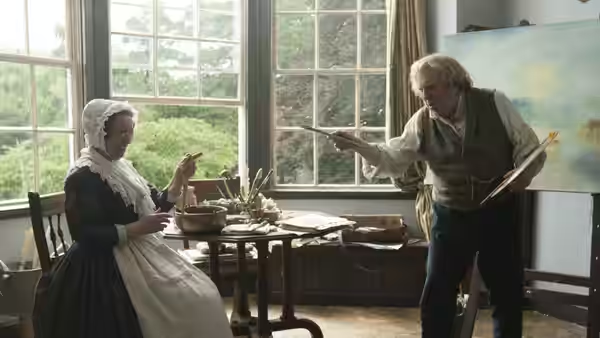
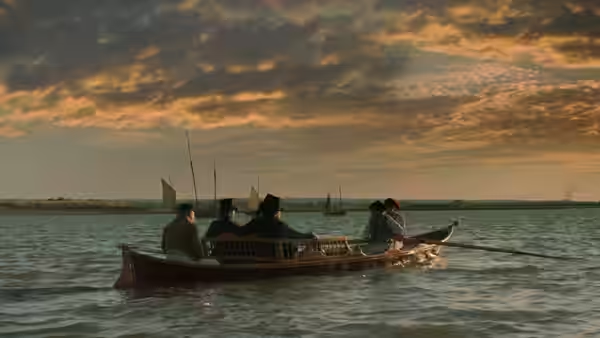
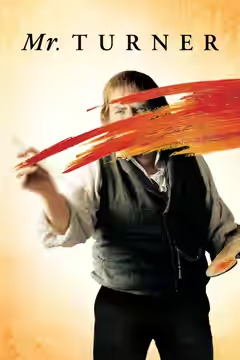
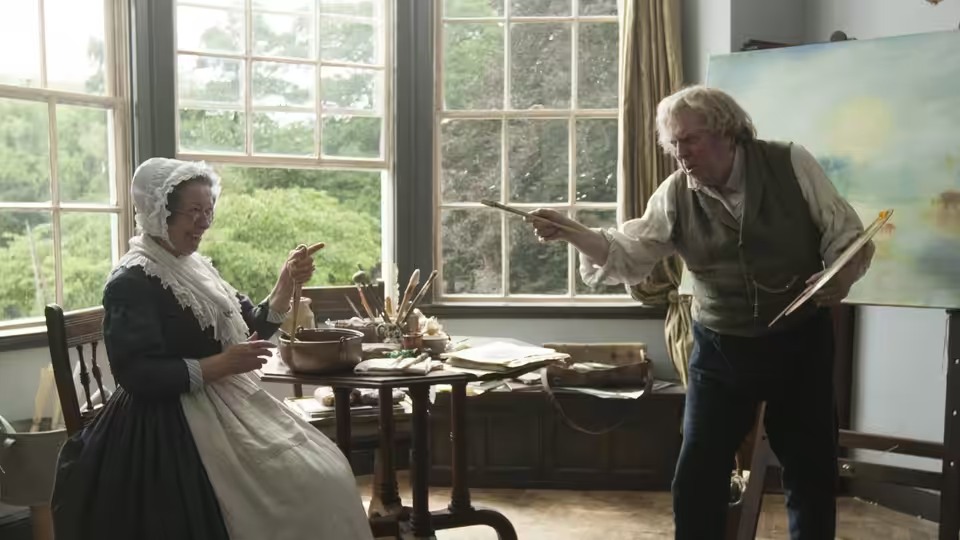
JMW Turner (Timothy Spall) gestures with a brush beside a seated woman in his studio
Film review

Mr. Turner

2014 · Directed by Mike Leigh · 2h 30m · CHVRS R

In a sentenceTimothy Spall makes a grunt sound like a considered objection

In nineteenth-century Britain, painter JMW Turner (Timothy Spall) gives his attention to work while the people around him make demands of their own. Hannah Danby (Dorothy Atkinson), Sophia Booth (Marion Bailey) and William Turner Snr (Paul Jesson) are among those in his life. Turner wants to paint, and his manner does little to ease his dealings with others. A grunt can stand in for a conversational reply. Painting, landscapes and ordinary encounters occupy his days, as those around him find their own ways of dealing with a man so absorbed in his work.

Plays from YouTube when you press play; nothing loads from them until then.

Fi1m review

Timothy Spall makes Mike Leigh’s portrait of JMW Turner absorbing company, despite the painter’s manners. The landscapes give us ample reason to linger, though the loose structure makes 150 minutes feel longer than necessary.

Mike Leigh’s Mr. Turner asks us to spend time with a painter without expecting him to become agreeable. It is a fine, patient film, led by Timothy Spall, though its succession of encounters occasionally mistakes another episode for a necessary one. Leigh is interested in the work and the awkward person doing it. He resists the convenient speech that would make both understandable. That leaves plenty for Spall to convey, and plenty of time in which to watch him.

Spall gives us plenty to watch while we wait. His grunts are funny because each seems to settle a conversation to Turner’s satisfaction, with little concern for anybody else’s. We laughed at the sheer finality of them. Spall makes each noise sound like a response to somebody, so the eccentricity has a purpose. There is feeling in the performance too, though Leigh and Spall make us pay attention to a man who will not politely announce every change in his mood.

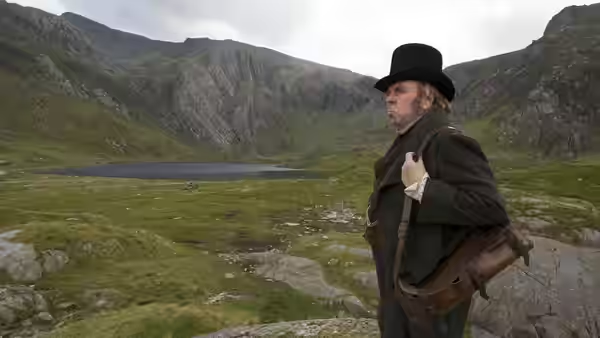
Dick Pope’s cinematography makes looking at the landscapes feel like part of Turner’s work. Their careful composition could have become a succession of handsome interruptions; instead, the attention to light helps explain why this man might find a stretch of land so absorbing. We found ourselves looking harder as the film went on, which is a useful result for a film about painting. Pope’s images supply a reason to stay attentive during some of the slower passages.

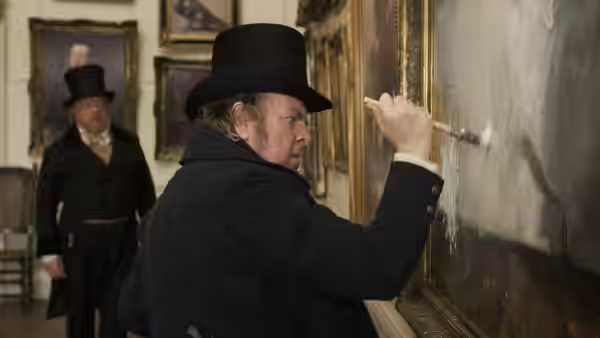
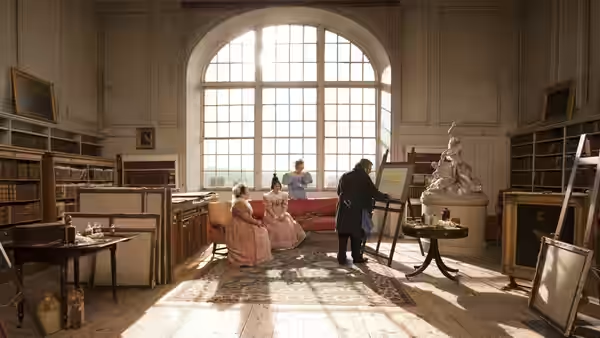
Suzie Davies’s production design gives this nineteenth-century Britain enough substance to hold our attention away from its central figure. Jacqueline Durran’s costumes help the cast look accustomed to their surroundings, and comfortable with the business of inhabiting them. The detail is persuasive without constantly asking to be admired. Gary Yershon’s music gives little reassurance about how we should feel about Turner, which suits the performance. The grunts remain the sound we remember.

John Ruskin, played by Joshua McGuire, is less convincing. Leigh’s treatment of him feels too pleased with its own amusement, giving us permission to dismiss him before we have had much chance to consider him. This is a small but telling lapse in a film usually willing to stay with uncomfortable company. For a while, the humour seems to be deciding for us how much a person is worth hearing.

Jon Gregory’s editing preserves the independence of the episodes, and often that lets a performance finish without being hurried towards the next event. But there are stretches when the succession becomes flat: another encounter adds information without changing our sense of Turner. At 150 minutes, the film gives us time to notice the repetition. We would lose a little of the incidental company for a stronger feeling that each scene has earned its place, especially when the faces and landscapes have already told us so much.

As an artist’s biography, this is unusually willing to let behaviour remain puzzling. Leigh does not offer the reassurance of feeling we have solved Turner by watching him. Spall is absorbing enough to make that uncertainty worth tolerating, and the film’s humour keeps the slower stretches from feeling dutiful. Choose an evening when nobody will be checking the clock.
Critical consensus AI synthesised

85
Positive
25
Mixed
1
Negative
0

Most critics warmly endorse Mike Leigh’s unconventional portrait of Turner, with praise clustering around Timothy Spall’s performance and Dick Pope’s cinematography. Spall makes the painter’s difficult temperament, humour and contradictions compelling, while Pope’s handling of light and landscape evokes his way of seeing. The reviews also admire the detailed recreation of the period and Leigh’s attention to artistic labour, finding the film insightful without relying on tidy explanations of its subject.

The spread runs from enthusiasm to qualified approval, with only one mixed assessment. Reservations centre on the loose, episodic structure: some find it absorbing, while others question the length and narrative drift. Digital Spy offers the strongest reservation about the lack of structure, despite admiring Spall. The AV Club argues that the film’s craft does not overcome familiar biopic limitations, while The New Yorker’s otherwise appreciative assessment objects specifically to its treatment of John Ruskin.

Little White Lies
31 October 2014 · 4/5/5 · Sophie Monks Kaufman
100

The critic considers the film a formal masterwork and a reverent portrait of artistic labour. They praise its vivid period detail and elegantly composed landscapes.

Read the full review →
Radio Times
★★★★★ · Leslie Felperin
100

Felperin praises Mike Leigh’s portrait as an unconventional, insightful biopic. Timothy Spall’s portrayal of Turner is singled out as a majestic career-best performance.

Read the full review →
Time Out
1 December 2014 · ★★★★★ · Dave Calhoun (trad. AP)
100

The publication gives the film its highest rating. The article text is unavailable, so no specific praise can be identified.

Read the full review →
Empire
15 May 2014 · Ian Nathan
90*

Nathan gives the film an exuberant, deeply admiring verdict, calling it a wonderfully alive portrait of Turner. He especially praises Timothy Spall’s extraordinary performance, which makes the artist’s contradictions and humanity compelling.

Read the full review →
IndieWire
15 May 2014 · A- · Eric Kohn
90

Kohn calls the film a first-rate match of director and subject, praising its compassionate, bittersweet portrait. He singles out Timothy Spall’s performance and the visual world created by Dick Pope’s cinematography.

Read the full review →
Los Angeles Times
18 December 2014 · Kenneth Turan
90*

Turan finds the film exceptional and engrossing, despite its unconventional narrative. He especially praises Timothy Spall’s astonishing performance and the immersive recreation of 19th-century Britain.

Read the full review →

Straight answers AI written, from our review

How long is Mr. Turner, and what is it rated?
Mr. Turner runs 2h 30m and is rated R by the CHVRS in Canada. It is a history and drama film.
Where can I watch Mr. Turner in Canada?
Mr. Turner is available to rent from Amazon Prime Video from CA$4.99. Availability is checked daily; the links above go straight to each service.
What should I watch after Mr. Turner?
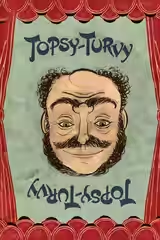
After Mr. Turner, try Topsy-Turvy (1999, Fi1m 88): Leigh gives artistic collaboration the same close attention he gives awkward people. Then Paterson (2016, Fi1m 84): A gentler account of making art while carrying on with ordinary life.

Cast

Awards

Academy Awards, 2015

Nominated
Best Cinematography
Nominated
Best Costume Design
Nominated
Best Original Score
Nominated
Best Production Design

European Film Award for Best Actor, 2014

Won
European Film Award for Best Actor

If you liked this, try…

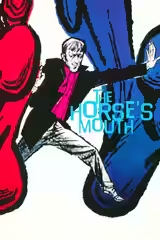
  1. The Horse's Mouth (1958) · not on Fi1m yetAnother difficult painter, with more room for comedy and no compulsory good manners.

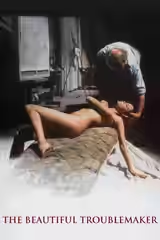
  2. La Belle Noiseuse (1991) · not on Fi1m yetPatient attention to painting, with the work allowed to take its time.

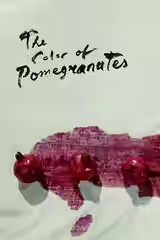
  3. The Colour of Pomegranates (1969) · not on Fi1m yetA poet’s life approached through images that require attention rather than explanation.

  4. Topsy-Turvy (1999, Fi1m 88)Leigh gives artistic collaboration the same close attention he gives awkward people.

  5. Paterson (2016, Fi1m 84)A gentler account of making art while carrying on with ordinary life.