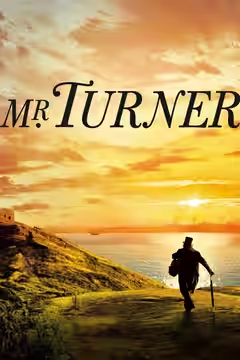
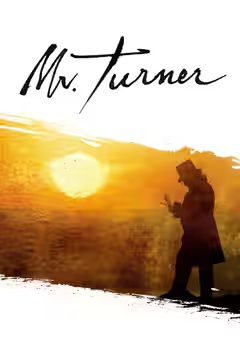
Timothy Spall makes Mike Leigh’s portrait of JMW Turner absorbing company, despite the painter’s manners. The landscapes give us ample reason to linger, though the loose structure makes 150 minutes feel longer than necessary.
Mike Leigh’s Mr. Turner asks us to spend time with a painter without expecting him to become agreeable. It is a fine, patient film, led by Timothy Spall, though its succession of encounters occasionally mistakes another episode for a necessary one. Leigh is interested in the work and the awkward person doing it. He resists the convenient speech that would make both understandable. That leaves plenty for Spall to convey, and plenty of time in which to watch him.
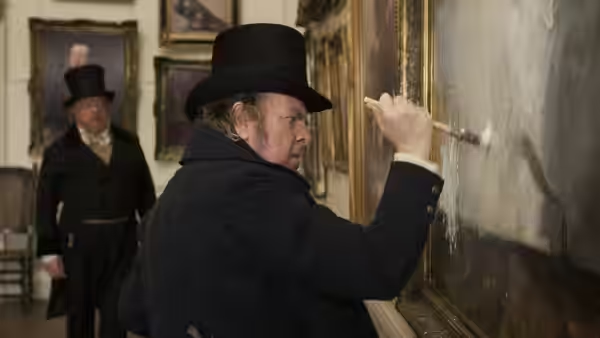
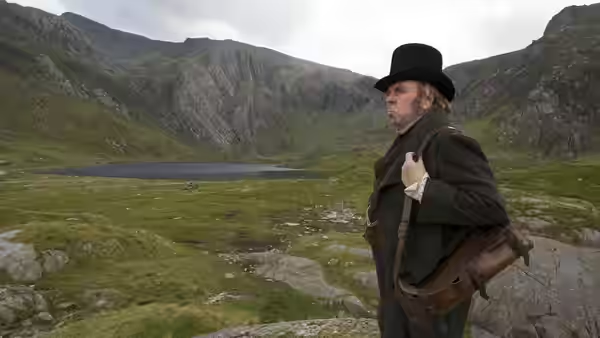
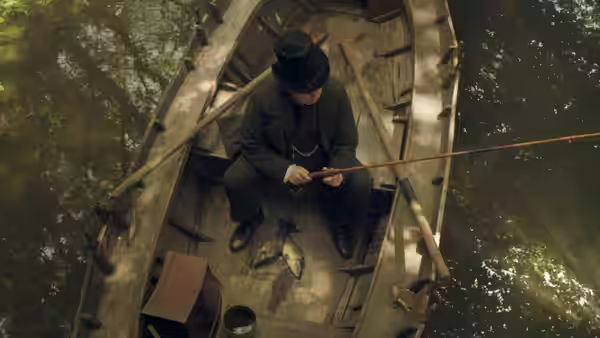
Spall gives us plenty to watch while we wait. His grunts are funny because each seems to settle a conversation to Turner’s satisfaction, with little concern for anybody else’s. We laughed at the sheer finality of them. Spall makes each noise sound like a response to somebody, so the eccentricity has a purpose. There is feeling in the performance too, though Leigh and Spall make us pay attention to a man who will not politely announce every change in his mood.
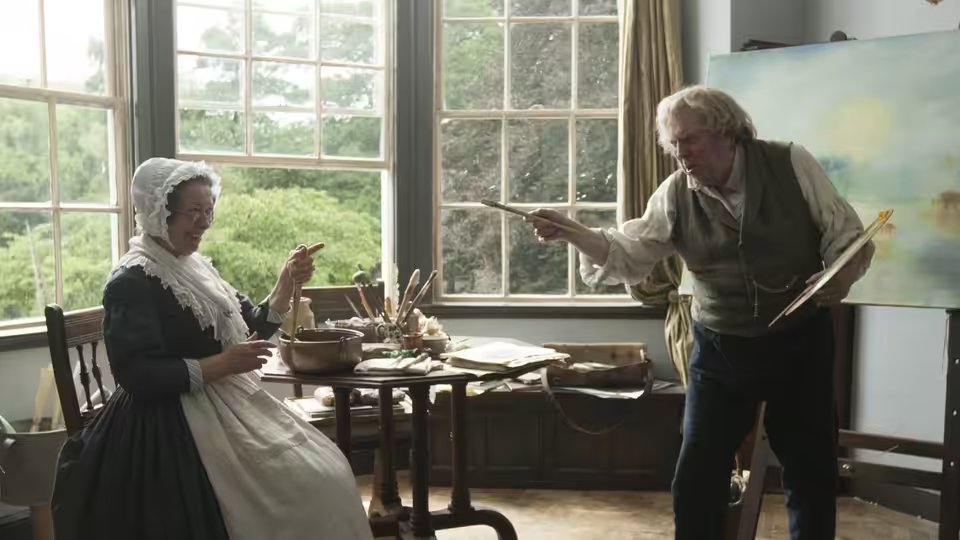
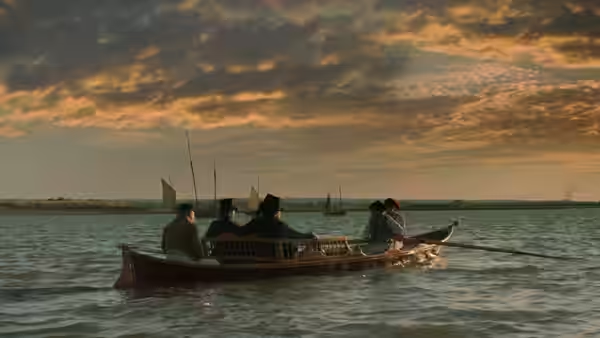
Dick Pope’s cinematography makes looking at the landscapes feel like part of Turner’s work. Their careful composition could have become a succession of handsome interruptions; instead, the attention to light helps explain why this man might find a stretch of land so absorbing. We found ourselves looking harder as the film went on, which is a useful result for a film about painting. Pope’s images supply a reason to stay attentive during some of the slower passages.
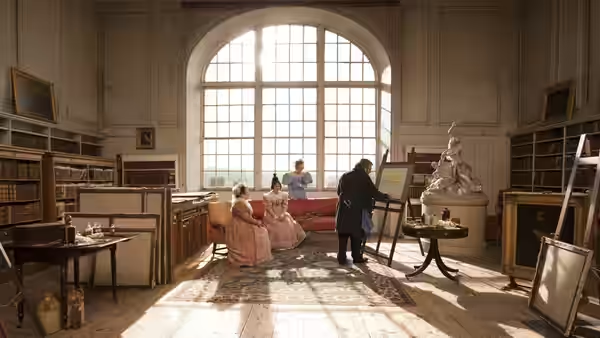
Suzie Davies’s production design gives this nineteenth-century Britain enough substance to hold our attention away from its central figure. Jacqueline Durran’s costumes help the cast look accustomed to their surroundings, and comfortable with the business of inhabiting them. The detail is persuasive without constantly asking to be admired. Gary Yershon’s music gives little reassurance about how we should feel about Turner, which suits the performance. The grunts remain the sound we remember.
John Ruskin, played by Joshua McGuire, is less convincing. Leigh’s treatment of him feels too pleased with its own amusement, giving us permission to dismiss him before we have had much chance to consider him. This is a small but telling lapse in a film usually willing to stay with uncomfortable company. For a while, the humour seems to be deciding for us how much a person is worth hearing.
Jon Gregory’s editing preserves the independence of the episodes, and often that lets a performance finish without being hurried towards the next event. But there are stretches when the succession becomes flat: another encounter adds information without changing our sense of Turner. At 150 minutes, the film gives us time to notice the repetition. We would lose a little of the incidental company for a stronger feeling that each scene has earned its place, especially when the faces and landscapes have already told us so much.
As an artist’s biography, this is unusually willing to let behaviour remain puzzling. Leigh does not offer the reassurance of feeling we have solved Turner by watching him. Spall is absorbing enough to make that uncertainty worth tolerating, and the film’s humour keeps the slower stretches from feeling dutiful. Choose an evening when nobody will be checking the clock.