Daniel Roher’s Navalny is a tense, accessible documentary about the investigation into an attempt on its subject’s life. The close access pays off, though its limited interest in his political history leaves important questions unanswered.
Daniel Roher’s Navalny is a gripping documentary with a serious limitation: it gives its subject’s political history too little attention. The director builds around Alexei Navalny’s efforts to uncover the poisoning plot, keeping the immediate question of responsibility firmly in view. That gives the film a clear purpose and considerable urgency, with little opportunity for the attention to wander. We recommend it as an account of an investigation, with reservations about how little context accompanies the man conducting it.
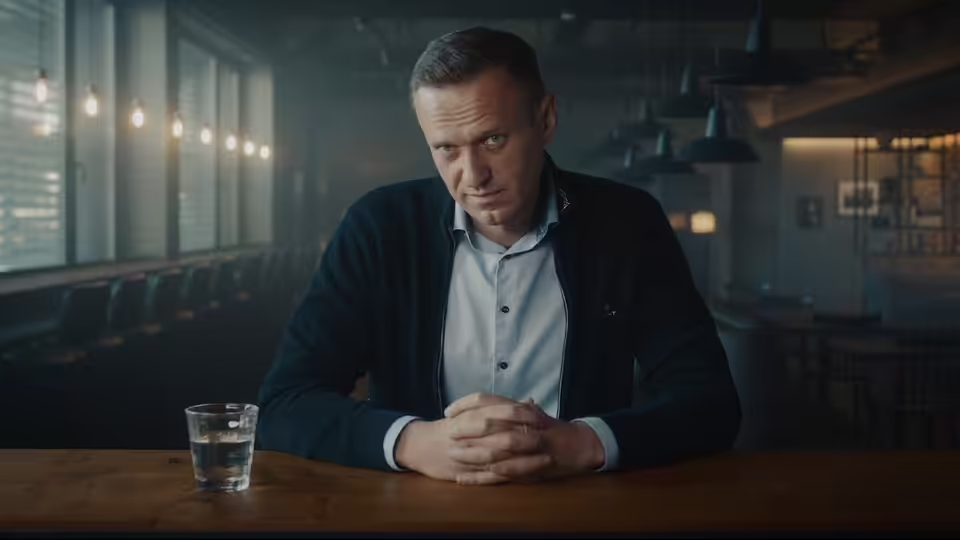
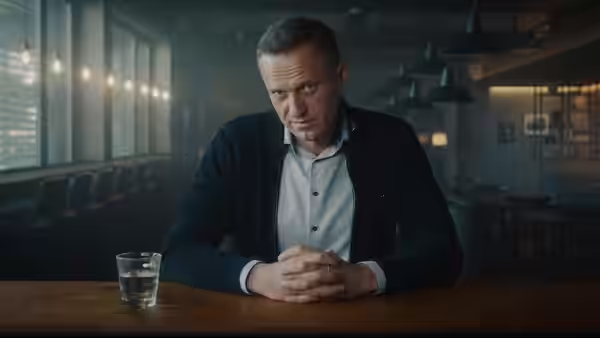
His screen presence does a great deal of the work, and the director recognises the appeal of a subject who seems comfortable being watched. Niki Waltl’s cinematography makes that close access count, encouraging us to study the man while the investigation proceeds. His composure can be reassuring, even when reassurance is hardly what the circumstances warrant. We found ourselves warming to him, and then questioning how readily we had done so; his confidence in front of the camera makes sympathy come almost before scrutiny.
Editors Langdon Page and Maya Hawke keep the enquiry moving, giving the pursuit of evidence the forward pull of a thriller. At 98 minutes, the film is compact, and that concentration is largely to its advantage. There is satisfaction in following people trying to establish what happened, particularly when the person pursuing answers was himself the target of the attack. The editing makes the investigation accessible without making it feel effortless, although the pace also helps the director move past questions that deserve a longer hearing.
Matt Robertson and Marius de Vries supply music that fits the thriller approach, though the circumstances hardly need help generating apprehension. We were frightened by watching a man investigate an attempt on his own life. His involvement makes the search for answers unsettling in a way that an account delivered at a safe distance could scarcely manage. The director is persuasive when he allows that situation to carry the drama, but the more encouraging tone sometimes makes the danger feel more containable than the film gives us reason to believe.
The principal problem is the space given to the subject’s earlier political career. There is too little of it to make this a searching portrait, and his considerable personal appeal goes insufficiently challenged. A documentary need not become a complete biography to ask what its subject believes, how those beliefs developed or which parts of his record warrant closer examination. Those matters receive too little attention here, particularly for a film that encourages such strong sympathy with the person at its centre.
That shortcoming matters because the film encourages us to support its subject beyond the investigation itself. A political documentary ought to leave enough room for awkward context, however compelling the immediate events might be. Even so, the access and the skill of the editing are substantial reasons to watch, and the enquiry rarely loses its grip. There is enough here to justify an evening, provided its narrow scope is understood. Do not let it be the only account of Alexei Navalny’s politics you encounter.