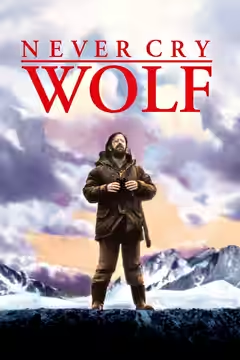
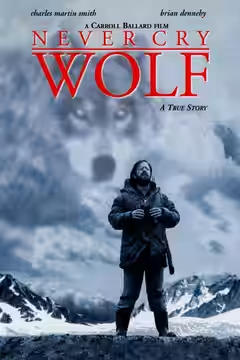
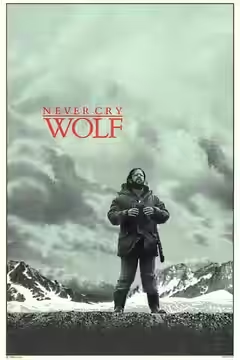
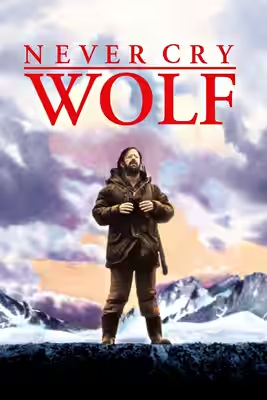
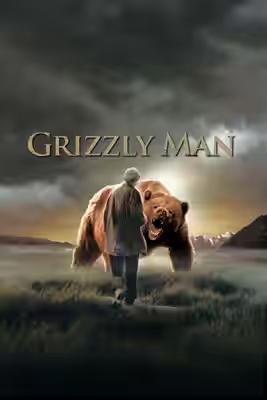
Carroll Ballard’s film about a biologist alone with the wolves is patient, funny and for long stretches almost silent, and Hiro Narita’s tundra is the best thing in it. Most critics have been lukewarm about it. We think the slowness is the point.
Tyler (Charles Martin Smith) is a government biologist, nervous, bespectacled and not obviously built for the Arctic, and that is why he has been sent there. His department wants proof that wolves are killing off the caribou so that the wolves can be shot, and it would rather the proof came from a man nobody will argue with. Carroll Ballard, whose previous film was The Black Stallion (1979), takes this premise, strips most of the plot out of it and makes a film about one man, some wolves and a great deal of weather. It runs 105 minutes and for long stretches nobody says anything at all.
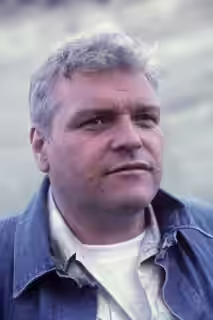
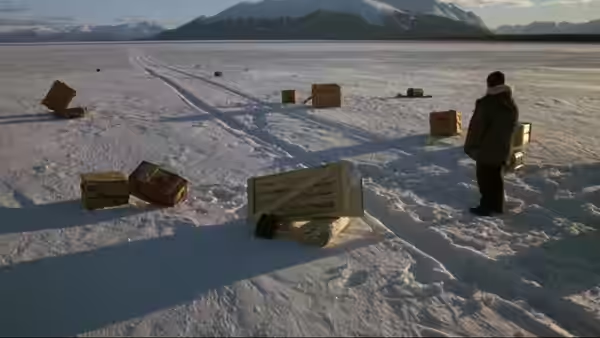
The first act is the comedy. A drunk (Hugh Webster) in a northern bar tells Tyler that the wolves will have him. Rosie (Brian Dennehy), the bush pilot who flies him in, is a cheerful wreck in a worse plane, and when the engine stops over the ice he climbs out on to the wing with a spanner while Tyler sits inside screaming. We laughed, and then we noticed we were gripping the sofa, because Ballard shoots the whole thing from inside the cabin and the ground is a long way down. Then Rosie leaves him on a frozen lake with a pile of crates and a typewriter and flies away, and the film changes gear.
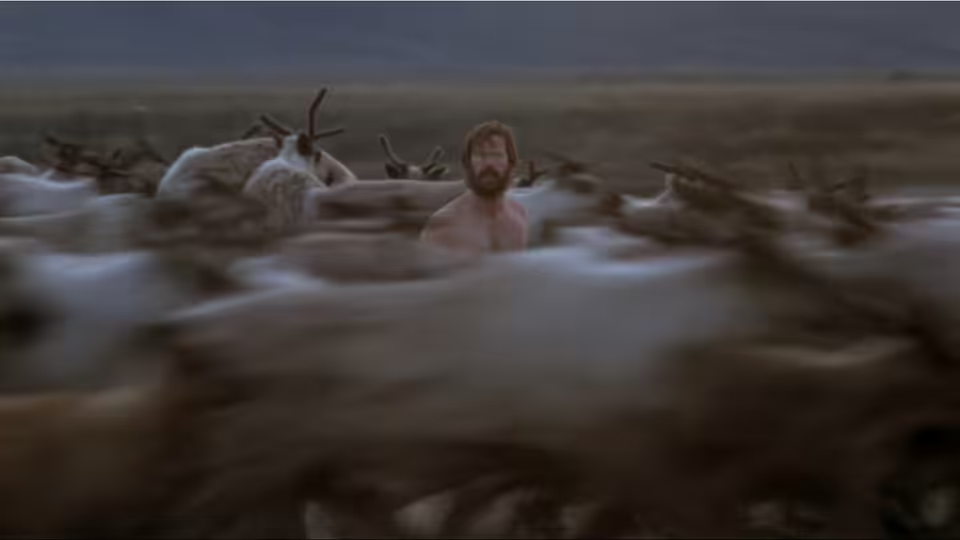
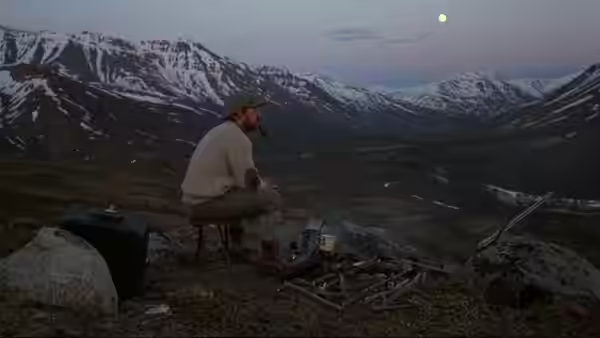
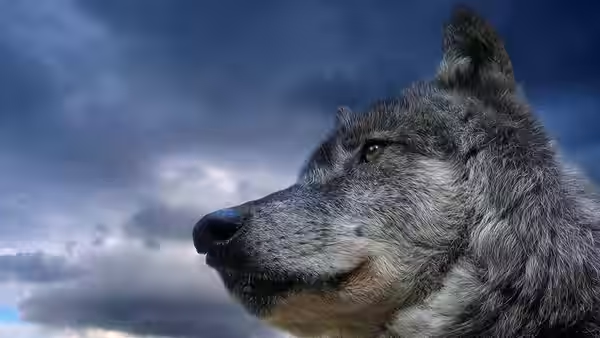
What follows is mostly Hiro Narita’s work, and it is remarkable. He shoots the tundra flat and enormous, in grey and white and a brown like old tea, and he lets the weather move across it in time-lapse so that a day’s cloud passes in a few seconds. The wolves are filmed close, at their own eye level, going about their business as if there were no camera there. The film’s best idea is that Tyler learns about them by sitting still and watching, and so do we. Mark Isham’s score is sparse, a few held synthesiser chords and a trumpet line that drifts in and out, and much of the film plays to wind instead.
Smith carries nearly all of this alone, and he is far better than the part might suggest. He has a soft, stunned face and a way of narrating his own disasters in a level voice, and the gap between that voice and what is happening to him is where most of the laughs come from. The scene in which he decides to live on mice, to test whether a wolf could do the same, and sits down to a plate of them, had us laughing and slightly ill at once. He narrates throughout, and most of it is good; some of it tells us what the pictures have already said.
The people he meets are the film’s quietest strength. Ootek (Zachary Ittimangnaq) is an old Inuit hunter who finds Tyler half-frozen and hauls him to shelter without a word of English, and Ittimangnaq plays him with a stillness that makes Tyler’s fussing look like noise. Mike (Samson Jorah), younger and English-speaking, is more complicated: he likes Tyler, and he also knows what a wolf pelt is worth. The film does not make either man a saint, which is rarer than it should be.
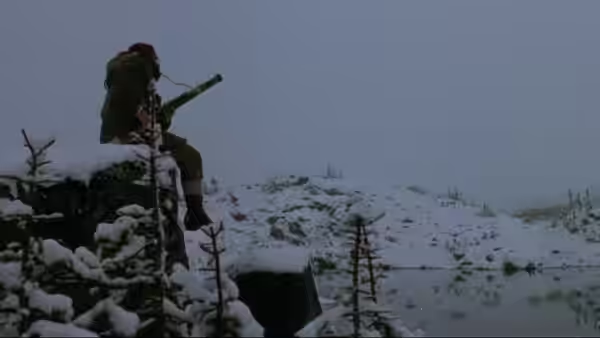
The weaknesses are in the writing. Three names share the screenplay credit, Curtis Hanson, Sam Hamm and Richard Kletter, and you can feel the joins. Tyler says out loud, more than once, what the film has already shown us about wolves and men, and the two hunters (Tom Dahlgren and Walker Stuart) who turn up late are there to stand for a point rather than to be people. Peter Parasheles and Michael Chandler cut the middle hour with patience, long takes and slow fades, and then hurry the last twenty minutes as if someone had told them the audience was restless. We were not. We would have taken another half-hour of the lake.
Most of the reviews we have read are lukewarm, and we can see why: the film does nothing a plot would recognise for long stretches. We think that is the achievement. Ballard trusts an audience to sit with a man on a hillside watching a den, and almost nobody making films for families does. See it with children old enough to be bored for ten minutes and then stop being bored, and see it on the largest screen you have, because Narita’s horizons do not survive being made small. Do not watch it over dinner.