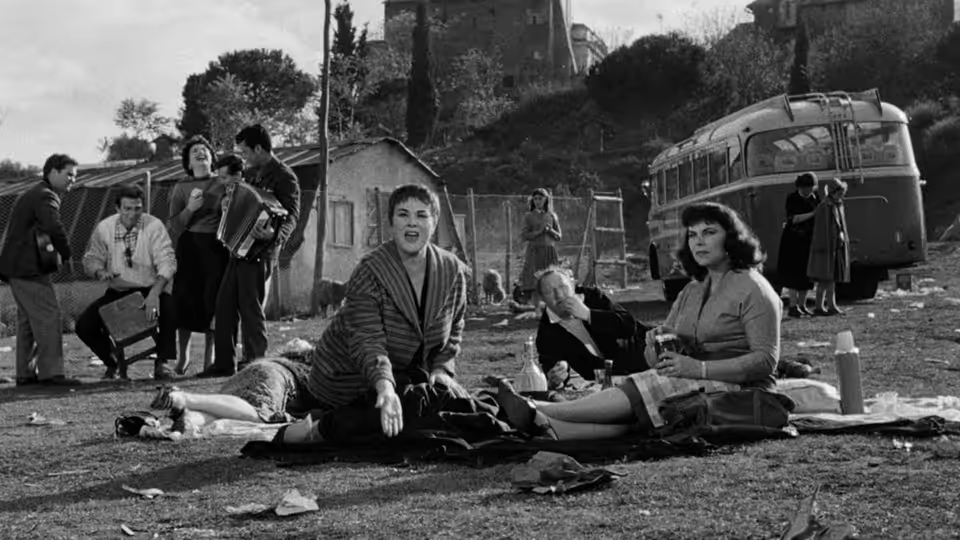
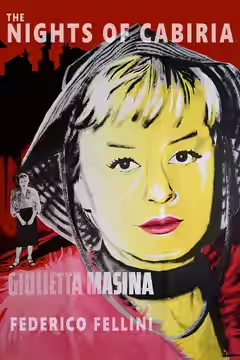
Nights of Cabiria earns its force through Giulietta Masina, whose expressive performance makes hope feel costly. Federico Fellini presses the suffering harder than he needs to, but we warmly recommend this portrait of a woman who refuses to give up.
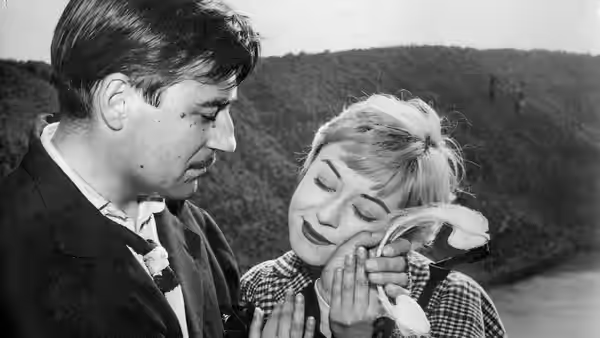
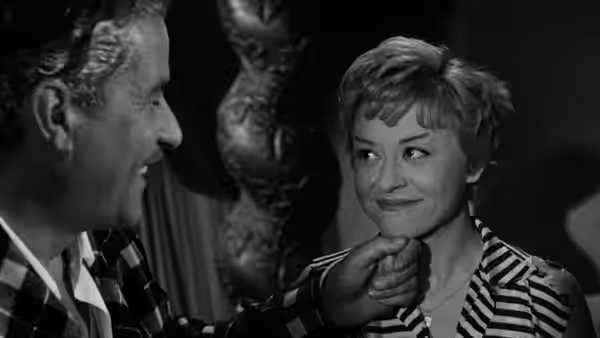
Nights of Cabiria is deeply moving, though its director sometimes presses harder than he needs to. Federico Fellini centres the film on a Roman streetwalker, Maria ‘Cabiria’ Ceccarelli, played by Giulietta Masina, whose hope survives betrayal. The danger is that she will become someone we are required to pity for the whole evening. Her performance prevents that, and makes the film worth recommending even when we want the director to ease off.
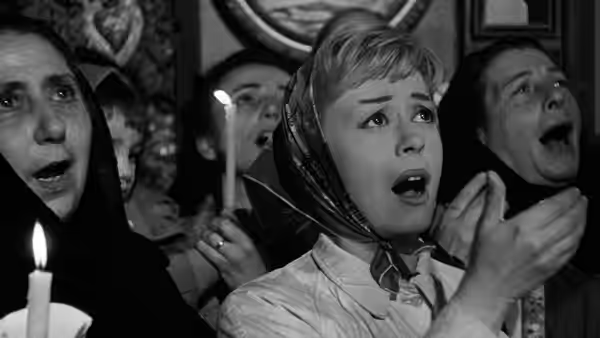
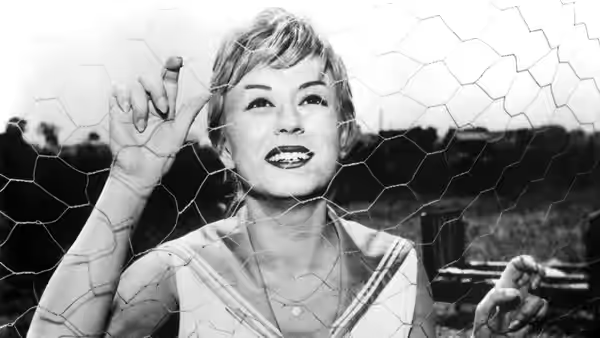
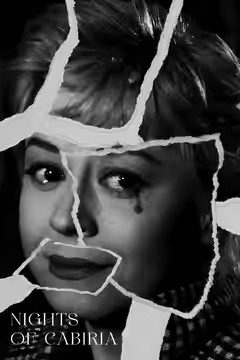
The first thing to admire is how much room she gives Cabiria to be difficult. Her exuberance can be funny without making her seem foolish, and her vulnerability does not tidy away the awkwardness. We were moved by the effort beneath that liveliness, by the way hurt remains legible in such an expressive face. She makes carrying on seem tiring, which is what persuades us to believe in the hope.
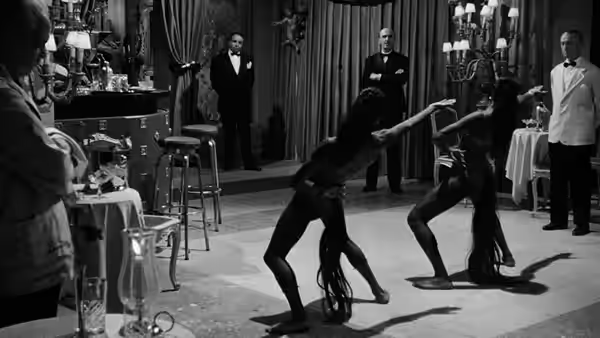
Aldo Tonti’s cinematography is most valuable for the attention it gives that face. We can watch the performance closely without feeling that the camera is competing with it, and the film benefits from that patience. Piero Gherardi’s production design and costumes accommodate an actress whose physical presence can fill an image. The work suits her broadness, allowing us to accept the comedy without wishing she would settle down and behave as though she were in a more solemn drama.
Leo Catozzo’s editing has a difficult job: it must give that acting room while keeping the shifts between comedy and pain from feeling managed. The rhythm generally lets us accept both, though there are moments when we feel the film preparing us to be moved. Nino Rota’s music is appealing on its own terms, but we sometimes want less help from it. Cabiria has already secured our attention, and a further invitation to sympathise can feel unnecessary.
The screenplay credits include Federico Fellini, Ennio Flaiano, Tullio Pinelli and Pier Paolo Pasolini, and its strongest quality is its tolerance of a heroine who will not behave tidily. Cabiria can be hard to take without ceasing to matter. The comedy helps because it allows an awkward, exuberant woman to exist alongside the suffering one. It gives us something to respond to beyond her troubles, so that we are not simply waiting for another misfortune to tell us how to feel.
Our reservation concerns how insistently those troubles are presented. At times, Federico Fellini seems to need Cabiria to suffer again to demonstrate something we have already understood about her. We feel the repetition, and it briefly weakens our trust in the storytelling. Still, Giulietta Masina makes the continued hope credible enough that we do not dismiss it as consolation supplied by a sympathetic director.
Melancholy comedy can become tiresome when it asks us to admire people merely for enduring. This film gives its heroine a personality that does not always invite approval, and an actress willing to make that personality large. The broadness may be an obstacle for anyone who prefers quieter acting, though we think restraint would cost this performance much of its humour. Watch it for Giulietta Masina, with fair warning that the warmth does not make this an easy evening.