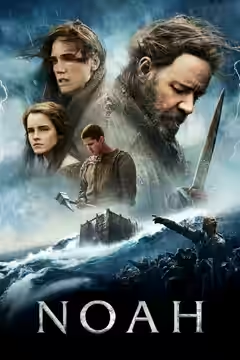
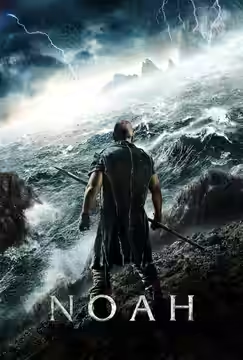
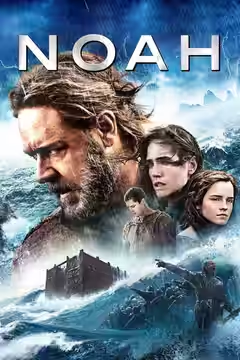
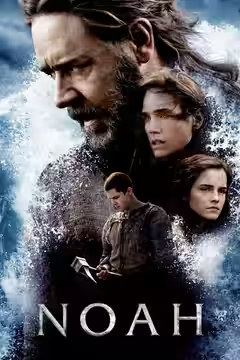
Darren Aronofsky’s flood is huge, strange and often magnificent to look at, and for stretches it is also solemn to the point of tedium. The creation sequence alone is worth ten minutes of anyone’s time; the boat trip is harder work.
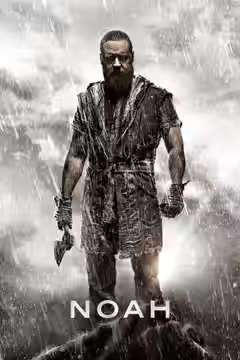
Darren Aronofsky, writing with Ari Handel, has taken the few pages of Genesis that cover the flood and made from them a 138-minute film about a man told to save the animals and let everyone else drown, who then does exactly that and does not enjoy it. That is the admirable thing about Noah: it treats the story as a horror, which is what it is. It is also, for long stretches, a slog. We came out impressed by perhaps forty minutes and worn down by the rest.
The best of those forty minutes is the creation. Noah tells his family how the world began, and Aronofsky and his editor Andrew Weisblum lay it out as a run of stills and time-lapse: a burst of light, a boiling sea, a fish that becomes a lizard that becomes an ape, each frame held a fraction of a second under Crowe’s flat, unhurried voice. It is the six days of scripture and several billion years of fossils in one breath, and the film makes no fuss about it. We sat forward, and stayed forward. Matthew Libatique shoots the pre-flood world as black soil under white sky, so that it looks like a place already dead.
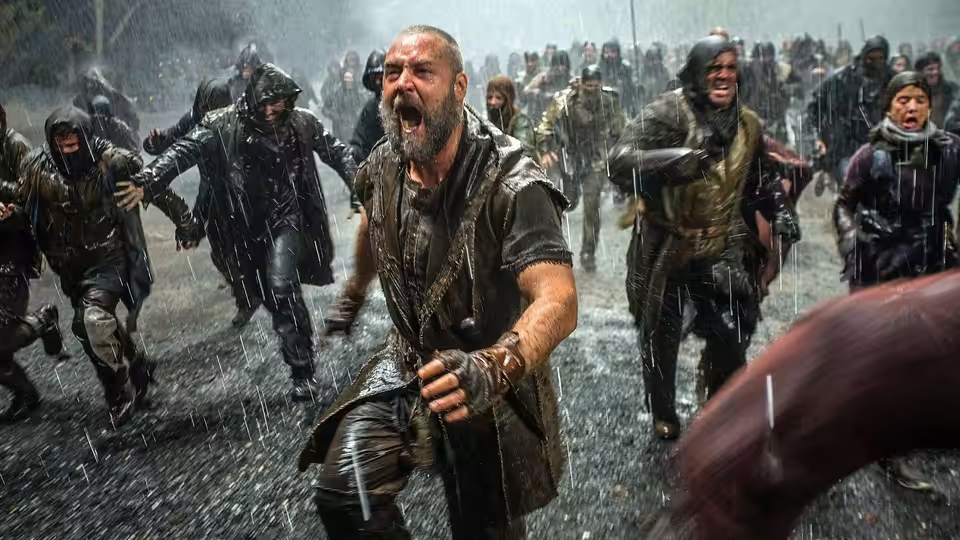
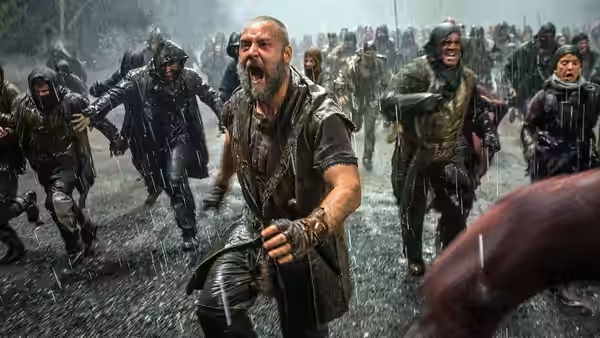
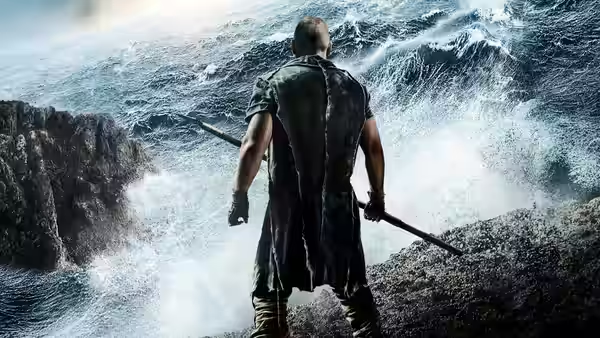
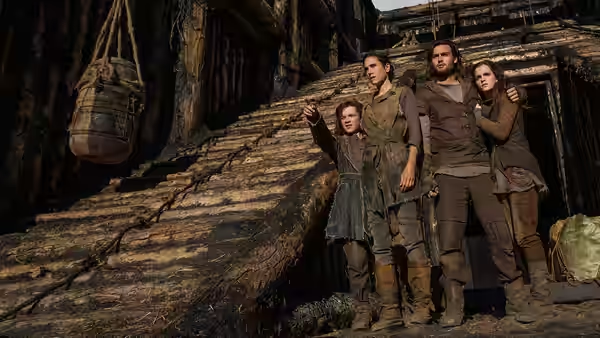
Mark Friedberg’s ark is a barn the height of a hill, a rectangle of timber tarred black, with no prow and no keel, and the sight of it going up on a bare plain is the film’s second great image. Michael Wilkinson dresses everyone in felted wool and stitched hide, with nothing to pin the story to a century. Then there are the Watchers, fallen angels sealed in rock, lumbering about on too many limbs with light leaking from their eyes, voiced by Nick Nolte, Mark Margolis and Kevin Durand. We laughed when the first one walked into frame, and we do not think we were meant to. Twenty minutes later they were hauling logs and we had stopped noticing.
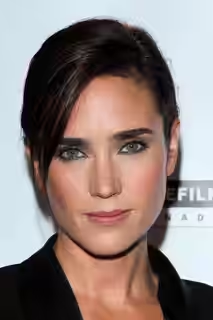
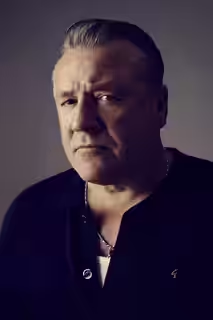
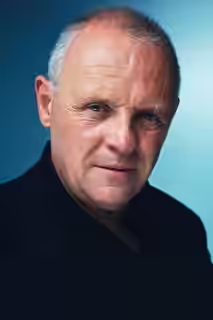
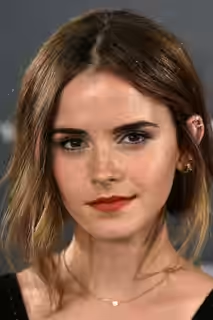
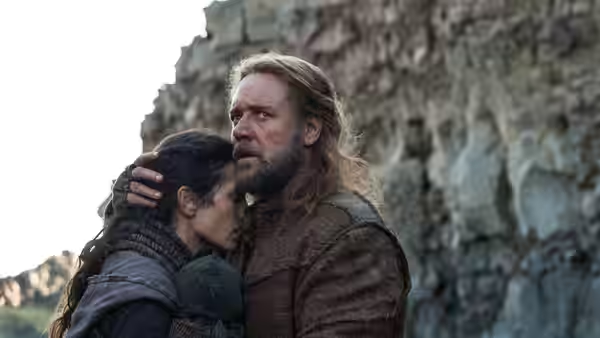
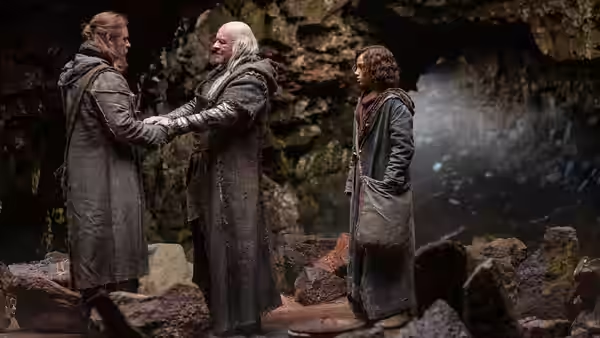
Russell Crowe carries it. He plays Noah as a heavy, quiet man who listens more than he speaks, and when the message turns out harsher than he expected he hardens rather than breaks, without a speech to mark the change. Jennifer Connelly’s Naameh is the one person who argues back, and the film needs her every time she does. Emma Watson gives Ila a steadiness that becomes the second half’s only warmth. Ray Winstone’s Tubal-cain bellows about a man’s right to take what he can, which is the script’s one counter-argument, and it is a good bellow. Anthony Hopkins turns up on a mountain, works a miracle and asks after berries.
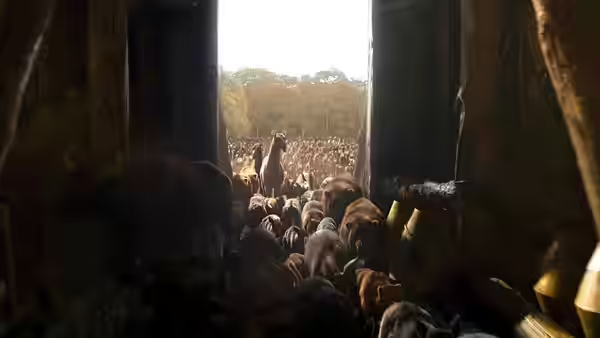
The trouble is the boat. Once the doors close the film has one argument to have and it has it three times, with the rain going and Clint Mansell’s choir swelling under each round in case we had missed the stakes. Somewhere in the second hour we were bored, and then cross that a film this odd had managed it. One stretch cuts through, and we will not detail it beyond saying it concerns what the family hears through the timber once the doors are shut. It horrified us, and it is the only time the cost of the story lands without a line to explain it. The second half then takes a turn we will not describe, and handles it with more solemnity than sense.
Aronofsky has always made films about one person and one fixed idea: the number in Pi (1998), the perfect performance in Black Swan (2010). Noah is the same film with a studio budget and a story everyone knows the end of, and the obsession that was frightening in a small room becomes wearing on a barge.
If you see it, see it for the creation, for the ark rising on the plain, and for the minutes after the doors close. It runs 138 minutes and carries a 12 certificate, which given what happens outside the hull strikes us as generous. At home the Watchers look smaller and the arguments can be paused.