Lewis Milestone films Steinbeck’s novel without fuss, in daylight, with a score by Aaron Copland that knows when to stop. Burgess Meredith and Lon Chaney Jr. are the reason to watch; the scenes added for Betty Field’s Mae are the reason it is not quite perfect.
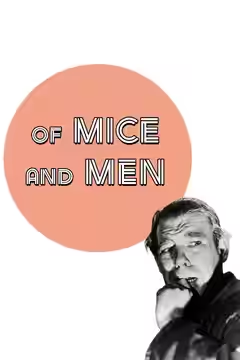
John Steinbeck published Of Mice and Men in 1937 and it was on Broadway the same year. Lewis Milestone, who had made All Quiet on the Western Front in 1930 and knew how to photograph men waiting for something bad, filmed it two years later from a screenplay by Eugene Solow. Two migrant workers, one clever and one not, want a farm of their own. That is the whole story, and the film knows it, and it does not pad. We think it is one of the best American films of its decade about poor people, and we say that as people who came to it braced for a school-set text and left wrung out.
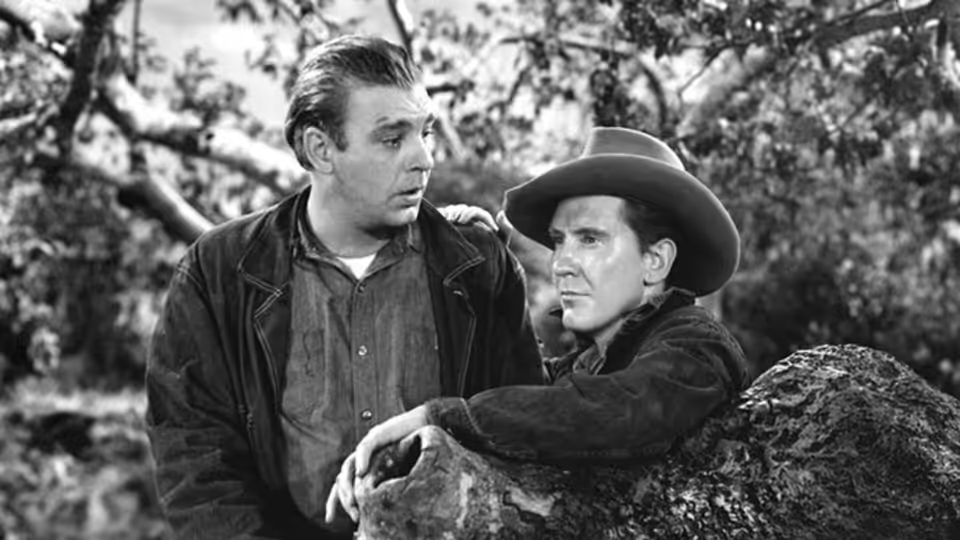
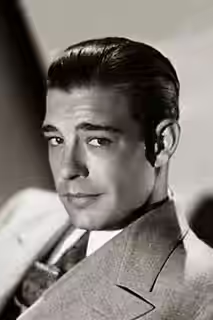
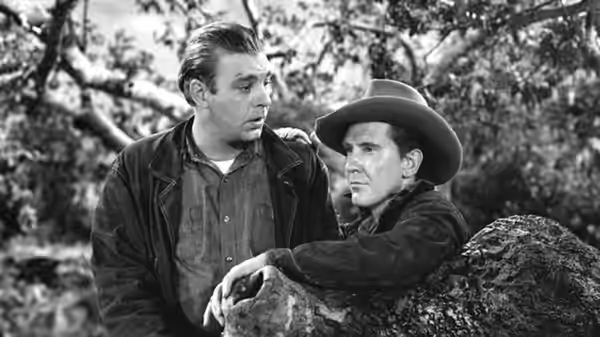
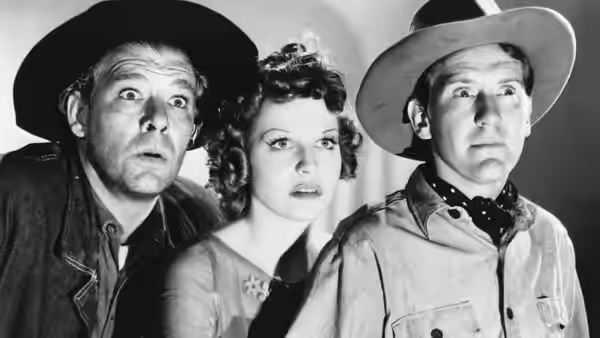
Burgess Meredith plays George as a man who has spent so long thinking for two that he has forgotten how to relax. He is sharp with Lennie, and sorry about it a moment later, and sharp again. Meredith does the sorry part with his shoulders rather than his face. Lon Chaney Jr. has the harder job, because Lennie is the sort of part that invites an actor to gurn, and Chaney mostly does not. He plays Lennie’s slowness as concentration: the huge man is always trying to remember something, and you can see the effort cost him.
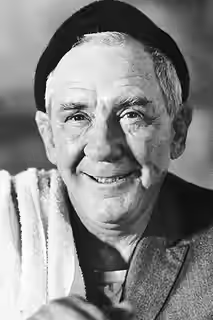
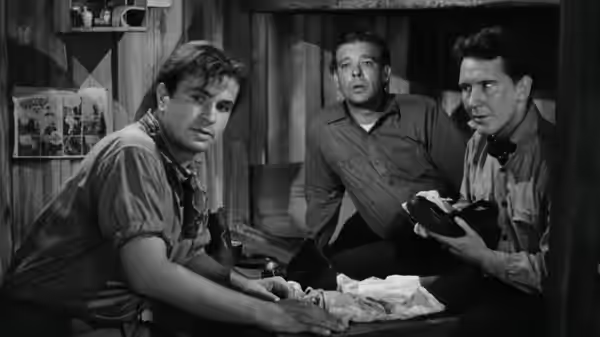
The scene that got us is the one everybody knows. Lennie asks George to tell about the place they will have, and George, tired, tells it, and Lennie mouths the words along with him because he has heard it so many times. We have read it and seen it acted before and it still moved us more than we expected, and the reason is Roman Bohnen. Milestone keeps Candy in the shot, an old man with one hand and a dying dog, listening to two strangers describe a future, and Bohnen’s face does the arithmetic of whether there might be room in it for him. Nobody underlines it. The scene ends and the men go to bed.
Norbert Brodine shoots the ranch in hard daylight, with the bunkhouse lit from its one window so the men move in and out of a slab of light. He does not soften the fields. The threshing sequence, teams of horses hauling barley wagons while Copland’s score comes in over them in wide, open chords, is the one place the film allows itself to be handsome, and it earns it by showing us how the work is actually done. Copland’s music arrives late, sits under scenes rather than on top of them, and is absent from the bunkhouse almost entirely. Bert Jordan cuts the talk scenes slowly, holding on whoever is listening, which is the right instinct for a story where the important thing is usually what a man does not say.
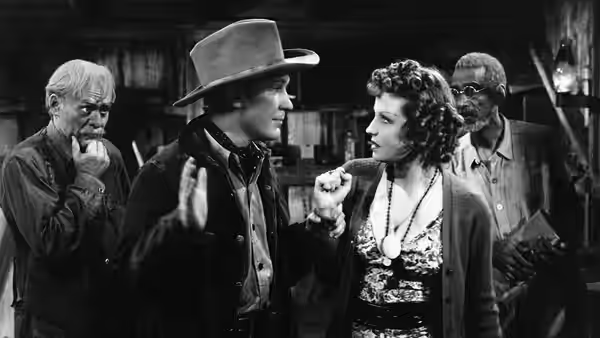
The ranch is well populated. Charles Bickford’s Slim is the one man there with any authority, and Bickford plays it as quietness rather than size. Bob Steele’s Curley is small, mean and frightened of it, and Leigh Whipper’s Crooks, the black stable hand kept out of the bunkhouse and in the harness room, is given real dignity in the scenes he gets. Granville Bates’s Carlson has an old dog to complain about and complains about it, and we will say nothing further about the dog.
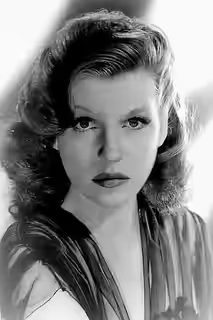
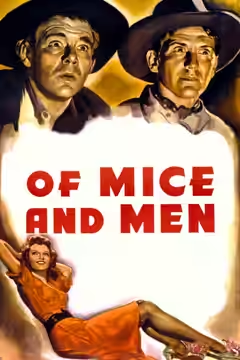
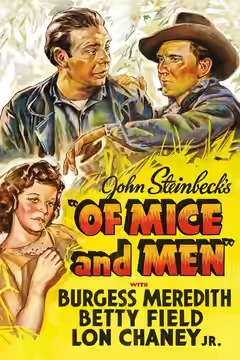
The weak strand is Mae. In the book she has no name and not many scenes. Solow gives her both, and adds a domestic life with Curley that the film keeps returning to as though it were the story. Betty Field is good, tense and lonely and wearing the wrong shoes for a farm, but every minute spent in her kitchen is a minute away from the two men, and the film sags a little each time. The tagline sold the picture as hers, which tells you what the studio thought it had. It was wrong. Chaney, too, overdoes it once or twice, mouth open and arms dangling, and the film’s view of what these men need, a bit of land and to be left alone, is simpler than the men are.
The second half goes where the book goes, and we will not describe it, except to say that Milestone does not flinch and does not linger either. At 106 minutes it is over before you have quite got comfortable, which is as it should be. Watch it with someone who has only read it. They will spend the first hour waiting for the film to fail the book, and they will stop waiting somewhere around the rabbits.