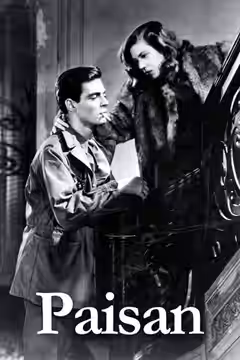
Roberto Rossellini’s six-part war film is moving, demanding and worth the effort. Its damaged landscapes and fractured storytelling give it unusual force, though some awkward American performances briefly make the war feel like an amateur production.
Roberto Rossellini’s Paisan is a rewarding war film with a real cost in patience. Across six stories of wartime Italy, it repeatedly gives up the comfort of following people we have begun to know. That can be frustrating, particularly when a new episode takes time to establish its hold. But the broken-up storytelling allows for experiences that would struggle to fit into a single soldier’s progress through the fighting. We recommend it warmly, with fair warning that its acting does not always match the conviction of its direction.
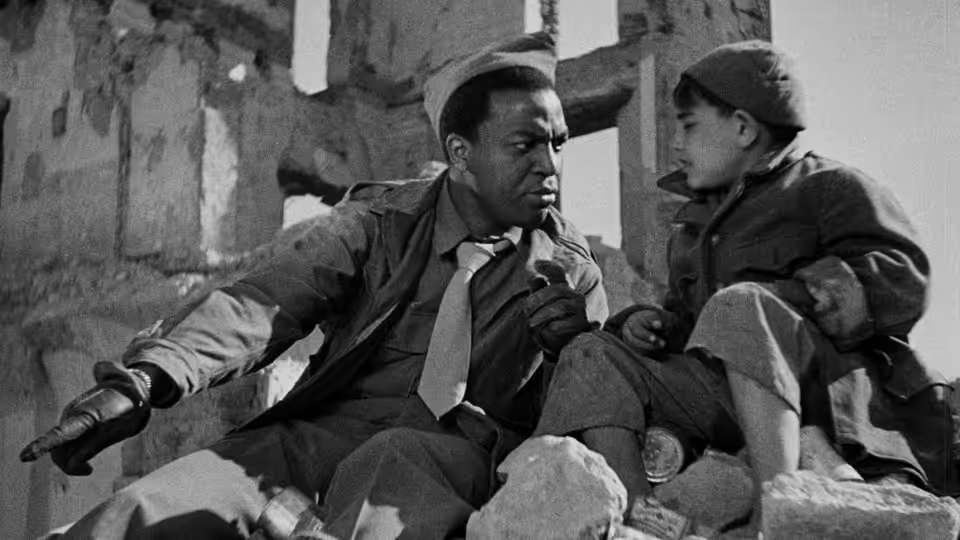
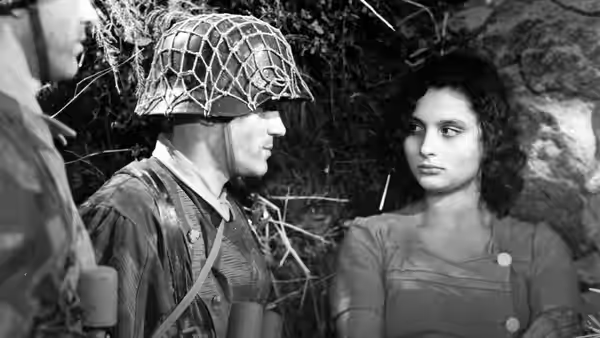
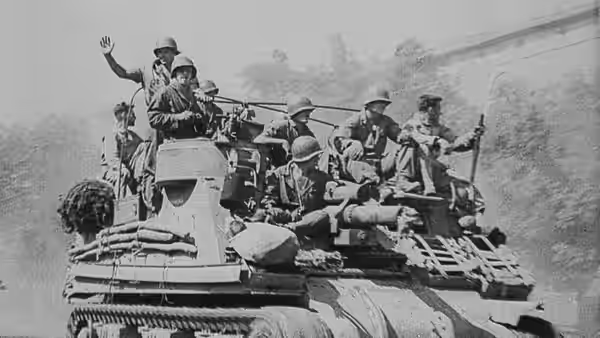
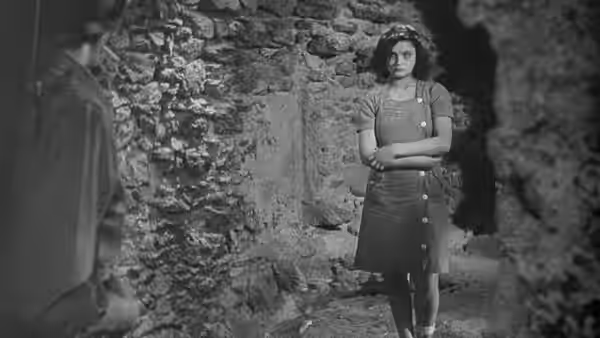
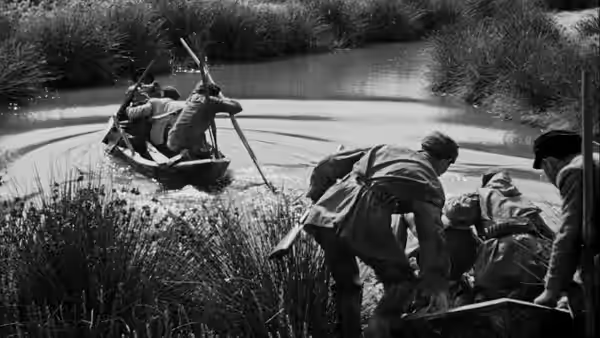
Otello Martelli’s cinematography gives us a strong reason to stay with it. The ravaged landscapes retain a beauty that does not make them reassuring, and the photography allows us to notice both their appeal and their damage. We were unsettled by that beauty, because it made us linger over places marked by suffering. The destruction remains visible however much we admire the image. This is where the film’s convincing sense of reality matters most: the surroundings demand attention even when we might prefer to concentrate on the people.
The performances are less dependable, and it would be indulgent to pretend otherwise. Roberto Rossellini brings professional and non-professional actors together with considerable sensitivity, but some of the American acting is awkward enough to interrupt our attention. At those points we become conscious of people trying to get through a scene, which is a serious problem for a film so dependent on our belief. Naturalness cannot simply be assumed because a performer lacks polish. Even so, the unevenness does not destroy the wider impression of ordinary lives caught in war.
Eraldo Da Roma’s editing has the difficult job of making separate stories belong to the same film without disguising their breaks. The changes ask us to adjust repeatedly, and the cutting does not make that process entirely comfortable. Attachment has to be built again, and not every section earns it equally quickly. Over 125 minutes, the repeated fresh starts can become tiring, especially when a performance makes the business of getting acquainted harder. We would keep those breaks, though some of the passages around them could use tightening.
Renzo Rossellini’s music makes less of an impression than the photography, though that says more about the strength of the images than any failure of the score. Our attention keeps returning to the damaged places and the people within them. Against the familiar pleasures of a war film, the lack of a sustained heroic story can seem almost wilfully unhelpful. It also prevents us from settling into the easy expectation that one person’s courage will explain what the fighting means for everyone else.
What makes the film worth its demands is Roberto Rossellini’s care for people whose experiences do not readily make a satisfying evening’s drama. We need not call every rough passage a virtue to recognise how much that care achieves. The awkward acting remains awkward, and viewers who need a firm attachment to one protagonist may find the changes exhausting. For us, the attention given to those different lives more than repays the effort. Choose it when there is time to give each new story a fair hearing.