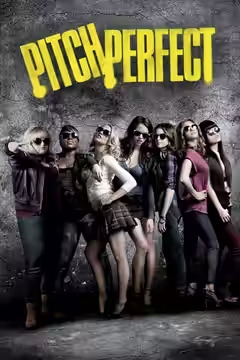
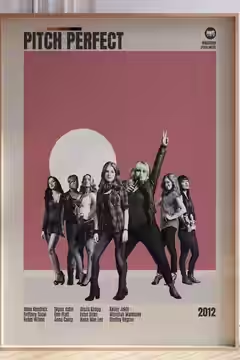
Pitch Perfect is a funny, uneven campus comedy with enough musical invention to make its familiar competition story worth following. Anna Kendrick gives it warmth; Rebel Wilson supplies most of the better interruptions.
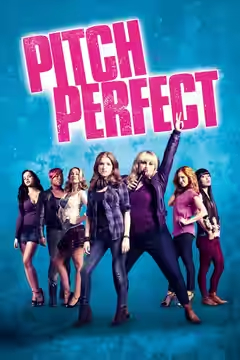
Pitch Perfect understands how seriously people can take a singing group, and how funny that seriousness looks from a short distance. Jason Moore makes a cheerful, occasionally coarse comedy out of the Barden Bellas’ efforts to improve their act, with Anna Kendrick giving us someone sensible to follow into the fuss. We recommend it for the singing and the company. The competition story is familiar enough that the film has to earn its place through individual jokes and performances, and usually does.
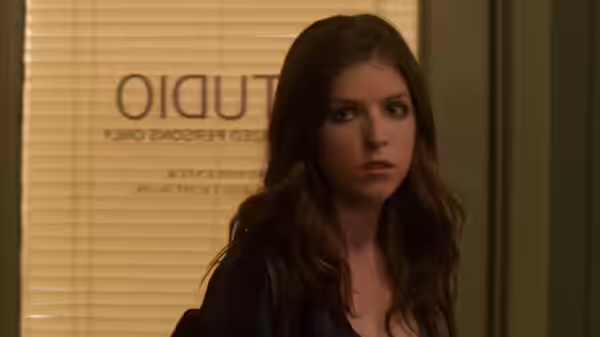
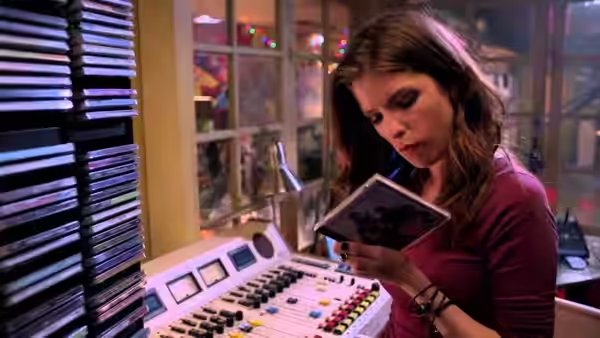
Anna Kendrick plays Beca Mitchell with enough reserve to make her growing involvement convincing: enthusiasm costs this person something. The cup-percussion performance is the clearest example of how little the film needs when it trusts her. We were delighted by it, because her voice and the cup’s rhythm hold our attention without needing the rest of the ensemble. Part of the pleasure is being able to follow exactly how she makes the music.
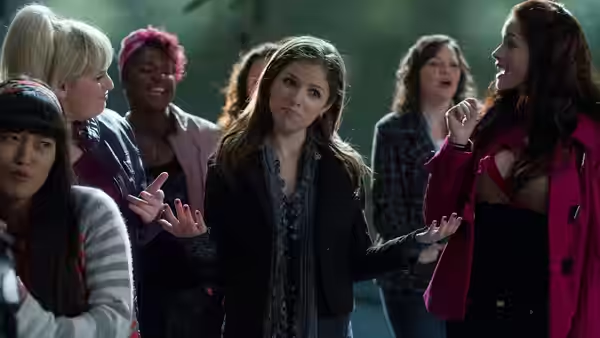
Rebel Wilson plays Fat Amy as someone whose self-confidence does not require anyone else’s approval. Her deadpan timing is a reliable pleasure, especially when Kay Cannon’s screenplay confuses saying something rude with finding something funny. Too many supporting characters arrive with a single defining trait, and the script does too little to complicate that first impression. The gross-out material also feels overworked: the cast can get a laugh from a pause, which makes the push for disgust seem unnecessary.
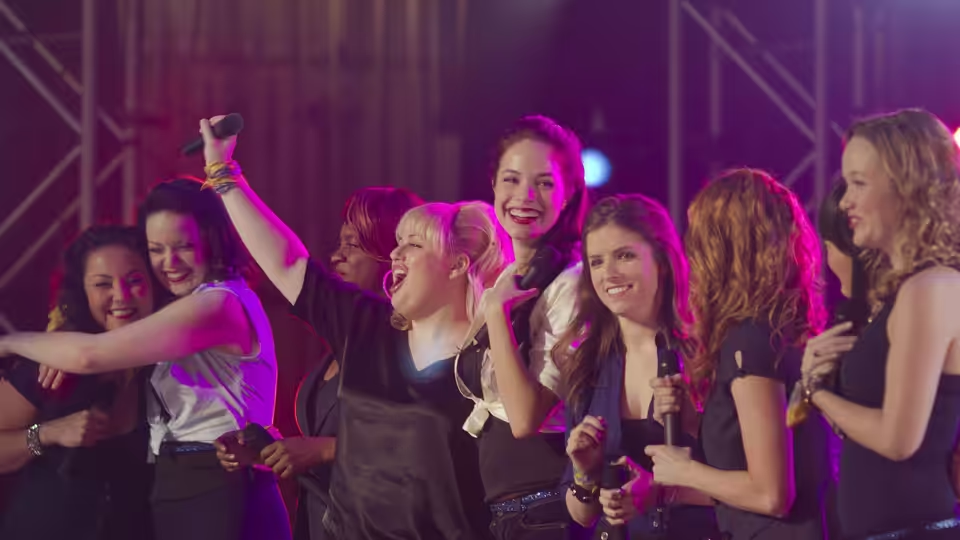
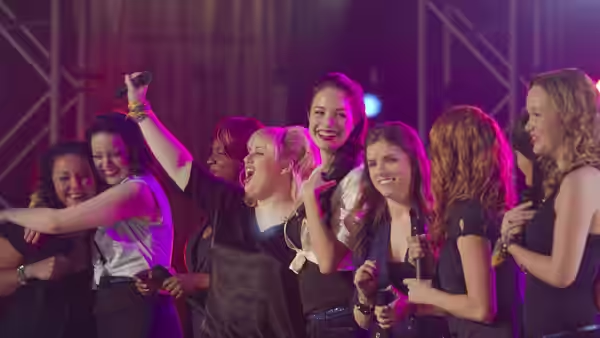
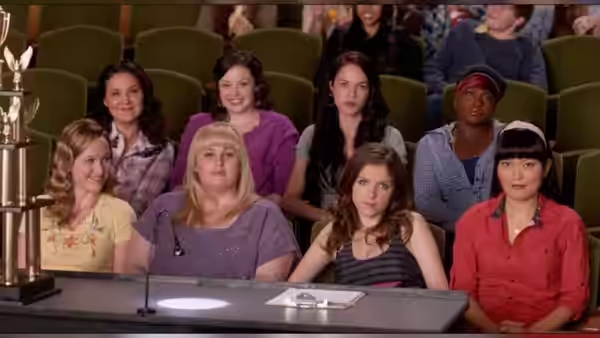
Julio Macat’s cinematography keeps the group performances clear enough for us to enjoy individual faces as well as the ensemble. That matters in a film whose jokes often depend on how much or how little somebody appears to care. Barry Robison’s production design is serviceable, making the campus a plausible setting without supplying much worth looking at for its own sake. When the comedy stalls, there is little visual invention to occupy us.
The a cappella arrangements are inventive enough to make familiar material worth another hearing, with sufficient variety to keep the next performance worth waiting for. The music by Mark Kilian and Christophe Beck is less memorable than the singing, but it supports the film’s easy good humour. Lisa Zeno Churgin cuts the musical passages briskly; the stretches between them need more discipline. At 112 minutes, this is a comedy that occasionally waits around after it has made its point.
Within the underdog musical, this is a fairly conventional effort, with comic timing and musical variety doing most of the work. Jason Moore lets the performers enjoy themselves, and their enthusiasm makes it easier to stay interested when the plotting becomes mechanical. We wanted more of the supporting singers to receive the care given to Beca, rather than remain available for the next easy joke. Best watched with someone who will not object to a little singing afterwards.