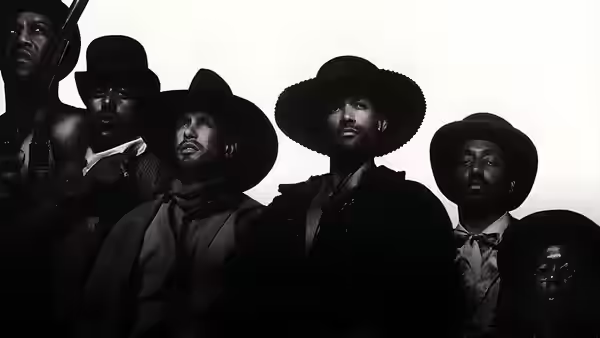
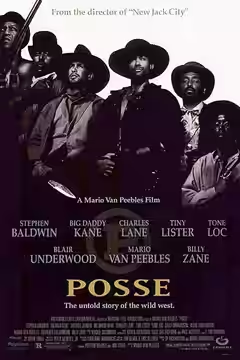
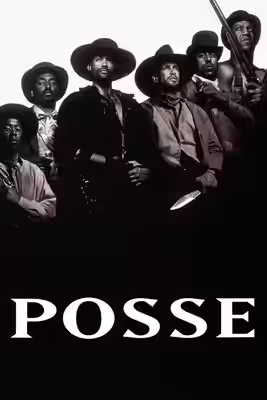
Mario Van Peebles puts Black cowboys back into the Western and tells us, often, that he is doing it. The result is lively, well cast and too restless to land a punch; the quiet final minute does more than the preceding 110.
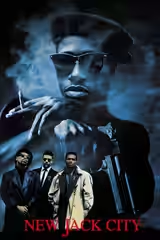
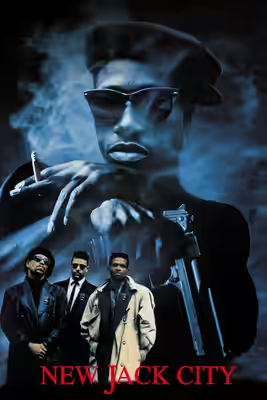
Two years after New Jack City, Mario Van Peebles directs and stars in a Western built to correct the record. The genre spent half a century pretending the frontier was white, the film says, and it is right. Good intentions are not nothing, and we went in wanting to like it. What he has made is a loud, crowded, hit-and-miss 111 minutes that keeps its history in the end titles and its energy everywhere else.
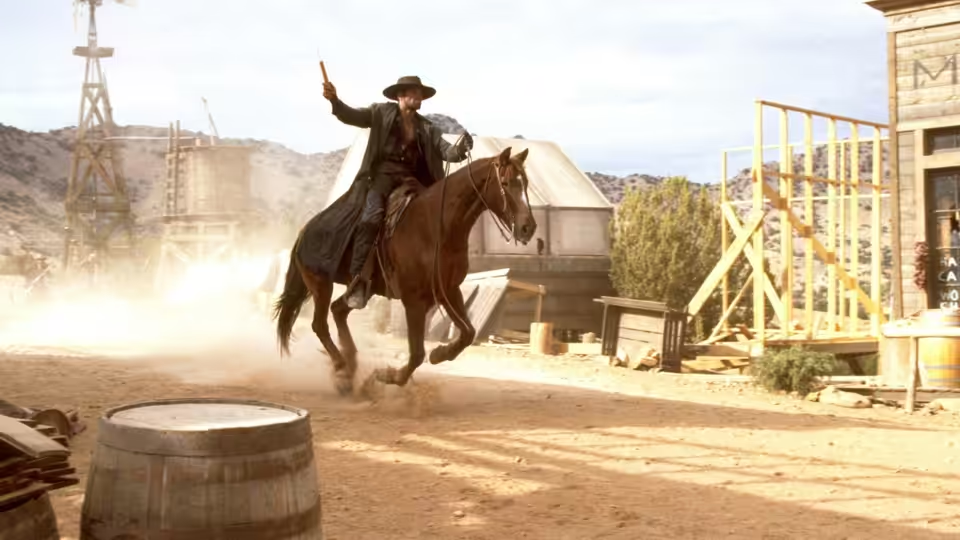
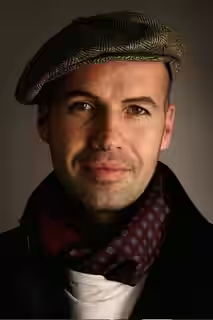
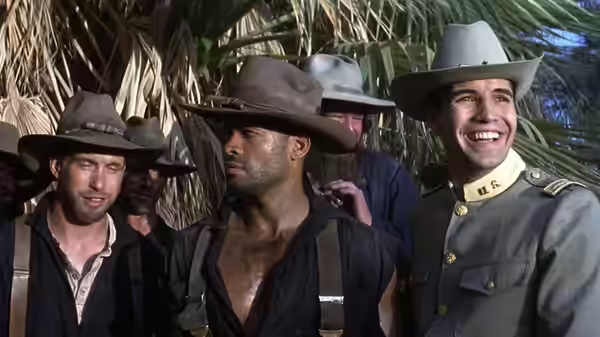
The opening is the best stretch. Cuba in 1898, a trench full of Black soldiers under a white colonel who plainly regards them as spare, a night raid for gold that turns into a betrayal and an escape. Peter Menzies shoots it in orange smoke and hard sidelight, with the camera low and tilted, and the confusion is the point. Billy Zane plays Colonel Graham with a white glove and a smirk and has a wonderful time doing it. For twenty minutes the film has one job, get these men out alive and rich, and it does the job.
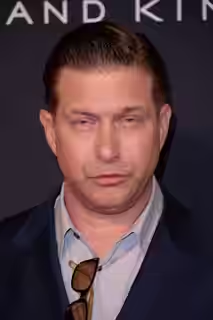
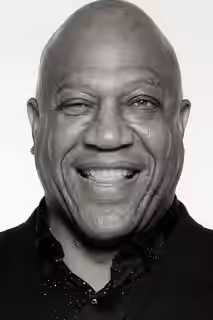
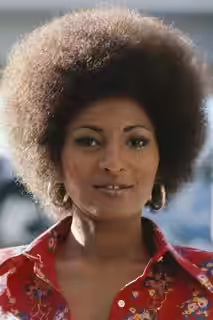
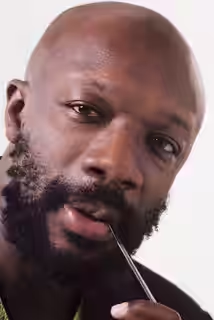
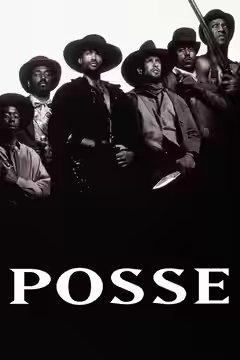
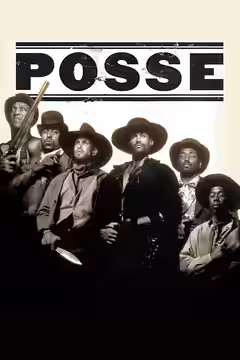
The cast is the reason to stay. Big Daddy Kane, as Father Time, is loose and funny and never seems to be acting. Tommy Lister Jr.’s Obobo is a big man the film treats as gentle, which is rarer than it should be. Charles Lane’s Weezie gets the laughs and earns most of them. Stephen Baldwin plays Little J as the eager younger brother the others tolerate. Pam Grier, Isaac Hayes and Salli Richardson are all in it and all underused; Grier in particular gets a few scenes and a look that suggests she could have carried the picture.
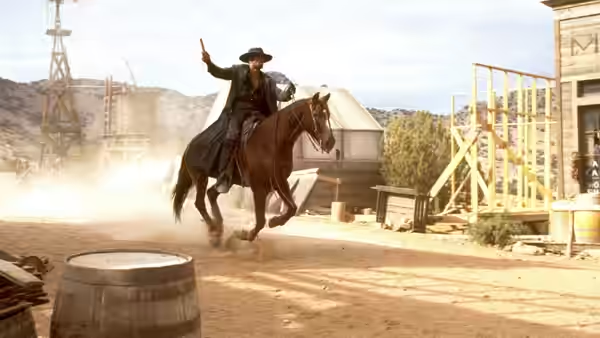
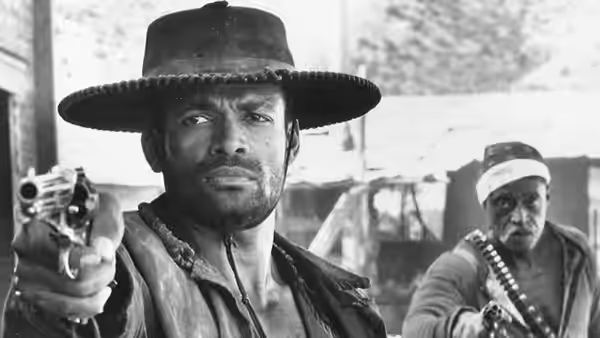
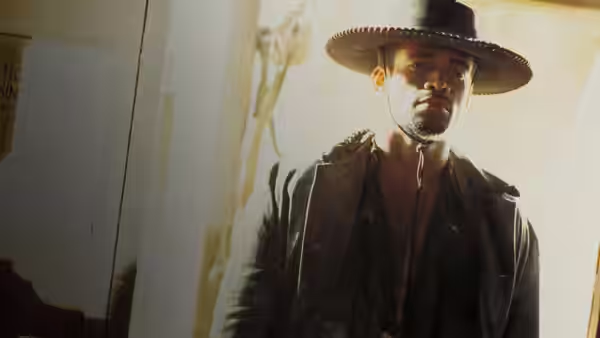
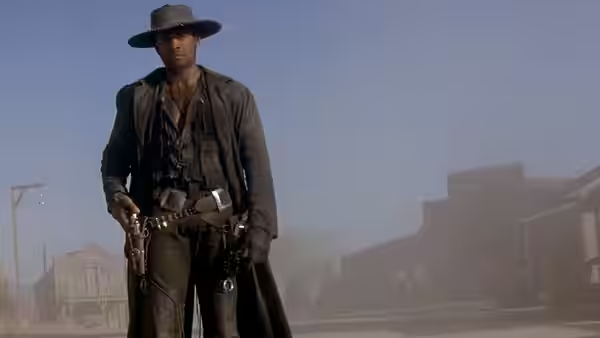
Van Peebles himself is the problem in the middle of his own film. He plays Jesse Lee as a pose: duster, hat brim, cheroot, eyes in close-up. The Leone borrowings are so direct they stop being homage and become a checklist, and he does not have Eastwood’s trick of looking as though the stillness costs him something. When Jesse talks about his father we are told he is in pain. We never saw it.
The direction will not sit still. Menzies is asked for fish-eye close-ups, whip pans, slow-motion blood and a camera that spins around speakers for no reason the scene supplies. Mark Conte and Seth Flaum cut a two-line exchange into eight shots. Michel Colombier’s score reaches for Morricone, brass and guitar and a big held chord under every entrance, and gets about halfway there. Catherine Hardwicke builds Freemanville as a plain wooden town with a church at its heart, and it is the one place in the film the camera calms down enough to let us look at.
The script, by Dario Scardapane and Sy Richardson, has too much in it. There is the pursuit, the gold, a railroad scheme, a romance for Little J, a second romance for Jesse, flashbacks that keep returning to the same night, and a frame in which an old man tells the whole thing to two reporters. Each of these would fill a Western on its own. Together they mean nothing gets more than a scene and a half, and the revenge the film is heading toward arrives as one more item on the list.
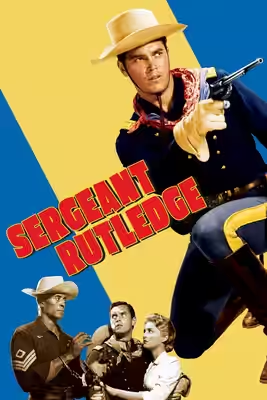
And yet. The frame ends with photographs of real Black cowboys and a few lines of text about how many of them there were, and we found ourselves moved, properly, in a way nothing staged in the previous hour and three-quarters had managed. The feeling was partly for the faces and partly for the film, which had the right subject the whole time and kept running away from it to shoot something in slow motion. John Ford got there first with Sergeant Rutledge in 1960, and did it with a single trial and a single man.
See it for the faces in the cast and the faces at the end. The hour in between is a Western made by someone who loves Westerns and does not yet trust one to stand still.