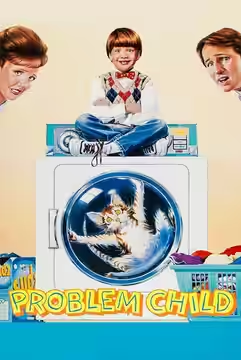
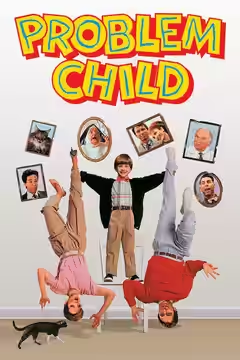
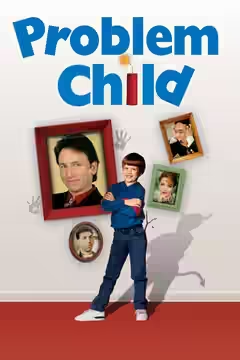
Dennis Dugan’s comedy makes an unloved child the excuse for crude jokes, then retreats into sentiment. Jack Warden brings some bite, but there is too little invention to make the unpleasantness funny.
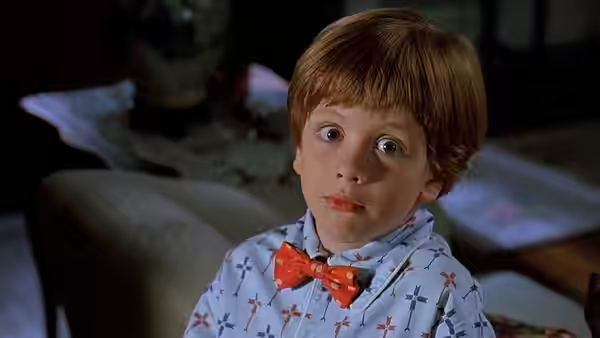
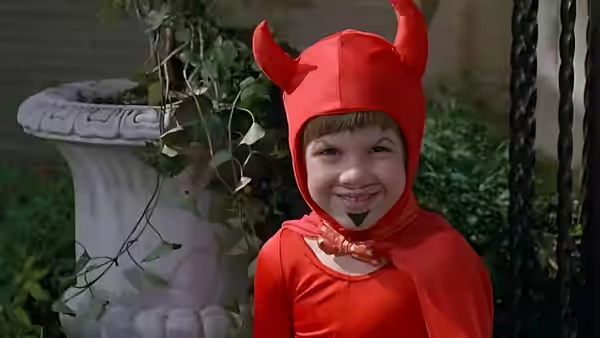
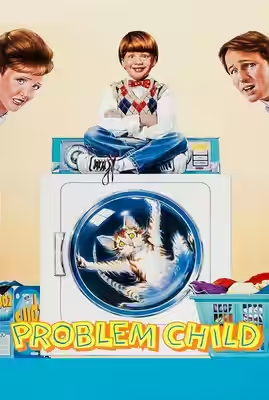
Dennis Dugan’s Problem Child wants a laugh from a badly behaved boy and some affection for him too. That is a workable basis for a comedy, but this is a poor one, too often content to treat being disgusting as enough to earn a laugh. Junior, played by Michael J. Oliver, is an unloved orphan whose rebellion causes trouble for the adults around him. The difficulty is deciding what, beyond causing trouble, the film thinks he is good for.
The screenplay by Larry Karaszewski and Scott Alexander has a potentially uncomfortable subject in a child whose behaviour makes sympathy difficult. We can understand why a comedy might resist making him adorable; there is no obligation to make a rebellious boy secretly angelic. But the jokes need to reveal something about his anger, or give us the pleasure of seeing someone deserving receive it. Too often, the mere fact that Junior is objectionable seems to be treated as the joke.
We grew irritated with the bodily-function jokes. They make an unloved child’s disruptive behaviour the main attraction, without finding much that is surprising or funny in it. The problem is not that the humour is unsuitable for polite company: comedy has no duty to behave itself, and offended adults can be excellent subjects for ridicule. Here, though, the crudeness supplies too much of the material, while the retreat into sentiment makes the nastiness feel timid.
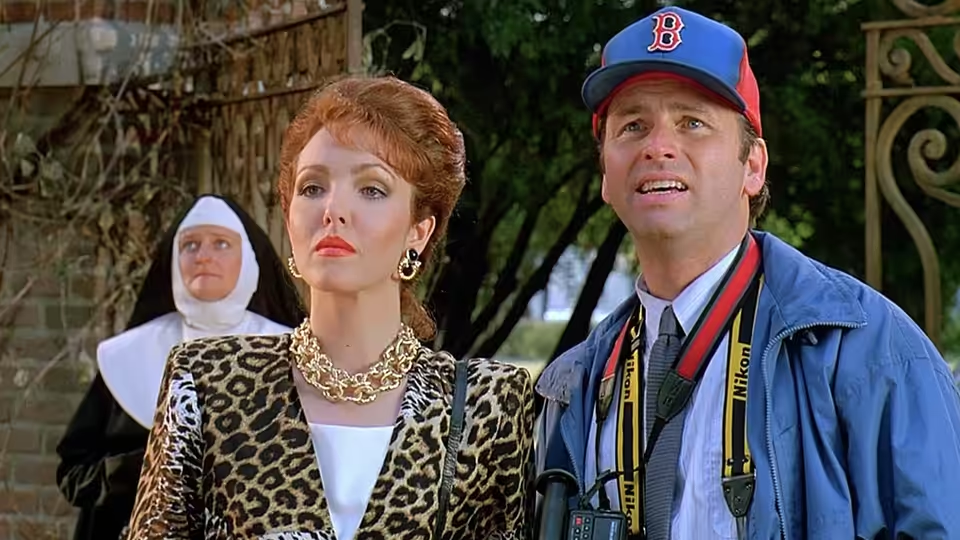
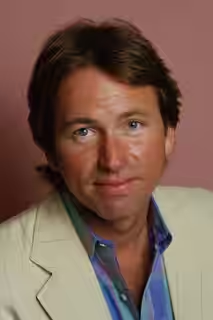
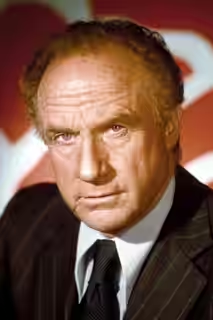
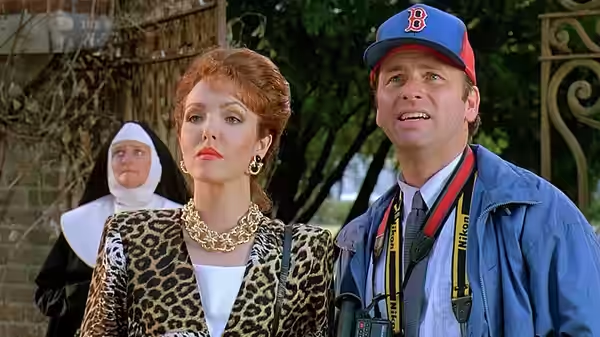
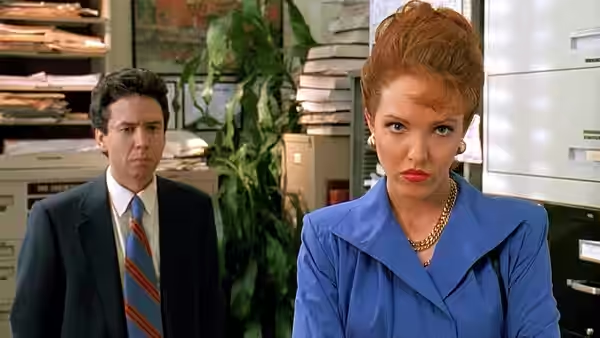
Jack Warden gives the film some welcome bite as Big Ben, playing through the softness that blunts so much of the comedy. His contribution is a reason not to dismiss the entire cast with the material. John Ritter, as Ben, gives us someone less exhausting to spend time with, though goodwill cannot make an underwritten comic situation funnier. Amy Yasbeck has a rougher assignment as Flo: the status-conscious wife is made so insistently objectionable that the performance has little room to surprise us.
Peter Lyons Collister’s cinematography and George Costello’s production design keep the action legible, but neither supplies much comic interest beyond the behaviour being presented. There is little pleasure here in simply looking at a scene and discovering another joke within it. Miles Goodman’s music cannot compensate for that lack of invention. Dugan puts the disruptive child at the centre of our attention, yet the filmmaking does too little to make watching him more rewarding than hearing an account of his bad behaviour.
Mike Hill, Tom Finan and Daniel P. Hanley share the editing credit, and the film runs 81 minutes. It still feels laboured, because a short running time cannot cure a succession of jokes built on much the same response. Once the adults have been aggravated, we need a fresh comic idea, not simply another reason for them to lose patience. The cutting does not give this material the briskness its length might suggest.
The usual pleasure of a badly behaved child in a comedy is that the adults’ rules begin to look ridiculous. There is room for anger in that arrangement, and no requirement for everyone to become nice. This film never makes us interested enough in Junior to excuse its attempts to win our sympathy. Anyone hoping for sustained comic spite should give it a miss; Warden cannot carry the whole evening.