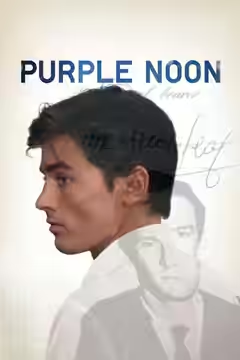
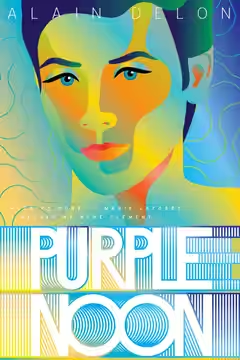
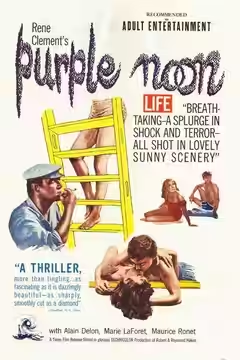
René Clément’s sunlit thriller makes Alain Delon’s stillness deeply unsettling. The plotting occasionally feels routine, but the photography, music and central performance keep us watching with a suspicion that never quite relaxes.
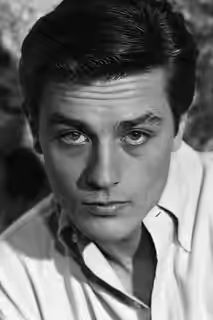
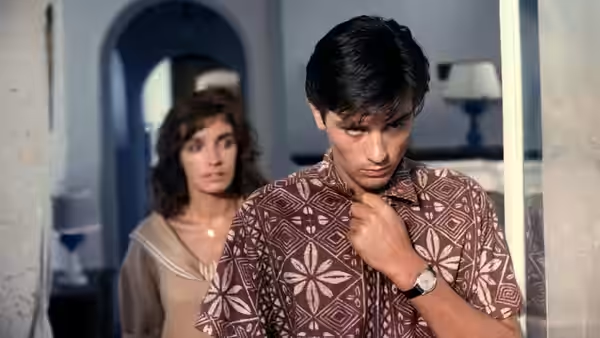
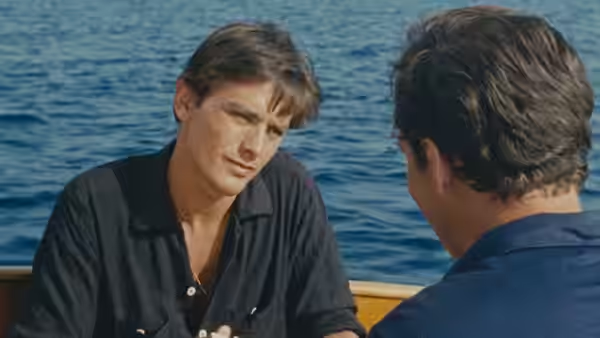
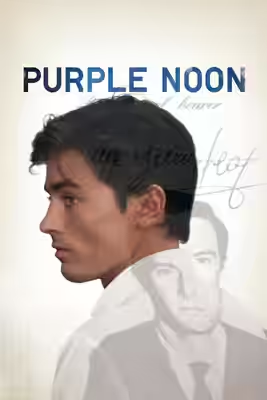
René Clément’s Purple Noon is a gripping thriller whose criminal schemes occasionally become less interesting than the man conducting them. Its strongest attraction is Alain Delon as Tom Ripley, whose attention to other people makes almost any exchange feel unsafe. This adaptation of Patricia Highsmith takes seriously the possibility that someone without much conscience can remain pleasing company. There is no need for darkness to warn us about him. The bright photography lets us look at him clearly and still leaves us wondering what he is thinking.
Alain Delon understands how little he needs to supply. Ripley watches with a concentration that might pass for interest or courtesy, and the performance gives us time to become uncomfortable with it. We felt uneasy simply watching him wait; his attention seems fixed on somebody else while his own feelings remain unreadable. His charisma matters because it makes that scrutiny tolerable for longer than it ought to be.
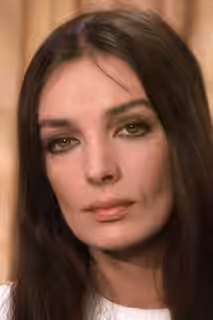
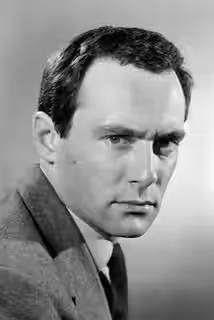
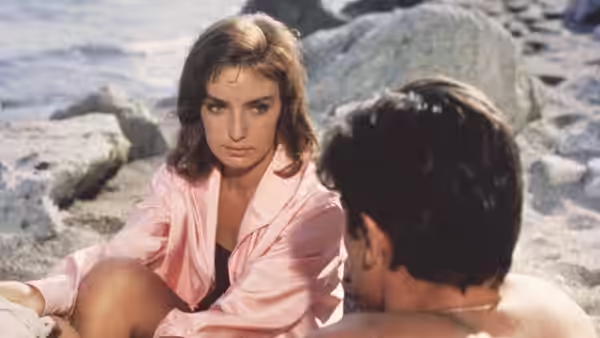
That concentration does leave the other performances at a disadvantage. Maurice Ronet’s Philippe Greenleaf and Marie Laforêt’s Marge Duval have to hold our interest while we keep checking what Ripley might be making of them. We would welcome more space for Marge, although the narrow attention helps sustain the film’s discomfort. The attraction is a performance we cannot comfortably settle our feelings about, and the supporting cast must compete with that.
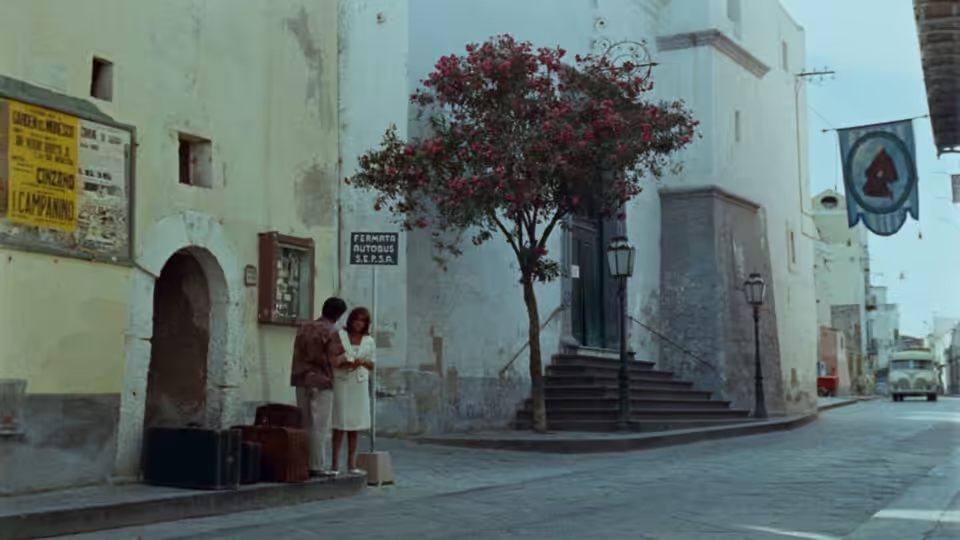
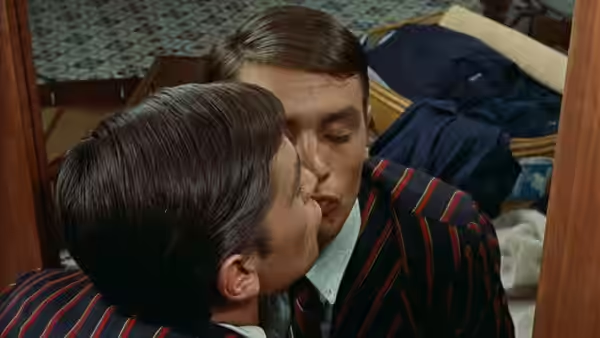
Henri Decaë’s cinematography is essential to the effect. The bleached sunlight makes the image inviting, while the fluid camera keeps us conscious of Ripley as a man looking, assessing and choosing how to present himself. Paul Bertrand’s production design sits comfortably within those bright compositions; its restraint works because nothing needs to advertise menace on the actor’s behalf. The early passages are especially assured, letting the camera and the performance establish a threat without insisting that we identify precisely what it is.
Françoise Javet’s editing is most effective when it preserves the time we need to study him. There is pleasure in a thriller that allows watching to occupy so much of our attention, and these stretches never struck us as slow. Nino Rota’s music supplies another reason to stay attentive. The score has a presence of its own without making every feeling seem settled in advance, and we found it lingering after the details of the plotting had begun to blur. It helps keep the film seductive even when Ripley is repellent.
The screenplay by Paul Gégauff and René Clément is less consistently persuasive. As the scheming demands more attention, Ripley’s practical problems can interest us less than his capacity to look harmless. The plotting remains suspenseful, but some of its business feels routine beside the actor’s troubling silences. These passages are competent enough; they simply make us conscious of following a crime story when the performance had made us feel uncomfortably close to a person.
As a thriller, Purple Noon benefits from never needing to strain for our attention. An attractive, composed man can be disturbing company, and the film trusts us to notice the danger without constant prompting. The stretches of ordinary plotting are a caveat worth accepting for the photography, the music and that watchful lead performance. Give it an evening without distractions; the pauses are worth watching.