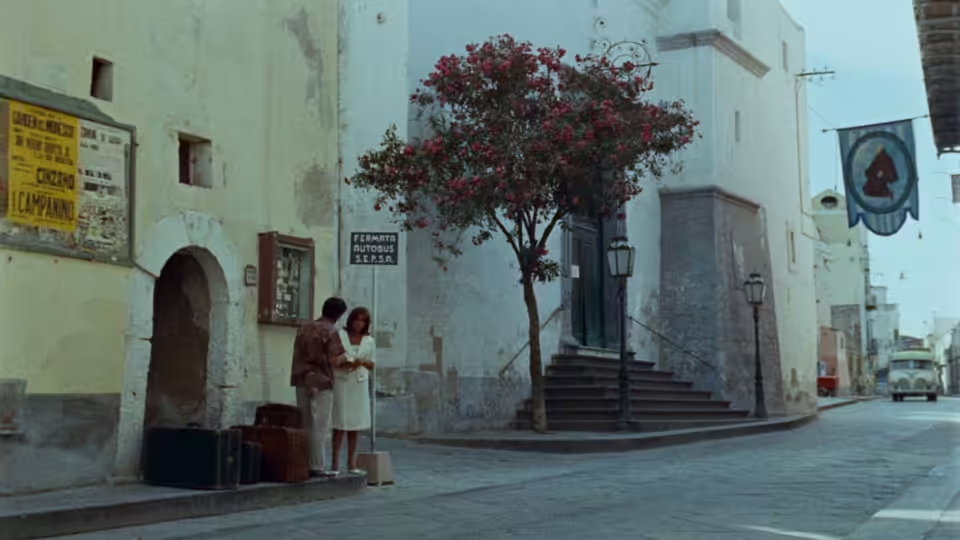
Two women stand beside luggage on a quiet street lined with white buildings
Film review

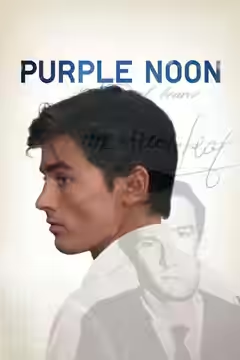
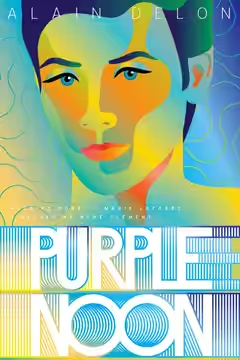
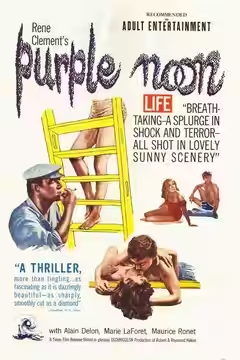
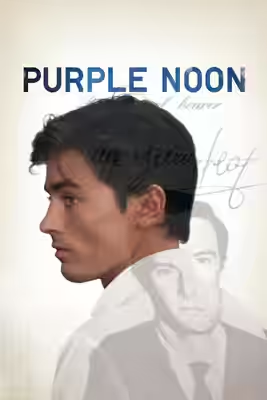
Purple Noon

1960 · Directed by René Clément · 1h 58m

In a sentenceAlain Delon makes looking quietly at somebody seem sufficient grounds for calling the police

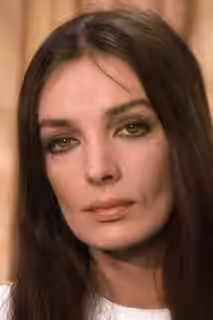
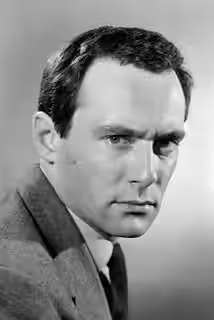
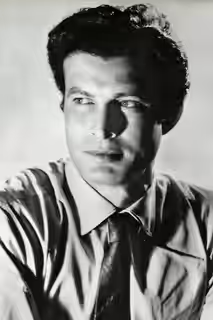
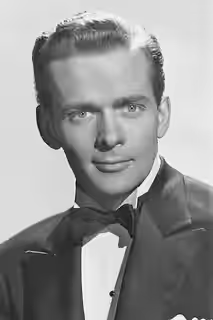
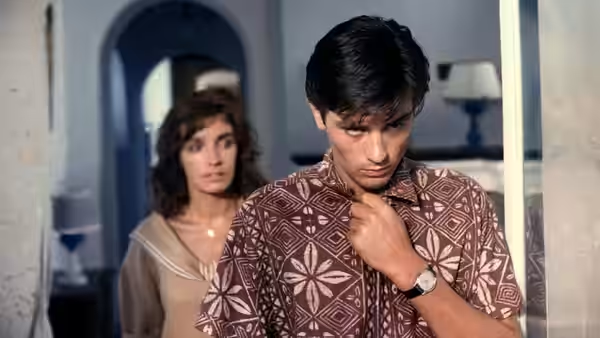
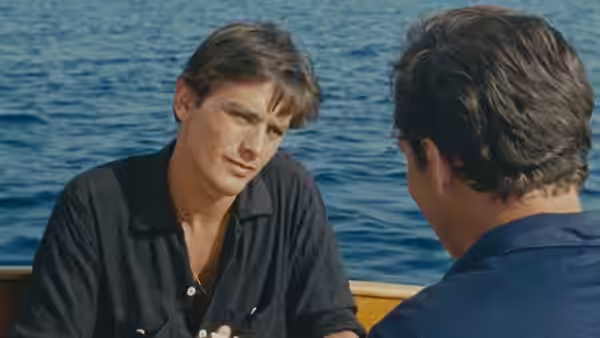
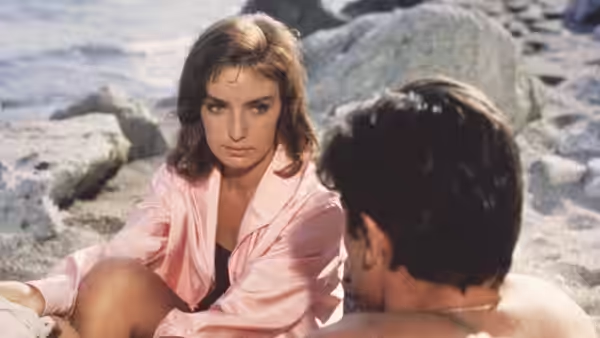
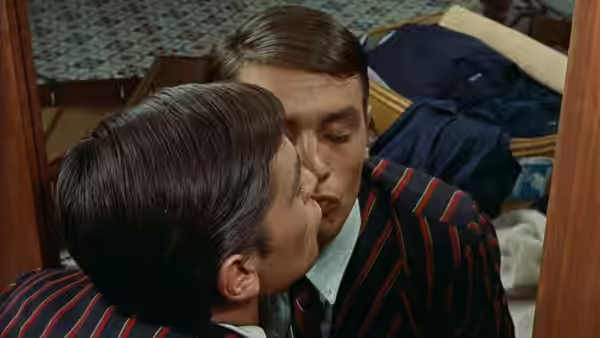
Tom Ripley (Alain Delon) watches the people around him with an attention that conceals his own intentions. Philippe Greenleaf (Maurice Ronet) and Marge Duval (Marie Laforêt) share the story with him, alongside Freddy Miles (Billy Kearns). Envy and calculation draw Ripley towards murderous schemes, while his outward composure gives little away. In this adaptation of a novel by Patricia Highsmith, the question is how far Ripley will take those schemes, and how much his apparently calm presence allows anyone else to understand about him.

Plays from YouTube when you press play; nothing loads from them until then.

Fi1m review

René Clément’s sunlit thriller makes Alain Delon’s stillness deeply unsettling. The plotting occasionally feels routine, but the photography, music and central performance keep us watching with a suspicion that never quite relaxes.

René Clément’s Purple Noon is a gripping thriller whose criminal schemes occasionally become less interesting than the man conducting them. Its strongest attraction is Alain Delon as Tom Ripley, whose attention to other people makes almost any exchange feel unsafe. This adaptation of Patricia Highsmith takes seriously the possibility that someone without much conscience can remain pleasing company. There is no need for darkness to warn us about him. The bright photography lets us look at him clearly and still leaves us wondering what he is thinking.

Alain Delon understands how little he needs to supply. Ripley watches with a concentration that might pass for interest or courtesy, and the performance gives us time to become uncomfortable with it. We felt uneasy simply watching him wait; his attention seems fixed on somebody else while his own feelings remain unreadable. His charisma matters because it makes that scrutiny tolerable for longer than it ought to be.

That concentration does leave the other performances at a disadvantage. Maurice Ronet’s Philippe Greenleaf and Marie Laforêt’s Marge Duval have to hold our interest while we keep checking what Ripley might be making of them. We would welcome more space for Marge, although the narrow attention helps sustain the film’s discomfort. The attraction is a performance we cannot comfortably settle our feelings about, and the supporting cast must compete with that.

Henri Decaë’s cinematography is essential to the effect. The bleached sunlight makes the image inviting, while the fluid camera keeps us conscious of Ripley as a man looking, assessing and choosing how to present himself. Paul Bertrand’s production design sits comfortably within those bright compositions; its restraint works because nothing needs to advertise menace on the actor’s behalf. The early passages are especially assured, letting the camera and the performance establish a threat without insisting that we identify precisely what it is.

Françoise Javet’s editing is most effective when it preserves the time we need to study him. There is pleasure in a thriller that allows watching to occupy so much of our attention, and these stretches never struck us as slow. Nino Rota’s music supplies another reason to stay attentive. The score has a presence of its own without making every feeling seem settled in advance, and we found it lingering after the details of the plotting had begun to blur. It helps keep the film seductive even when Ripley is repellent.

The screenplay by Paul Gégauff and René Clément is less consistently persuasive. As the scheming demands more attention, Ripley’s practical problems can interest us less than his capacity to look harmless. The plotting remains suspenseful, but some of its business feels routine beside the actor’s troubling silences. These passages are competent enough; they simply make us conscious of following a crime story when the performance had made us feel uncomfortably close to a person.

As a thriller, Purple Noon benefits from never needing to strain for our attention. An attractive, composed man can be disturbing company, and the film trusts us to notice the danger without constant prompting. The stretches of ordinary plotting are a caveat worth accepting for the photography, the music and that watchful lead performance. Give it an evening without distractions; the pauses are worth watching.

Critical consensus AI synthesised

73
Positive
4
Mixed
2
Negative
0

Most critics respond warmly to Purple Noon, with praise clustering around its suspense, cinematography and Alain Delon’s presence as Ripley. The sun-bleached images and elegant camerawork draw admiration, while Delon is described as both charismatic and unnerving. The favourable reviews find the film seductive without softening its study of amorality. Nino Rota’s score also earns praise for helping make the thriller memorable.

The spread runs from strong enthusiasm to qualified approval, with no outright negative reviews among the six. The Guardian finds the thriller dated but still compelling, largely thanks to Delon. The Los Angeles Times admires its low-key approach and irony, though it considers the later adaptation richer. Slant Magazine offers the sharpest reservation: despite admiring the early camerawork, it finds Ripley’s murderous scheming increasingly banal and less compelling than in Highsmith’s novel.

The AV Club
29 March 2002 · Keith Phipps
90*

Phipps calls the film a suspenseful, unpredictable classic and a can’t-miss rental. He especially praises its striking cinematography and memorable Nino Rota score.

Read the full review →
Total Film
28 August 2013 · ★★★★ · Simon Kinnear
80

Kinnear finds the film seductive and suspenseful, praising its bracing study of amorality. He singles out the sun-bleached cinematography and Alain Delon’s charisma.

Read the full review →
Los Angeles Times
17 December 2012 · Andy Klein
70*

Klein calls the film a great, refreshingly low-key thriller, though he finds the later adaptation richer. He praises its irony and the quality of Criterion’s restored print.

Read the full review →
Time Out
15 March 2012
70*

The review appears positive about this elegant French adaptation. The visible description singles out its elegance, though the full review is unavailable.

Read the full review →
The Guardian
29 August 2013 · Peter Bradshaw
65*

Bradshaw finds the thriller dated but considers the film compelling overall. He singles out Alain Delon’s unnerving, magnetic performance as Ripley for praise.

Read the full review →
Slant Magazine
10 January 2014 · ★★½/4 · Joseph Jon Lanthier
62

The critic finds that the film’s portrayal of Ripley’s murderous scheming becomes banal and less compelling than Highsmith’s novel. They praise the film’s early icy, fluid camerawork for capturing Ripley’s menacing, watchful presence.

Read the full review →

Straight answers AI written, from our review

Is Purple Noon worth watching?
Purple Noon is worth watching for its unsettling Alain Delon performance, sunlit photography and memorable music; we score it 82. We recommend it especially to those who enjoy studying a character’s behaviour, with the caveat that Ripley’s criminal schemes sometimes feel routine beside his troubling stillness.
How long is Purple Noon, and what is it rated?
Purple Noon runs 1h 58m. It is a crime and drama film.
Where can I watch Purple Noon in Slovakia?
Purple Noon is not on any streaming or rental service in Slovakia at the moment. It is available in 11 other countries; change your country at the top of the page to see where. Availability is checked daily.
How violent or frightening is Purple Noon, and is it suitable for children?
Purple Noon has a UK PG certificate, but its murderous schemes and quietly threatening central character call for parental judgement rather than assuming it suits every child. We find its unease comes chiefly from Ripley’s unreadable behaviour; the certificate allows general viewing with parental guidance, though the subject matter may trouble younger or sensitive children.
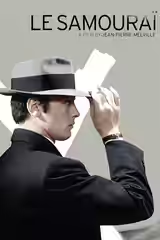
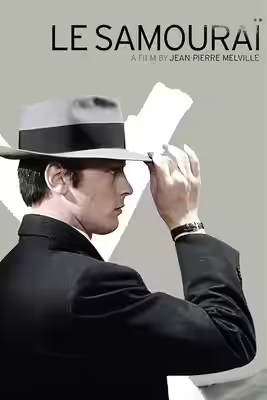
How does Purple Noon compare to Le Samouraï?
Purple Noon offers sunlit menace where Le Samouraï gives Alain Delon’s threatening stillness colder surroundings and fewer distractions. We favour Le Samouraï for a more concentrated thriller, while Purple Noon suits those drawn to bright photography, distinctive music and the discomfort of watching a man whose pleasing manner conceals his intentions.
Is Purple Noon based on a true story or a book?
Purple Noon is adapted from a novel by Patricia Highsmith, rather than presented as a true story. Knowing the book is not necessary to appreciate the thriller: we find its strongest attraction in Delon’s watchful performance and the way Ripley’s outward composure keeps his intentions difficult to read.
What should I watch after Purple Noon?
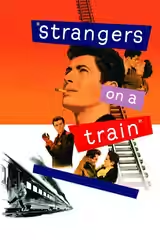
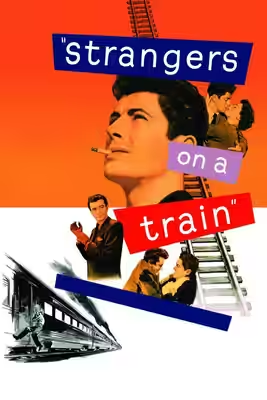
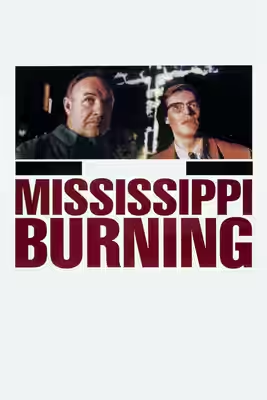
After Purple Noon, try Le Samouraï (1967, Fi1m 88): Alain Delon makes stillness threatening again, with fewer distractions and colder surroundings. Then Strangers on a Train (1951, Fi1m 86): Try this for charm deployed as pressure, and murder discussed with alarming politeness; and Burning (2018, Fi1m 72): A slower study of watching, wanting and suspecting the person with more money.

Cast

If you liked this, try…

  1. Le Samouraï (1967, Fi1m 88)Alain Delon makes stillness threatening again, with fewer distractions and colder surroundings.

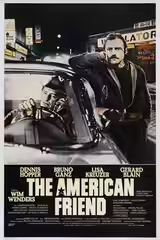
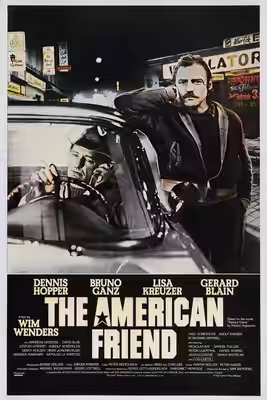
  2. The American Friend (1977) · not reviewed yetFor another uneasy encounter with Ripley, where companionship makes danger harder to judge.

  3. La Cérémonie (1995) · not reviewed yetDomestic routines and class resentment acquire a steadily more troubling edge.

  4. Strangers on a Train (1951, Fi1m 86)Try this for charm deployed as pressure, and murder discussed with alarming politeness.

  5. Burning (2018, Fi1m 72)A slower study of watching, wanting and suspecting the person with more money.

Free account

Know what to watch tonight

Two lists that know where things are streaming, collections you can share, your own score beside ours, and Discover that remembers what you have seen.

  • Want to see, sorted by what is streaming now
  • Seen, with your score out of ten
  • No adverts, ever