Phillip Noyce’s historical drama is direct, moving and carried by three young performers whose faces hold our attention. Its portrait of official cruelty can be thin, but the children’s distress never feels manufactured.
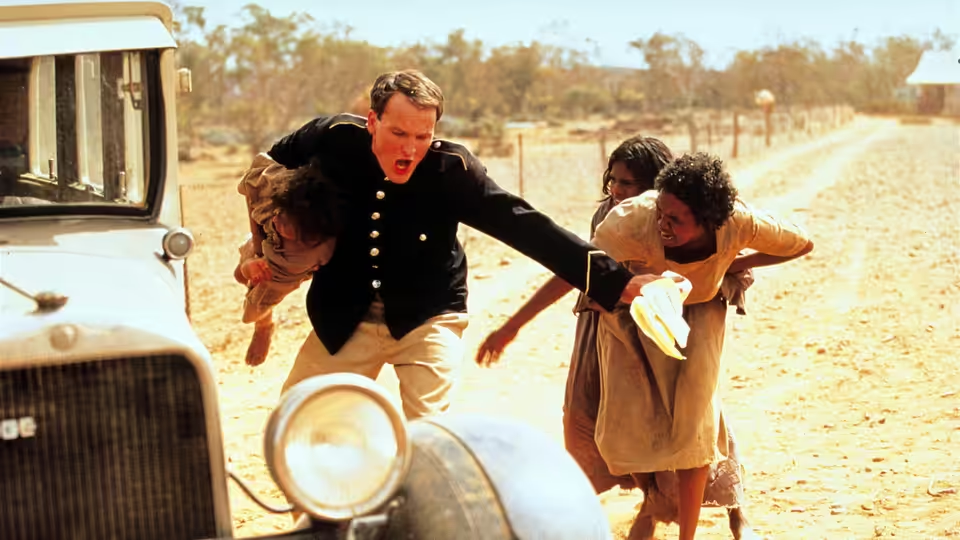
Rabbit-Proof Fence is a moving historical drama whose strongest claim on us comes from the children at its centre. Director Phillip Noyce gives their escape the directness of an adventure, making the injustice easy to grasp without requiring a lecture before the story can begin. We understand why getting away matters, even when the adults have become too easy to dismiss. At 94 minutes, the film gives its young cast little unnecessary business to carry.
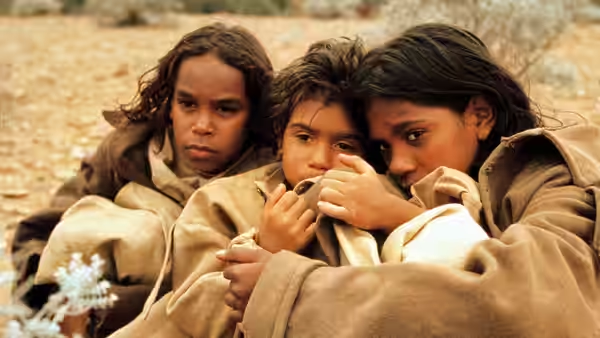
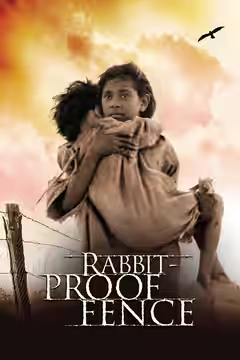
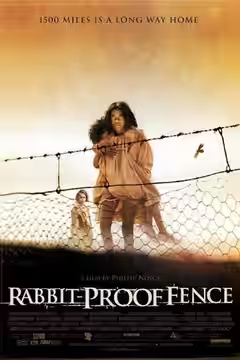
Everlyn Sampi, playing Molly Craig, supplies the steadiness that keeps the film from becoming a succession of sad images. We watch her face for decisions, and she holds that attention without seeming to solicit our sympathy. Tianna Sansbury as Daisy Craig Kadibill and Laura Monaghan as Gracie Fields give the central group an equally welcome naturalness. We were moved by the effort these children make to remain composed. The young performers allow fear to show without making every expression an appeal to the audience, and that restraint earns our concern.
Christopher Doyle’s photography gives the stark landscape a scale that makes the girls’ vulnerability plain. Its beauty matters because we remain conscious of how exposed a child can be within it. His attention to their faces keeps the scenery from becoming the principal attraction, even when there is plenty to admire around them. Roger Ford, responsible for production design and costumes, works with a useful lack of fuss. The clothes and surroundings do not compete with the children for attention, which suits a film so dependent on small changes of expression.
Editors Veronika Jenet and John Scott keep the escape legible and the pace purposeful. They allow the young performers enough space for us to read a reaction before asking us to worry again. That rhythm helps the film avoid making each new difficulty feel like another scheduled opportunity for distress. Peter Gabriel’s score sustains the unease effectively, although its insistence occasionally feels unnecessary. There are passages where the performances already give us enough to respond to, and a little less musical encouragement would have served them better.
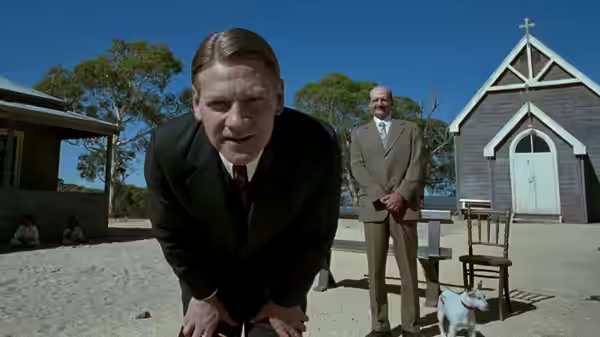
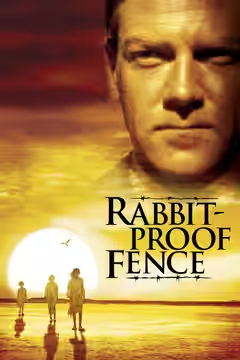
Kenneth Branagh, as A. O. Neville, has the less rewarding task. The character is so firmly defined by his part in the injustice that we are given little reason to watch him closely. We do not need a sympathetic account of a racist official, or a fabricated case for his defence. We do need to understand how a person becomes comfortable exercising this sort of power, and Christine Olsen’s screenplay is less searching there. The certainty of the telling sometimes makes the adults less disturbing than they ought to be.
The adventure structure is a sound choice for this history, because the wish to escape gives the injustice an immediate consequence. Historical dramas can become preoccupied with explaining their importance; here, following the children is sufficient reason to keep watching. We would have welcomed more curiosity about the adults, but the film’s concentration on the girls remains persuasive enough to justify the evening. Give it an evening when there is time for a quiet conversation afterwards.