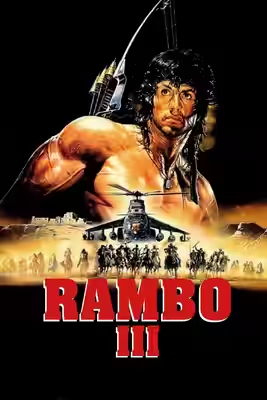
Rambo III delivers forceful action but makes John Rambo so righteous that the fighting soon becomes tiresome. Richard Crenna brings some welcome interest; weak dialogue and relentless hero worship leave him too much to repair.
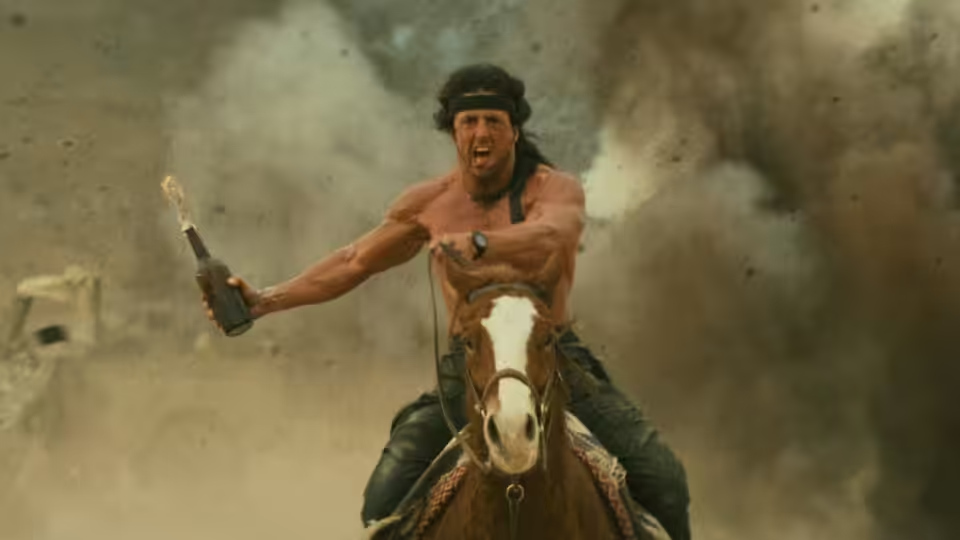
Rambo III has a simple reason for sending John Rambo into action: he is fighting for a friend. That should be enough for an action film, but Peter MacDonald directs it with such extravagant hero worship that the people become difficult to care about. The fighting has force, and some of it can still startle us. It is nevertheless a poor war adventure, too pleased with its hero to make his struggle interesting.
Sylvester Stallone and Sheldon Lettich’s screenplay is weakest where it most needs to be persuasive, in the dialogue that supplies motives between bouts of violence. The characters have so little complication that there is scarcely anything to discover about them once their loyalties are established. We know how we are being asked to feel about Rambo, and the film keeps asking anyway. Affection for a friend could have given him something ordinary and recognisable; the writing makes even that feel like an announcement of his importance.
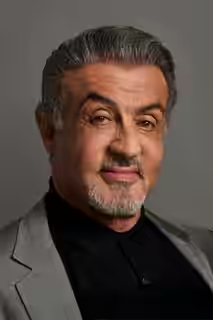
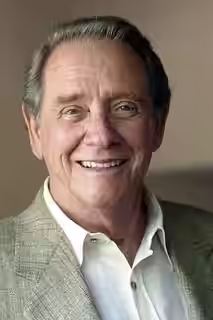
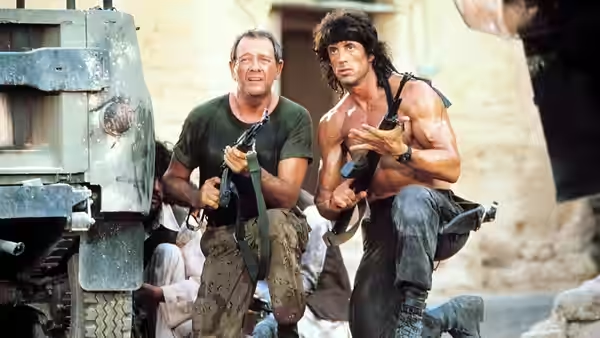
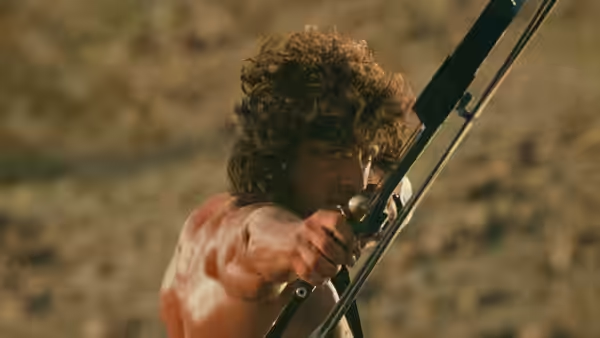
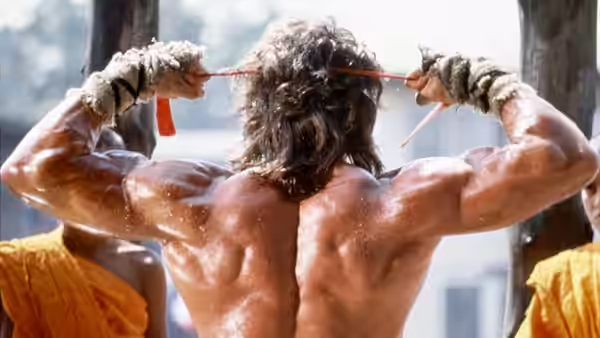
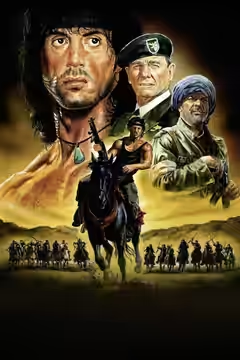
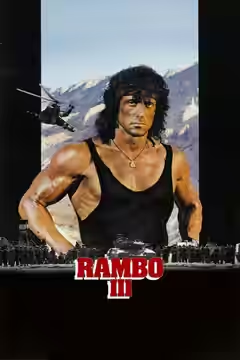
Sylvester Stallone is fully committed to this version of John Rambo, which helps explain the film’s force and its faintly ridiculous air. There is no embarrassment in the performance, even when the presentation of the hero becomes almost religious. That conviction can carry a piece of action, but it cannot supply the uncertainty missing from the character. Richard Crenna, as Trautman, is a welcome presence because he gives us another performer to take an interest in amid all the admiration for Rambo.
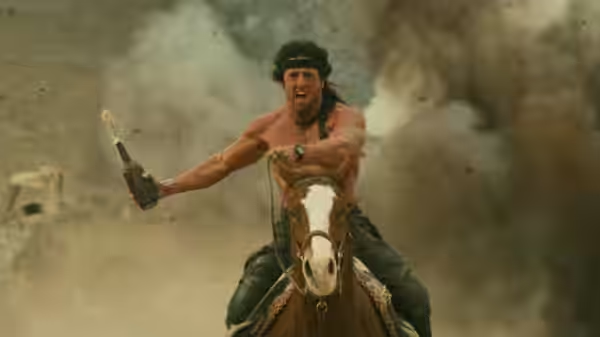
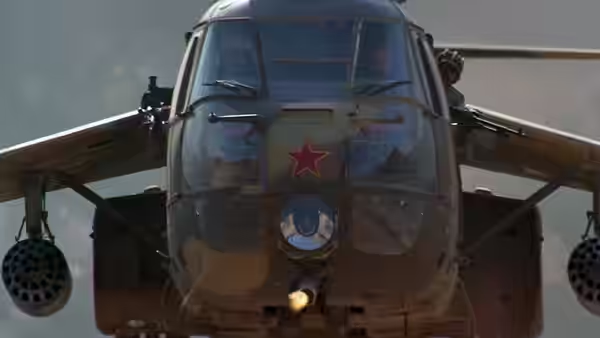
Peter MacDonald gives the battle scenes enough explosive force to make their appeal clear. John Stanier’s cinematography helps make the violence imposing, while Bill Kenney’s production design contributes to the scale of the spectacle. These are useful qualities in an action film, and the impact sometimes survives the absurdity of what surrounds it. We were worn out by the succession of battles, though, because the film keeps asking us to applaud destruction without giving us enough reason to fear for anyone.
The editing is a more immediate problem. O. Nicholas Brown, Andrew London, James R. Symons and Edward Warschilka are credited, and the awkward cutting makes the plentiful action less enjoyable than it ought to be. A film this dependent on fighting needs a sequence to build tension, with each fresh threat changing what its characters can do. Too often, another violent incident arrives before the previous one has made much of an impression.
Jerry Goldsmith’s music works to give the material weight, but the shallow characterisation leaves it carrying too much responsibility. Once every display of strength receives such reverence, another invitation to admire Rambo has little effect. The film’s camp qualities offer some amusement, although the weak dialogue rarely makes us confident that the joke is deliberate. At 102 minutes, it is not extravagantly long; the repetition makes it feel longer.
Measured against the needs of a straightforward action adventure, the disappointment is how little pleasure follows from so much exertion. We do not need a complicated account of war to enjoy a story about loyalty, but we do need to care about the people doing the fighting. The explosive passages and Richard Crenna provide reasons for the committed action enthusiast to persist. For anyone looking for suspense as well as destruction, there are better uses of an evening.