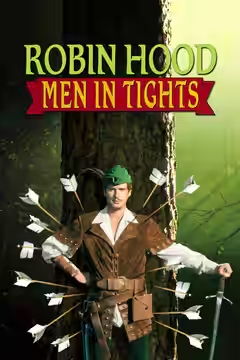
Mel Brooks aims at the Costner Robin Hood and hits it about one gag in three. Cary Elwes plays it straight and Roger Rees plays it scrambled, and between them they carry a spoof that would otherwise sit down and rest.
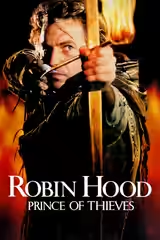
Mel Brooks takes aim at Robin Hood: Prince of Thieves, the 1991 Kevin Costner film, and at the whole Sherwood legend behind it, and the target is the first thing to say about the result. Costner’s film was already solemn to the point of comedy, so a spoof of it has to get laughs out of things that were faintly funny to begin with. Brooks, Evan Chandler and J.D. Shapiro manage it about one gag in three. The other two are either a pun on a name or a routine Brooks has done better before.
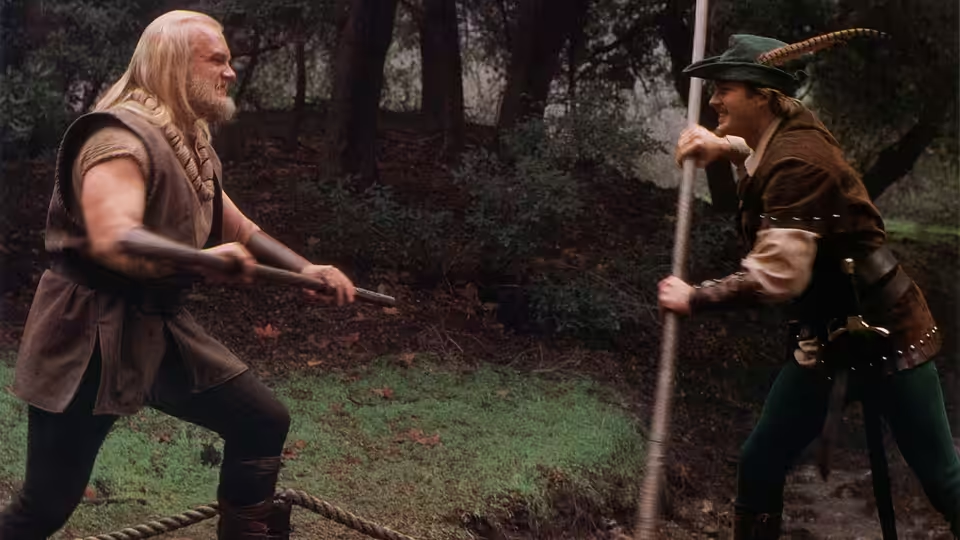
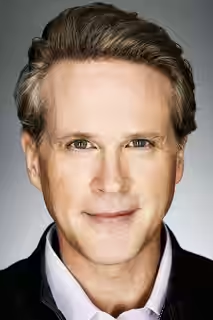
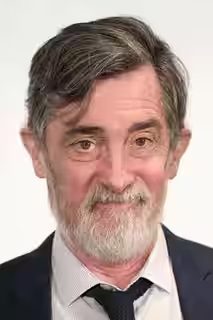
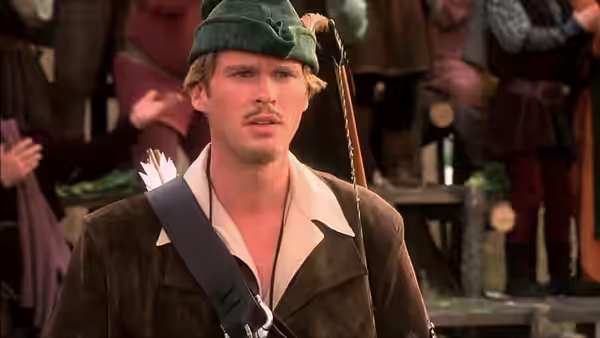
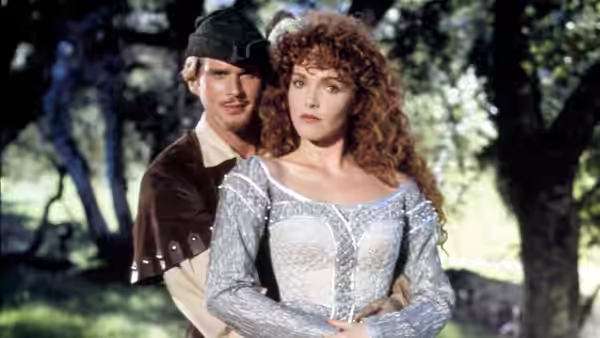
Cary Elwes is the film’s best decision. He plays Robin absolutely straight, chin up, hand on hip, and lets the nonsense happen around him, and when he points out that, unlike some other Robin Hoods, he can manage an English accent, the line lands because he has spent twenty minutes earning it. Roger Rees, as the Sheriff of Rotingham, does the opposite job. He speaks in sentences whose words have been shaken up and poured out again, and he does it with such conviction that we laughed every time, then felt slightly foolish for still laughing on the fourth go. These two are the reason the film works whenever it works.
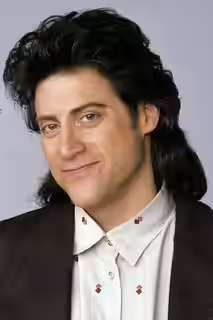
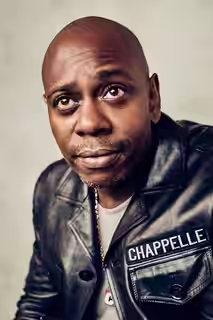
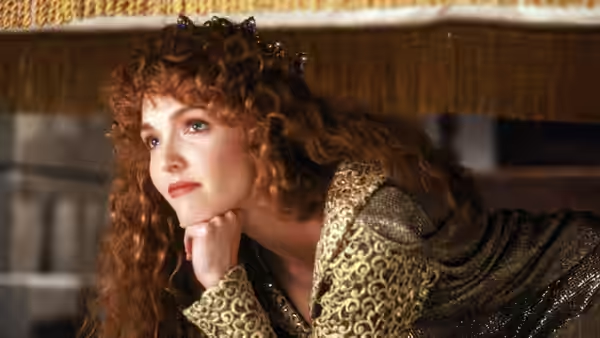
The support is more variable. Richard Lewis plays Prince John as a Los Angeles neurotic with a mole that moves about his face between scenes, which is a good joke twice and is told six times. Dave Chappelle, young and loose as Ahchoo, gets some of the sharpest lines in the picture and is given oddly little to do with them. Amy Yasbeck’s Marian is sweet and padlocked and not much else. Mark Blankfield’s Blinkin gets a run of gags about not seeing things that carries on well past the point where the audience has noticed. Brooks himself turns up briefly, and the film wakes up the moment he does.
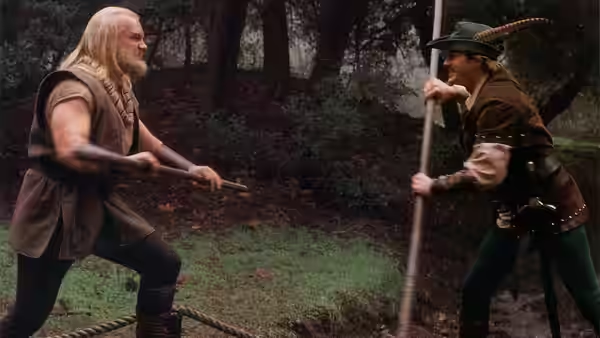
The film looks cheap, and mostly on purpose. Michael D. O’Shea lights everything flat and even, like a television studio, so that Roy Forge Smith’s castle walls look like painted castle walls; nobody is pretending otherwise. Dodie Shepard’s tights are the tights the title promises, and the song that celebrates them is staged with real energy and cut by Stephen E. Rivkin at a pace the rest of the film could have used. Hummie Mann’s score plays the swashbuckling straight, all brass and galloping strings, and it is the correct choice, since a spoof needs one department taking things seriously.
What does not work is the rhythm. Brooks’s best films, Blazing Saddles and Young Frankenstein, both from 1974, threw jokes at a rate that meant a bad one was buried by the next before you had noticed it. Here Rivkin holds on the reaction after the punchline, so the bad ones sit in the open. Our honest experience was of laughing hard perhaps five or six times across 104 minutes and spending the stretches between waiting, politely, for the next one. We were never bored enough to be cross, but we did check the time, which we do not remember doing during Spaceballs.
The PG certificate is fair and the rudeness is of the seaside-postcard sort: a chastity belt, a rap about tights, a hag named Latrine (Tracey Ullman) who fancies the Sheriff. Patrick Stewart arrives late as King Richard with a Scottish accent that anyone who sat through the Costner film will recognise, and his few minutes are among the best here.
Most critics have been lukewarm and we are more or less with them. This is Brooks in his slippers, fond of his old routines and in no hurry to find new ones. If you have children of the age at which a wandering mole is the funniest thing in the world, it will do the job on a wet afternoon. If you remember what Brooks could do when he was properly awake, keep Blazing Saddles to hand for afterwards.