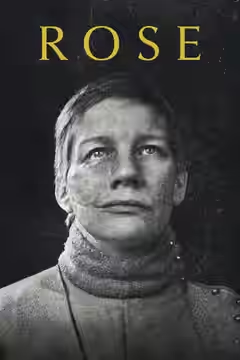
Sandra Hüller gives this austere historical drama a vulnerability that its controlled storytelling sometimes threatens to suppress. We recommend it for her performance and its precise filmmaking, with a reservation about how firmly it directs our understanding of Rose.
Rose is a good historical drama with an exceptional central performance, and our reservation concerns how much help that performance receives. Writing and directing, Markus Schleinzer approaches the policing of gender through a folk tragedy, keeping the telling deliberate and the emotions closely held. Sandra Hüller gives Rose enough vulnerability to make that restraint affecting, although the narration sometimes seems unwilling to let us reach our own understanding. We recommend it, provided a severe, patient film is what the evening calls for.
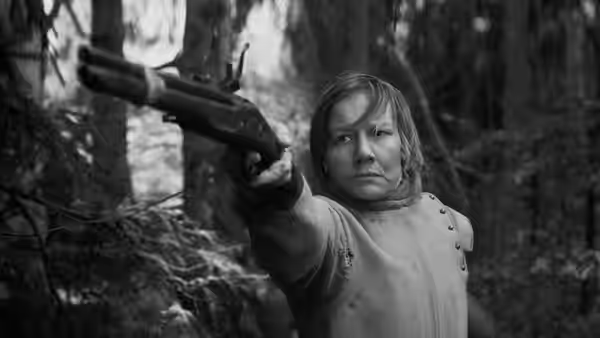
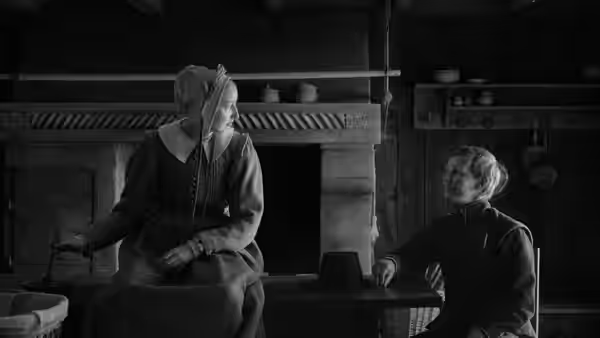
Hüller’s performance is tightly controlled without making Rose seem inaccessible, and that distinction matters throughout a story about the consequences of defying social rules. We were moved by the vulnerability she allows through such a restrained performance; the effort of maintaining composure becomes painful to watch. She gives us someone to attend to closely, rather than simply a position to agree with. The film’s treatment of gender is most persuasive when it leaves that work to her.
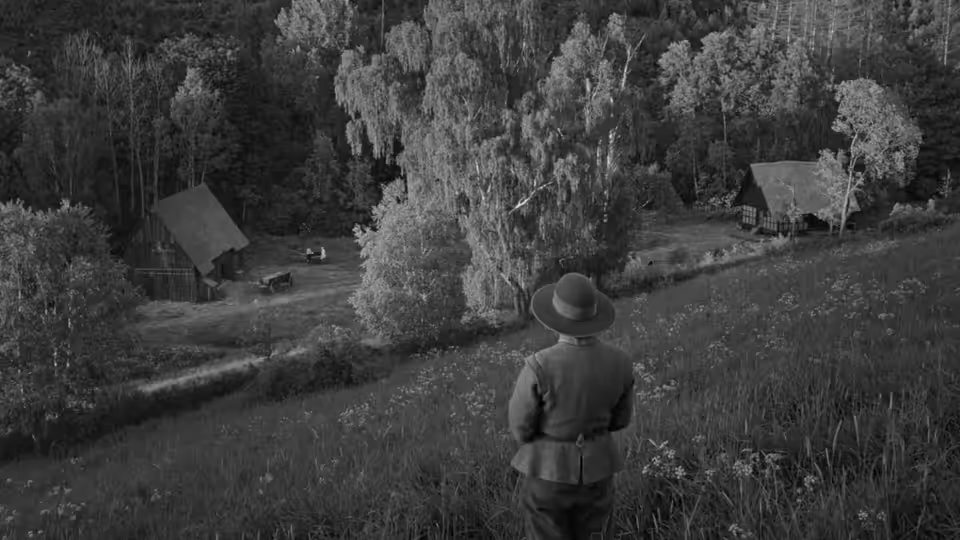
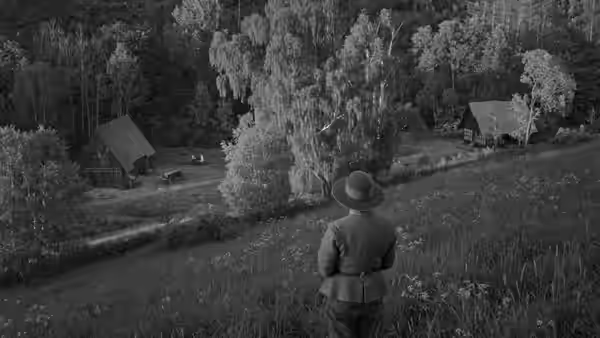
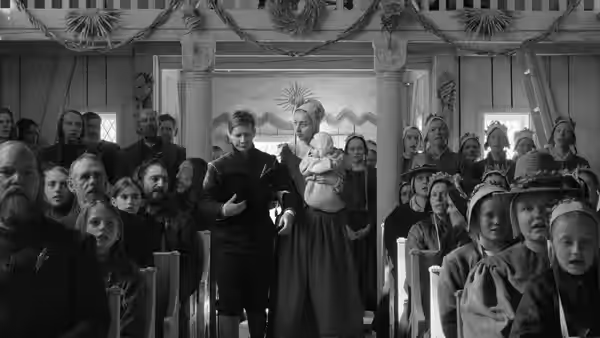
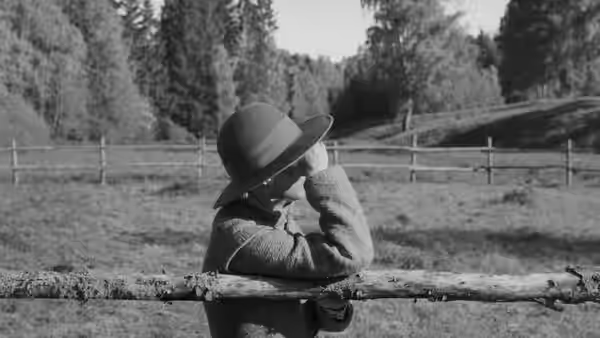
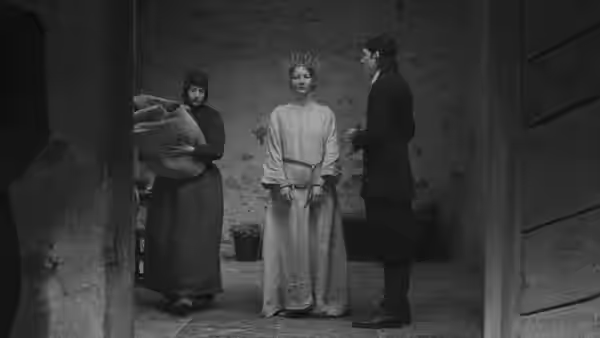
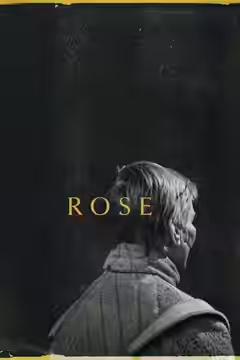
Gerald Kerkletz’s black-and-white cinematography is precise and austere, a suitable choice for a film so concerned with scrutiny and restriction. Its beauty does not soften the grimness, though the consistency of the visual control can become a little wearing. Olivier Meidinger’s production design contributes to the meticulous historical detail, giving the drama a convincing material setting without requiring us to admire the research separately. The care is welcome, even when we wish the film would loosen its grip for a moment.
Tara Nome Doyle’s a cappella music is another strong choice: the exposed human voice suits a story whose emotional weight rests so heavily on its performers. It adds unease without needing the familiar insistence of a swelling orchestral accompaniment. Hansjörg Weißbrich’s editing sustains the deliberate pace, allowing the performances room while preserving the film’s severity. At 94 minutes, this is a compact drama, although compactness does not necessarily make its measured progress feel brisk.
Caro Braun’s precise work as Suzanna deserves attention alongside Hüller’s, especially in a film where small differences in emphasis have to carry considerable weight. Schleinzer’s direction of the actors gives the moral difficulties seriousness without demanding a conspicuous display of emotion. This is where the austerity earns its keep: we have time to consider people whose circumstances resist an easy response. The performances remain the strongest reason to stay with the film when its grimness becomes oppressive.
The difficulty is the narration, voiced by Marisa Growaldt, and the authority Schleinzer gives it over our interpretation. There is a point at which careful storytelling starts to narrow the possibilities of a character, and Rose comes too close to it. Hüller’s subtlety invites us to wonder about Rose, while the telling can make that uncertainty feel less welcome than it should. For a drama challenging rigid expectations about gender, this is a consequential limitation, rather than merely a matter of taste about voice-over.
Within the historical drama, Schleinzer’s confidence and attention to performance are considerable virtues, and the film avoids making its subject feel like an academic exercise. Our enthusiasm stops short of the strongest praise because the emotional control sometimes becomes too restrictive. Still, Hüller and Braun make the patience worthwhile. Choose it for an evening when close attention feels like a pleasure, not another obligation.