Alfred Hitchcock’s Sabotage is a gripping thriller with an unusually cruel streak. Its family relationships give the suspense weight, though obscure plotting and ill-timed comedy keep interrupting the fear.
Alfred Hitchcock’s Sabotage is a good, disquieting thriller, though its comic interruptions and cloudy plotting keep it from being a wholly satisfying one. The bomb plot supplies the danger, but the family caught close to it gives that danger a weight the mechanics alone could not carry. Hitchcock understands how frightening an ordinary place can become once we know something is wrong. At 77 minutes, the film has little space to waste, which makes its occasional distractions more noticeable.
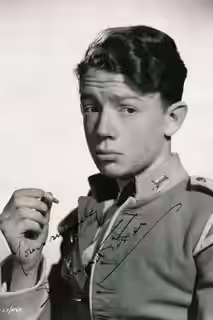
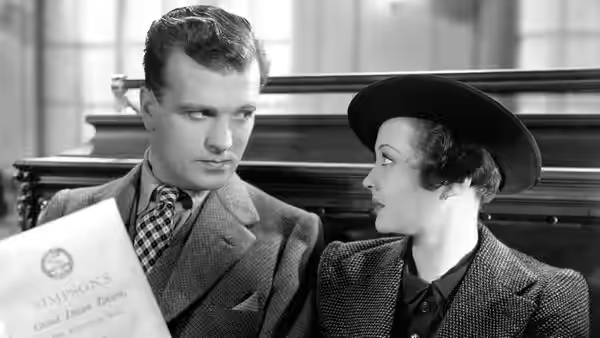
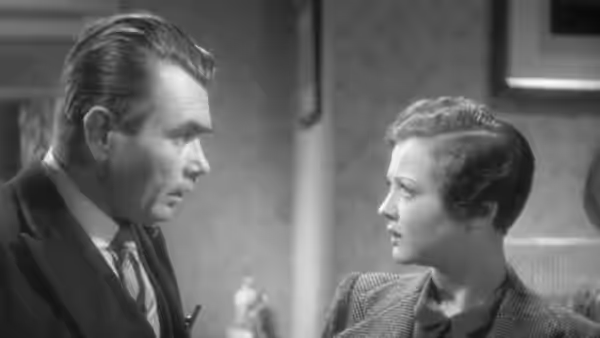
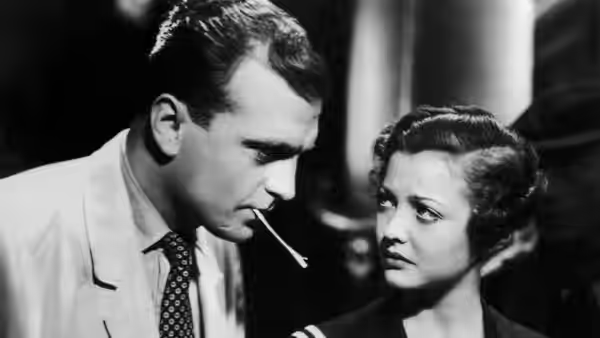
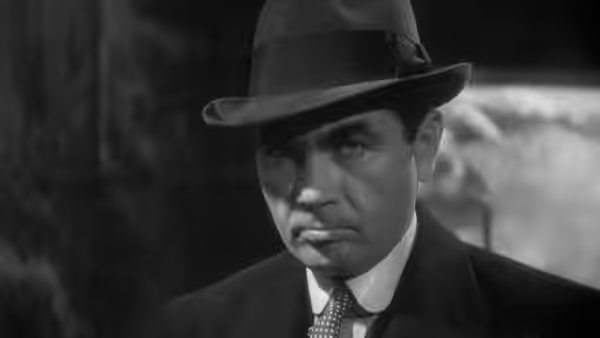
Sylvia Sidney gives Mrs. Verloc enough emotional substance to prevent the film becoming an exercise in threatening people we scarcely know. We care about her because Sidney makes the domestic relationships seem worth protecting, even when the plotting demands more attention than it deserves. Oskar Homolka, as Karl Verloc, is absorbing without making the man easy to understand, and his performance sustains interest where the writing leaves questions. Desmond Tester gives Stevie a place in that family, so our concern for him begins with his relationship to his sister.
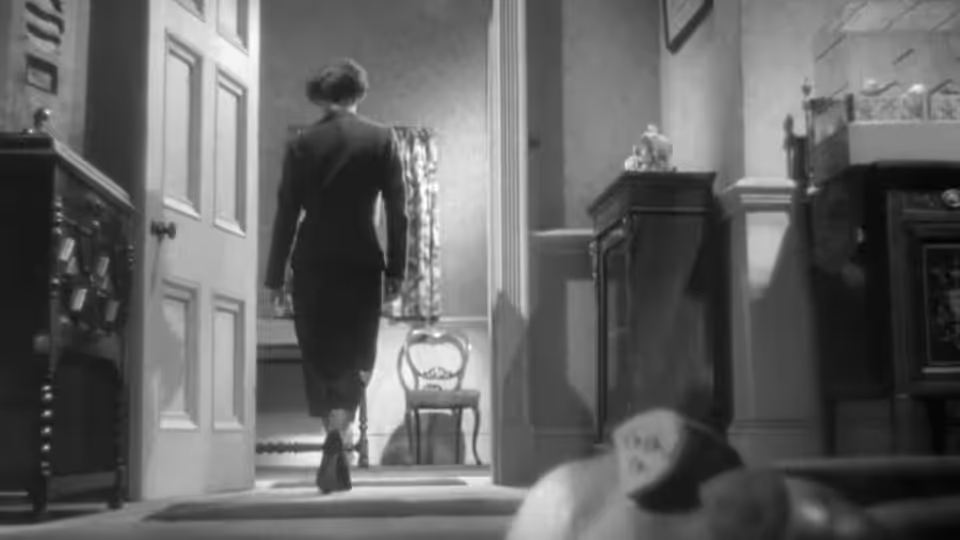
The aquarium sequence shows Hitchcock’s control at its most assured. Bernard Knowles’s photography makes the setting feel inhospitable, giving an ordinary public attraction a chill that needs little explanation. We felt uneasy because a place devoted to quietly looking at fish had become a place to fear the people. The setting does useful work: it makes the encounter strange without making it remote from everyday life, and allows Hitchcock to suggest how close danger can come to an innocent outing.
Charles Frend’s editing gives the suspense time to gather, making anticipation an uncomfortable part of watching. We have time to imagine what might go wrong before the film presses on. The music, credited to Jack Beaver, Hubert Bath and Louis Levy, supports that unease without becoming the chief source of it. We remember the aquarium more readily than a musical phrase, and the film benefits from giving the pictures so much responsibility.
Charles Bennett’s screenplay adapts a novel by Joseph Conrad, and the underlying intrigue is not always as clear or persuasive as the immediate threat. Some motives remain obscure long enough to distract us from what is happening in front of us. The comic interludes cause a different problem: they loosen the tension without consistently earning the interruption. Humour can make screen danger nastier by catching us unprepared, but here it sometimes feels as though we have wandered into another film just when the first one was getting somewhere.
By the usual crime-thriller measure of how neatly everything has been arranged, Sabotage is imperfect. Hitchcock’s treatment of the family makes neatness seem a secondary concern, although it cannot excuse every awkward change of tone. We recommend it to anyone who wants suspense with some emotional risk; save the comfortable detective story for another evening.