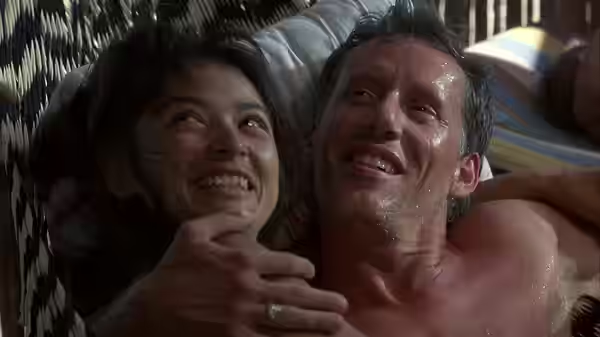
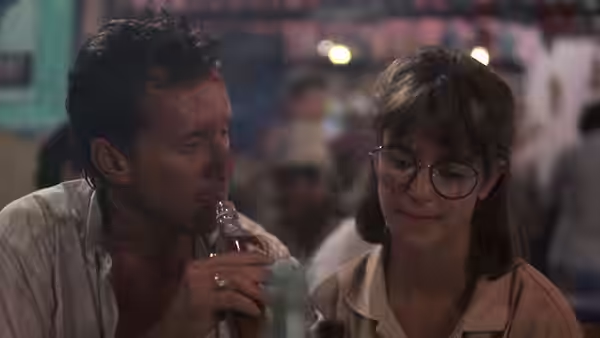
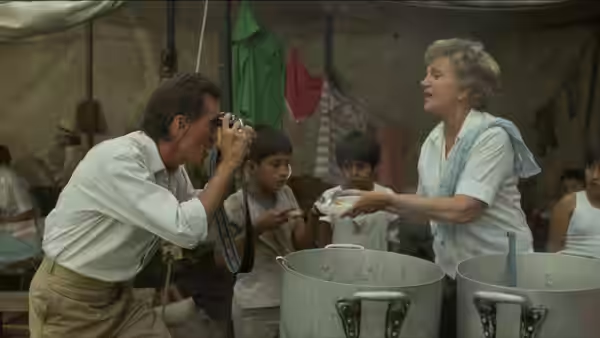
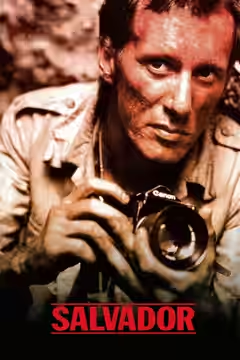
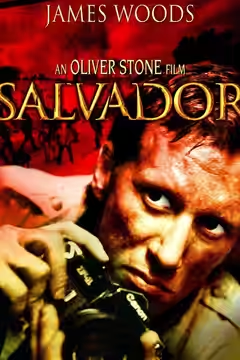
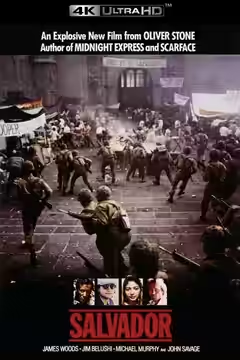
Oliver Stone’s account of a burnt-out reporter in El Salvador in 1980 is loud, angry and often clumsy, and James Woods is so alive in it that the clumsiness rarely matters. It plays loose with the record, and it still lands.
Oliver Stone made two war films in 1986, and this is the ragged one. Platoon made him respectable; Salvador, written with Rick Boyle, the reporter James Woods is playing, was made in a hurry and a temper. Boyle is a broke photojournalist who drives to El Salvador because there is a war on and wars pay. He takes an out-of-work disc jockey called Doctor Rock (Jim Belushi), mostly because Rock has a little cash. Stone wants us to see that American money is paying for the bodies on the hillside. He says so loudly and often, and the film is better than the speeches.
Woods is the reason to watch. His Boyle talks the way other people breathe, to get out of trouble and past checkpoints, and Woods plays him with a wet forehead and eyes that never stop counting the exits. He is a liar, a scrounger and a coward who keeps walking towards the shooting anyway, and Woods never asks us to like him for it. There is a scene in a church where Boyle tries to strike a bargain with God and cannot stop negotiating even on his knees; it is funny and pitiful at once.
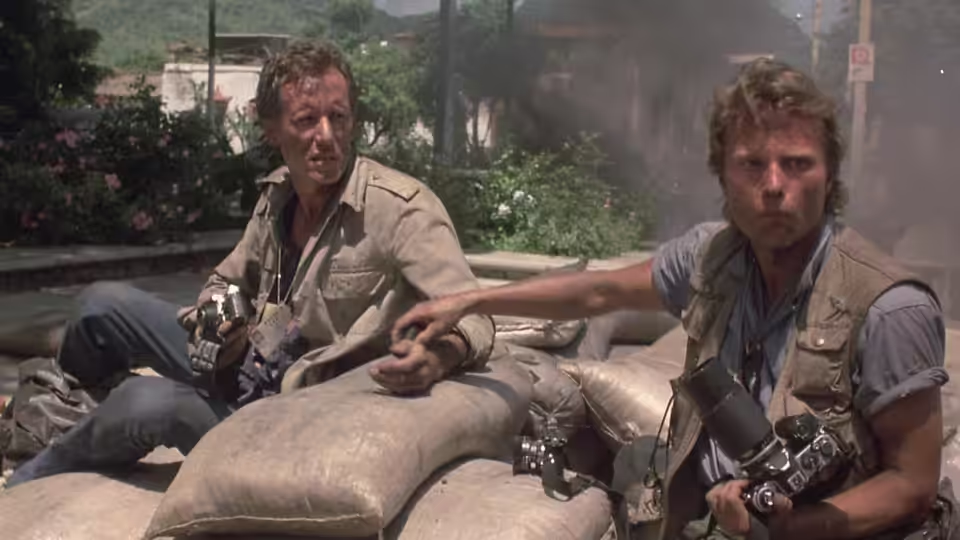
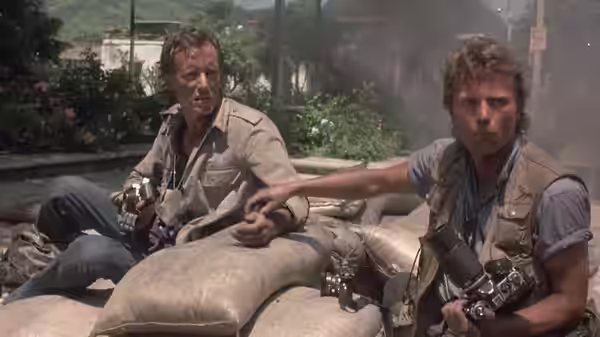
Robert Richardson shoots it handheld in a hard white light that makes everyone look ill, and keeps the camera at Boyle’s shoulder, so we see the country as a man looking for a story, not a view. Bruno Rubeo’s San Salvador is shuttered shops, sandbags and pick-up trucks with armed men in the back. Claire Simpson cuts fast when the shooting starts and slows right down when it stops, so the aftermath lasts longer than the fight. Georges Delerue’s score is used sparingly, a mournful string theme over the worst of it, the one soft thing in the film.
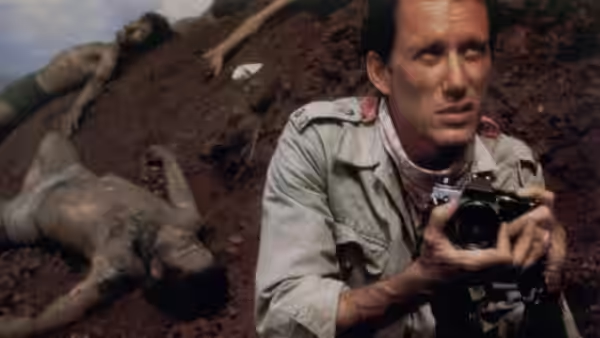
The film’s centre is the hillside where the death squads leave their dead. Boyle and Cassady go there to work, stepping between bodies, and Stone does almost nothing with it: flat noon light, vultures on the ridge, two men with cameras looking for a face they know. We were horrified, and what horrified us was the routine of it, the way the two men treat it as a place they have been before. The scene needs no speech, and gets none.
Stone the writer is the trouble elsewhere. Boyle gets a speech to the embassy’s military men, Colonel Hyde (Will MacMillan) and Jack Morgan (Colby Chester), about what the United States is buying here, and it stops the film so the argument can be read out. Hyde and Morgan are cartoons in short sleeves, there to be shouted at. Michael Murphy’s Ambassador Kelly is the one American allowed doubt, a decent man who knows what he is signing and signs it anyway; Murphy gives him more than the script does.
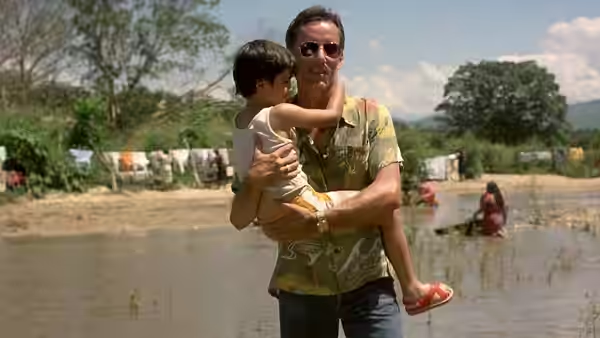
The women fare worse. Elpidia Carrillo’s Maria, whom Boyle wants to marry and take north, is written as patience with a child on her hip, and Carrillo can do little but be gentle at him. Cynthia Gibb’s Cathy Moore, a church worker, is sweet and brief. Boyle’s redemption runs through both of them and neither is asked what she wants. Belushi’s Rock, by contrast, gets a whole film of panic and grumbling, and is good company. John Savage’s Cassady, who wants the one picture that matters, is the only man calmer than Boyle.
Some critics have taken the film apart for its history, and they have a point. Boyle is put at events the real Boyle did not witness, and several people in the film never existed. That matters more than in most thrillers, because the film’s whole force is that this happened, and the truth was terrible enough. But the bodies on the hillside were real, and the film makes you look at them, which few films of its decade did.
It runs 123 minutes and carries an 18. Watch it for Woods, the hillside and Richardson’s light, and expect a lecture around the hour mark. Stone would go on to make tidier films. This one is untidy and it is alive, and the second matters more.