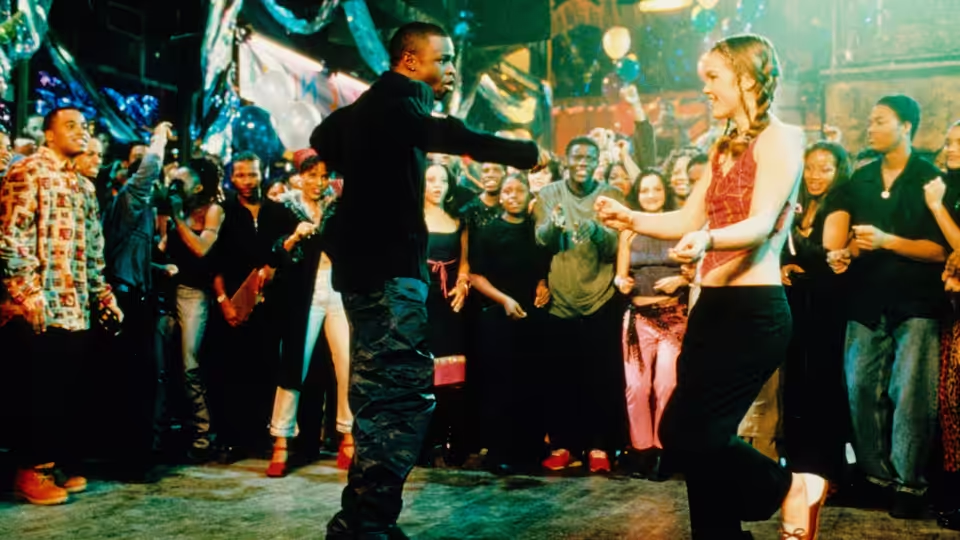
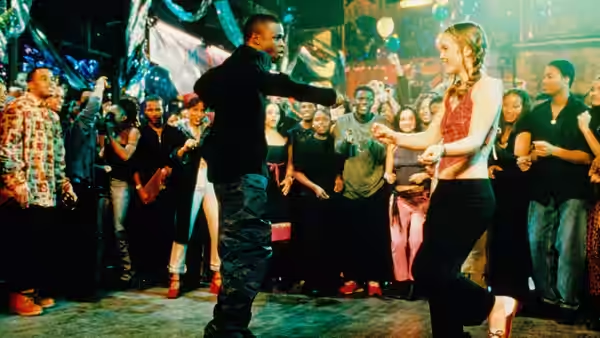
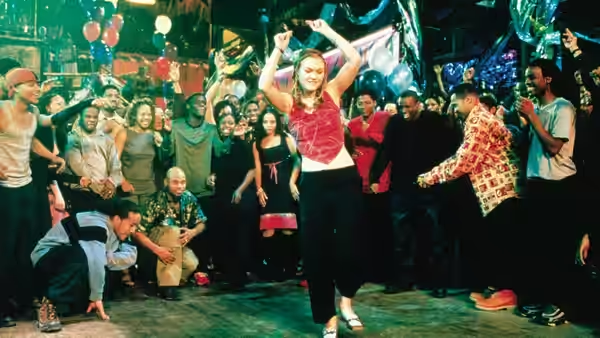
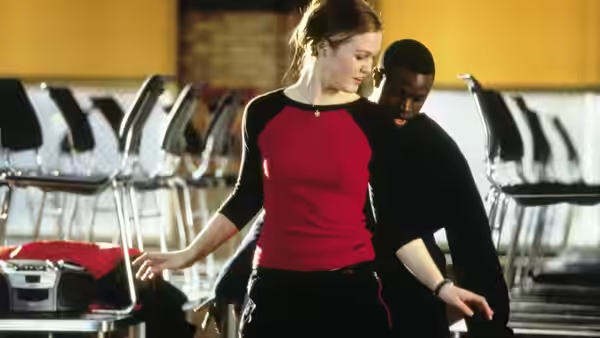
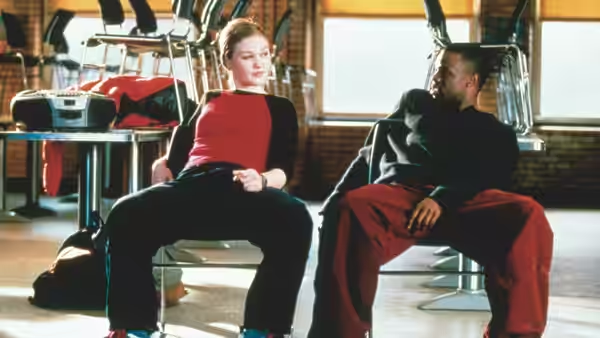
Julia Stiles and Sean Patrick Thomas give Save the Last Dance enough warmth to survive its familiar plotting. The romance is persuasive; the awkwardly edited dancing and over-insistent music are harder to forgive.
Save the Last Dance is a likeable teenage romance with enough feeling to make its familiar plot worth tolerating. Director Thomas Carter asks it to take young love seriously, make dancing matter and acknowledge the racial tensions around the central couple. That is a reasonable amount to ask of this kind of film, and the cast often make it seem possible. The trouble comes when the screenplay reaches for another complication and the characters start behaving as the story requires.
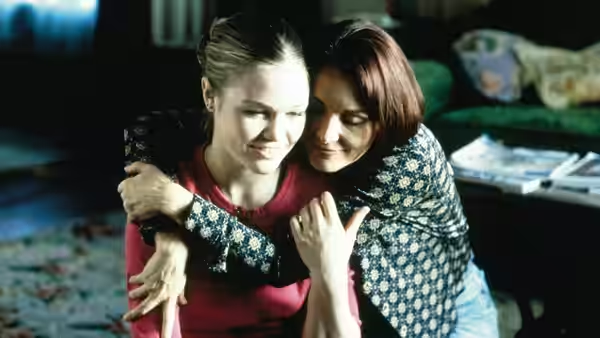
Julia Stiles takes Sara Johnson seriously, without making every moment of the performance feel solemn. Sean Patrick Thomas is especially good as Derek Reynolds, bringing warmth and confidence without making their attraction feel like a foregone conclusion. We found ourselves caring about this couple. Their ease together lets the romance develop beyond the simple fact that a screenplay has paired them off, and the performances give the familiar material some feeling.
The screenplay by Duane Adler and Cheryl Edwards deserves credit for allowing racial tensions into a story that could have kept its attention on dancing and attraction. Those pressures give the relationship more to contend with than the usual question of whether the leads fancy one another. The earnestness can be awkward, but the subject belongs here. What lets the writing down is its dependence on recognisable obstacles, with decisions that seem arranged to prolong the difficulty rather than arise from the people involved.
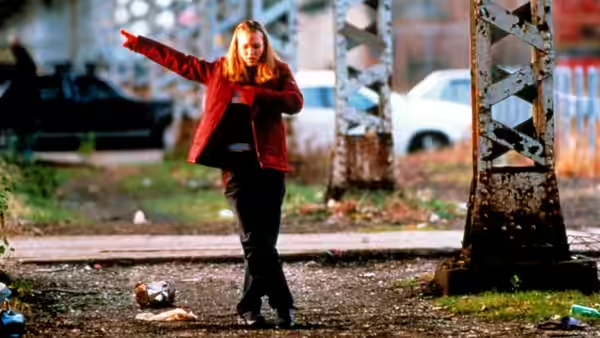
The dancing is less dependable, partly because the cutting keeps drawing attention to itself. Peter E. Berger, Jeff Canavan and Fritz Feick share the editing credit, and too many transitions prevent a movement from having its full effect. We want to see what a dancer can do without continually being reminded that somebody has assembled the footage. That matters in a film which asks dancing to carry so much of its appeal.
Robbie Greenberg’s cinematography and Paul Eads’s production design keep the performers as the main attraction, a sensible choice for this story. Mark Isham’s score is less willing to leave them alone, pressing emotions that the leads have already made clear. It is difficult to enjoy an unforced exchange when the music seems so anxious that we might miss the point, and the insistence makes some of the sincere passages feel calculated.
The middle section is where familiarity becomes a problem. The screenplay keeps finding reasons to delay the satisfaction it has encouraged us to expect, and Thomas Carter does not always make those delays interesting in themselves. A dance romance can be predictable and still carry us along, provided the movement or the conversation keeps offering a fresh pleasure. Here we begin waiting for the next scene between the leads, because the surrounding drama is less persuasive.
There is enough here for an evening when a sincere teenage love story will do and familiar plotting is no great obstacle. We would hesitate to recommend it to anyone whose main interest is dance, because those sequences should be providing pleasures the romance cannot. Watch it for the couple, and expect to forgive quite a bit on their behalf.