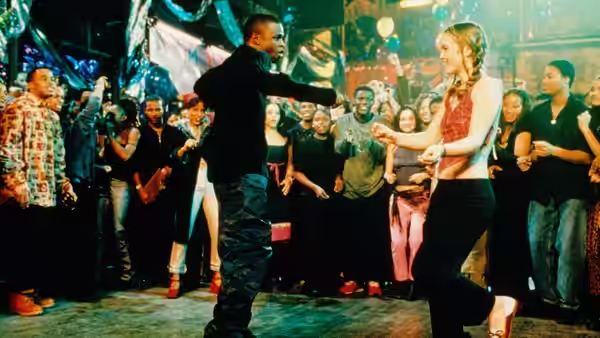
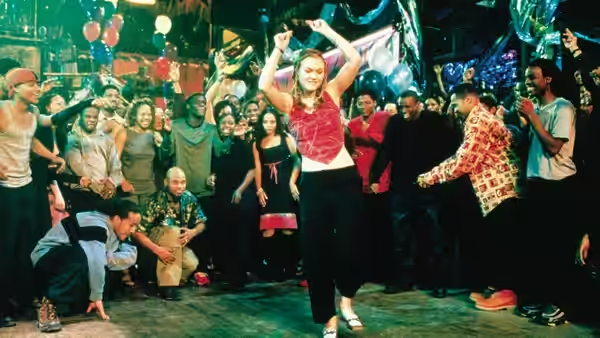
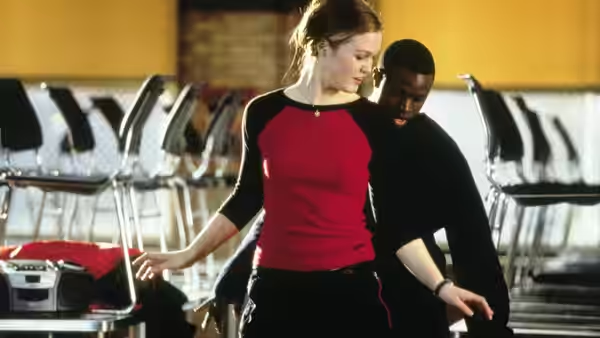
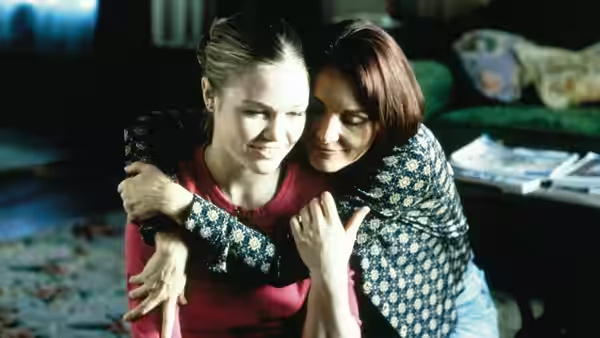
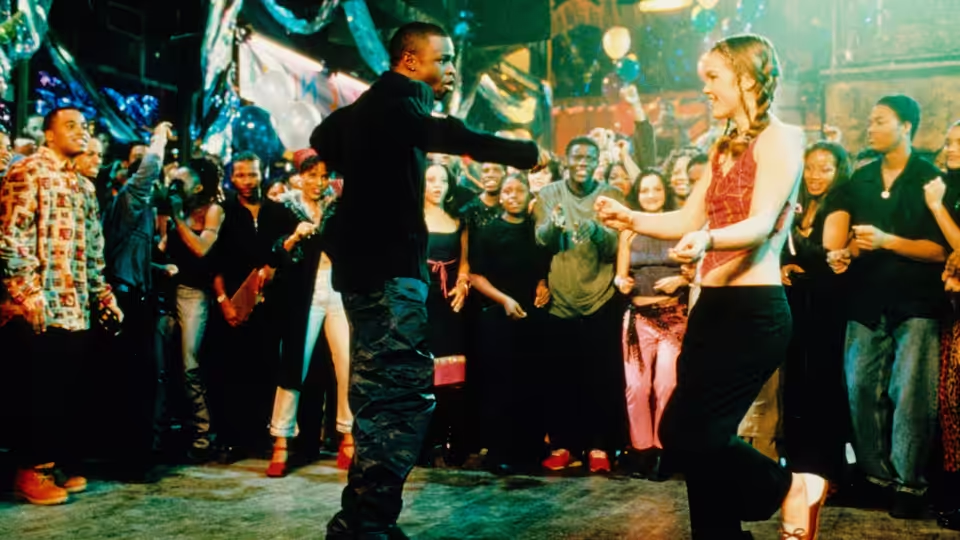
Derek Reynolds (Sean Patrick Thomas) and Sara Johnson (Julia Stiles) dance in a crowded club
Film review

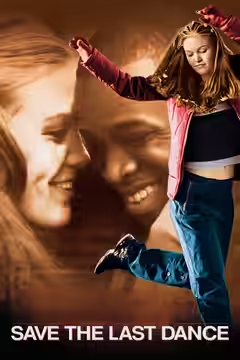
Save the Last Dance

2001 · Directed by Thomas Carter · 1h 53m · CH 10

In a sentenceWe liked the couple enough to forgive the dancing, though the editors did test our patience

Sara Johnson (Julia Stiles) and Derek Reynolds (Sean Patrick Thomas) are drawn to each other in a teenage romance shaped by dancing and racial tensions. Chenille Reynolds (Kerry Washington), Malakai (Fredro Starr) and Nikki (Bianca Lawson) are among the people around them. Sara and Derek want to grow closer, but attraction does not settle the difficulties surrounding their relationship. Dancing runs alongside their love story as the pair try to be together, with the pressures beyond the couple complicating what they feel for one another.

Plays from YouTube when you press play; nothing loads from them until then.

Fi1m review

Julia Stiles and Sean Patrick Thomas give Save the Last Dance enough warmth to survive its familiar plotting. The romance is persuasive; the awkwardly edited dancing and over-insistent music are harder to forgive.

Save the Last Dance is a likeable teenage romance with enough feeling to make its familiar plot worth tolerating. Director Thomas Carter asks it to take young love seriously, make dancing matter and acknowledge the racial tensions around the central couple. That is a reasonable amount to ask of this kind of film, and the cast often make it seem possible. The trouble comes when the screenplay reaches for another complication and the characters start behaving as the story requires.

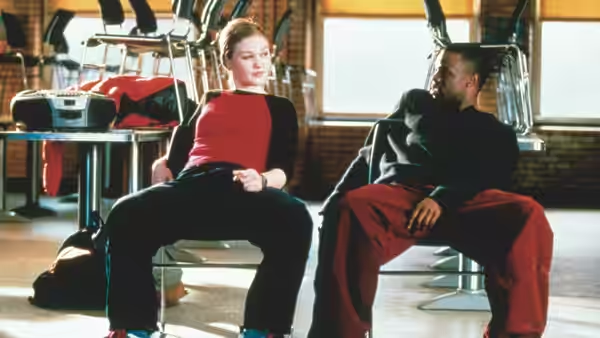
Julia Stiles takes Sara Johnson seriously, without making every moment of the performance feel solemn. Sean Patrick Thomas is especially good as Derek Reynolds, bringing warmth and confidence without making their attraction feel like a foregone conclusion. We found ourselves caring about this couple. Their ease together lets the romance develop beyond the simple fact that a screenplay has paired them off, and the performances give the familiar material some feeling.

The screenplay by Duane Adler and Cheryl Edwards deserves credit for allowing racial tensions into a story that could have kept its attention on dancing and attraction. Those pressures give the relationship more to contend with than the usual question of whether the leads fancy one another. The earnestness can be awkward, but the subject belongs here. What lets the writing down is its dependence on recognisable obstacles, with decisions that seem arranged to prolong the difficulty rather than arise from the people involved.

The dancing is less dependable, partly because the cutting keeps drawing attention to itself. Peter E. Berger, Jeff Canavan and Fritz Feick share the editing credit, and too many transitions prevent a movement from having its full effect. We want to see what a dancer can do without continually being reminded that somebody has assembled the footage. That matters in a film which asks dancing to carry so much of its appeal.

Robbie Greenberg’s cinematography and Paul Eads’s production design keep the performers as the main attraction, a sensible choice for this story. Mark Isham’s score is less willing to leave them alone, pressing emotions that the leads have already made clear. It is difficult to enjoy an unforced exchange when the music seems so anxious that we might miss the point, and the insistence makes some of the sincere passages feel calculated.

The middle section is where familiarity becomes a problem. The screenplay keeps finding reasons to delay the satisfaction it has encouraged us to expect, and Thomas Carter does not always make those delays interesting in themselves. A dance romance can be predictable and still carry us along, provided the movement or the conversation keeps offering a fresh pleasure. Here we begin waiting for the next scene between the leads, because the surrounding drama is less persuasive.

There is enough here for an evening when a sincere teenage love story will do and familiar plotting is no great obstacle. We would hesitate to recommend it to anyone whose main interest is dance, because those sequences should be providing pleasures the romance cannot. Watch it for the couple, and expect to forgive quite a bit on their behalf.

Critical consensus AI synthesised

59
Positive
3
Mixed
3
Negative
1

The reviews are mixed, though most critics find something persuasive in the romance and performances. Praise clusters around Julia Stiles and Sean Patrick Thomas, whose chemistry and character work help make familiar material emotionally credible. Several critics also value the film’s willingness to address racial tensions, finding enough substance in the central relationship to offset some of the predictable plotting.

Reservations centre on formula, with even sympathetic reviews acknowledging how readily the story follows familiar routes. The dancing divides opinion: Total Film criticises awkward editing and the use of a body double, while Eye for Film welcomes the dance sequences as an education. The spread runs from warm approval to a strongly negative response from Empire, which finds the film patronising and its score intrusive, despite praising the cast and dance numbers. The clearest agreement concerns the performers; the disagreement is over how much they compensate for the script.

Los Angeles Times
12 January 2001 · Kevin Thomas
75*

The critic finds the teen romance emotionally effective despite its predictable ending. He praises the youthful cast and the film’s balance of melodrama, wishful thinking, and grit.

Read the full review →
The AV Club
12 January 2001 · Nathan Rabin
75*

Rabin finds the film a perceptive, unusually substantial teen romance, though its dance elements are clumsier and more predictable. He especially praises the layered central relationship and the performances of Julia Stiles and Sean Patrick Thomas.

Read the full review →
The New York Times
12 January 2001
64*

The URL identifies this as a film review, but the critic’s verdict is unavailable. The accessible page provides no details about what the critic praised or criticized.

Read the full review →
Total Film
30 March 2001 · ★★★ · Total Film
60

The review finds the film predictable but ultimately enjoyable, praising its cast’s charm and its willingness to address racial tensions. It criticizes the dance scenes, especially their awkward editing and use of a body double.

Read the full review →
Variety
8 January 2001 · Robert Koehler
50*

Koehler finds the film earnest but formulaic, with an uneven middle and some implausible character choices. He praises the performances and the leads’ appealing chemistry, especially Sean Patrick Thomas’s warmth and confidence.

Read the full review →
Empire
1 January 2000 · Colin Kennedy
20*

The critic gives the film a strongly negative verdict, calling it a patronizing hybrid of familiar teen movies. They single out the formulaic plot and intrusive score, while praising the performances and dance numbers.

Read the full review →

Straight answers AI written, from our review

Is Save the Last Dance worth watching?
Save the Last Dance is worth considering for its warm teenage romance, and we scored it 66 out of 100. Julia Stiles and Sean Patrick Thomas make the couple worth caring about, but familiar complications, intrusive music and awkwardly edited dancing make it harder to recommend if dance is the main attraction.
How long is Save the Last Dance, and what is it rated?
Save the Last Dance runs 1h 53m and is rated 10 by the CH in Switzerland. It is a drama and family film.
Where can I watch Save the Last Dance in Switzerland?
Save the Last Dance is available to rent from Amazon Prime Video and Apple TV from CHF 4.50. Availability is checked daily; the links above go straight to each service.
How violent or frightening is Save the Last Dance, and is it suitable for children?
Save the Last Dance has a UK 12 certificate, making it a more appropriate choice for older children and teenagers than younger children. Its teenage romance involves racial tensions, but we have no specific violence or fear warnings to offer; we would use the certificate as the guide rather than assume a dance film suits every age.
How does Save the Last Dance compare to Billy Elliot?
Save the Last Dance is our choice for a sincere teenage romance, while Billy Elliot is the stronger recommendation for dancing and the difficult conversations surrounding ambition and family pressure. We like Stiles and Thomas together, but their film tests our patience with contrived obstacles and restless cutting; Billy Elliot gives its performers and dancing more persuasive support, despite some sentimentality.
What should I watch after Save the Last Dance?
After Save the Last Dance, try Dirty Dancing (1987, Fi1m 79): Another romance where learning the steps means negotiating class and adult expectations. Then Billy Elliot (2000, Fi1m 81): Dance, ambition and family pressure, with more patience for the difficult conversations; and Strictly Ballroom (1992, Fi1m 83): Competitive dancing and romance, with enough humour to loosen the formal routines.

Cast

If you liked this, try…

  1. Dirty Dancing (1987, Fi1m 79)Another romance where learning the steps means negotiating class and adult expectations.

  2. Billy Elliot (2000, Fi1m 81)Dance, ambition and family pressure, with more patience for the difficult conversations.

  3. Strictly Ballroom (1992, Fi1m 83)Competitive dancing and romance, with enough humour to loosen the formal routines.

  4. Girlhood (2014) · not on Fi1m yetMore searching about teenage friendship, belonging and the pressure to fit in.

  5. The Fits (2015) · not on Fi1m yetA young dancer’s need to belong becomes something stranger and harder to explain.