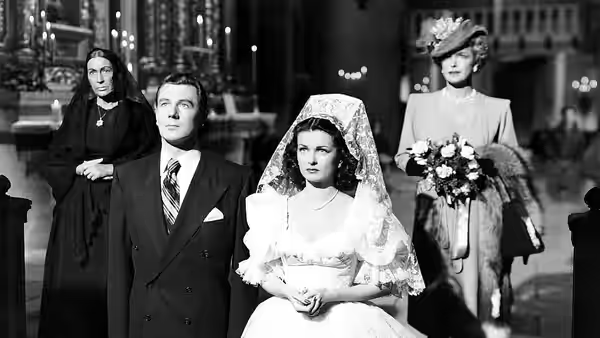
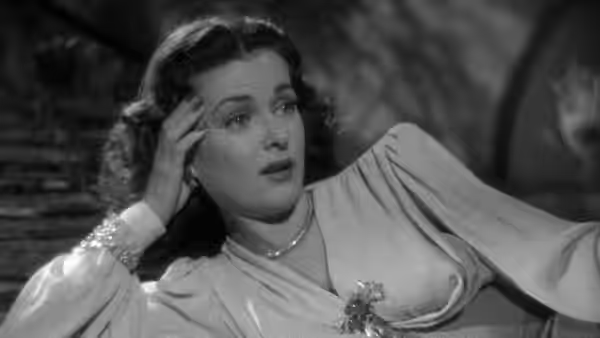
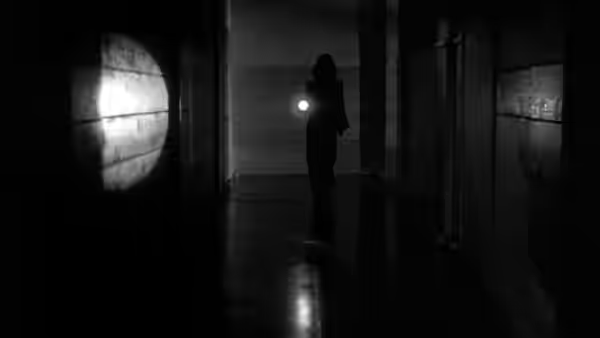
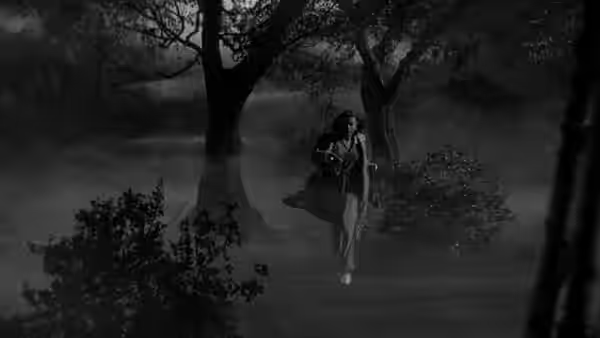
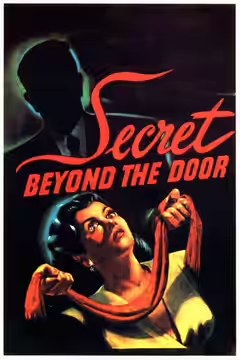
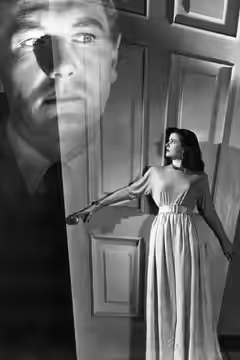
Fritz Lang’s psychological melodrama is worth considering for Stanley Cortez’s photography and Joan Bennett’s performance. Its troubled minds become less convincing the more insistently the film tries to explain them, but the unease survives.
Secret Beyond the Door is an absorbing, uneven psychological melodrama whose photography gives us good reason to tolerate its explanations. Fritz Lang takes the business of troubled minds seriously, sometimes more seriously than the writing can support. There is pleasure in that seriousness, even when it becomes cumbersome: this is a film prepared to make romantic unease uncomfortable. We recommend it to viewers who enjoy a thriller enough to forgive some doubtful psychology.
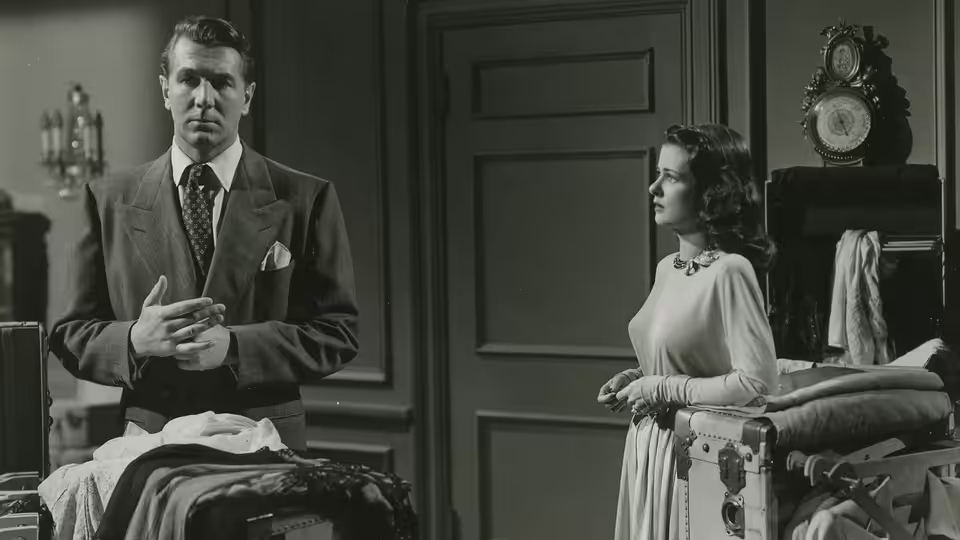
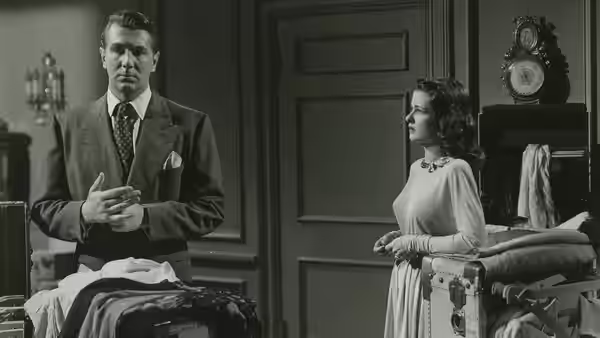
Stanley Cortez’s photography is the strongest reason to persist. The striking images give the film a force that its dialogue cannot reliably sustain, making its emotional extremes feel persuasive before anyone attempts to account for them. We felt uneasy looking at it, then impatient listening to it. That impatience comes from the gap between the conviction of the images and the strained explanations attached to the characters’ behaviour.
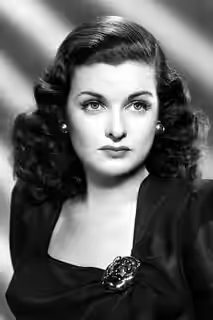
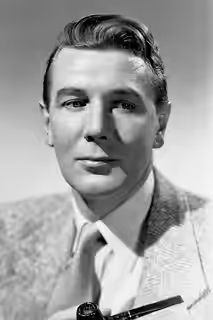
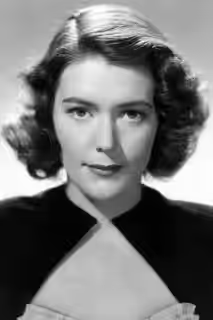
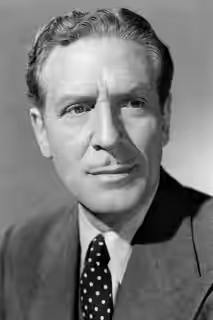
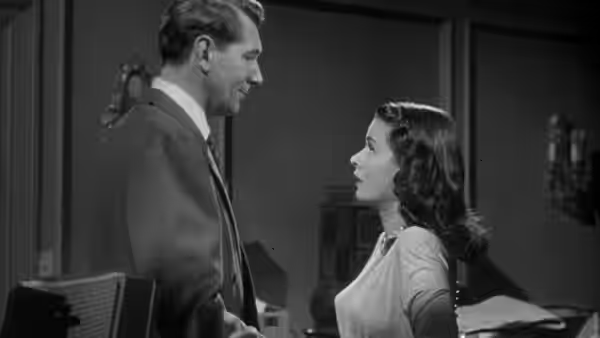
Joan Bennett, playing Celia Lamphere, gives us another reason to stay interested. Her performance makes the melodrama easier to accept without making it seem ordinary, an important distinction in a film that needs considerable indulgence. Michael Redgrave, as Mark Lamphere, is less persuasive; the performance does not consistently make difficult motivations feel like the workings of a recognisable person. Bennett does more to hold our attention than the psychological machinery surrounding her.
The screenplay by Silvia Richards, from a story by Rufus King, places considerable demands on that machinery. Mental complexity can enrich suspense, but here it too often makes the characters harder to follow without making them more interesting. We need not approve of what people do in a thriller, or even fully understand it, to feel apprehensive about their next decision. We do need the explanation, when it comes, to withstand a little thought, and the writing is weakest when it sounds most certain of itself.
Arthur Hilton’s editing deserves some of the credit for keeping this material compelling. There is enough control in the cutting to sustain interest even when the dialogue threatens to exhaust it, and Travis Banton’s costumes contribute to the film’s carefully composed appearance. Max Parker is responsible for the production design, with Miklós Rózsa providing the music. Yet Cortez’s photography remains the clearest achievement: the images command attention without requiring us to accept every psychological proposition accompanying them.
Judged as a mystery, the film asks for more patience than its reasoning earns. Judged as melodrama, it has a stronger claim on an evening, because heightened feeling permits a degree of excess that a tidy explanation cannot. Lang’s commitment helps, although it also leaves the weaker dialogue exposed: nothing here benefits from being taken lightly. The suspense works often enough to make the lapses frustrating rather than fatal.
The reservations matter, particularly for anyone who wants behaviour to remain plausible beneath the atmosphere. Bennett and Cortez provide substantial compensation, but they cannot make every explanation convincing. Choose it for an uneasy melodrama, and be prepared to argue with its psychology afterwards.